Showing posts with label Food. Show all posts

Saturday, November 17, 2007

Manila: Abe Restaurant turns one!

I was lucky to be invited by Larry Cruz to the first anniversary celebration of Abe Restaurant in Serendra. Named after his father, Emilio "Abe" Aguilar Cruz, a diplomat, artist, bon vivant and gastronome of his generation, the restaurant serves a wide variety of Kapampangan favorites.

Guest of honor that night was none other than Gov. Ed Panlilio who was an instant celebrity as soon as he arrived in Serendra since passersby kept on requesting to have their picture taken with him. I did too! Hehe! Here's a photo with him and my brod, PR executive Danny Gozo. As always, the food was great and plentiful!

Thursday, November 15, 2007

Baguio: Baguio Country Club's famous raisin bread

When family and friends hear you're on your way to Baguio Country Club, one pasalubong request stands out: raisin bread! The next day, we had breakfast in the Raisin Bread Shop of the BCC. And of course, I bought their signature raisin bread and banana bread to take home.

Don't miss out on their equally famous blueberry muffins among many other muffins. I'm sure their cakes are equally mouth-watering. In fact, the cake display case beckons to every customer who enters. But I had enough sugar for the morning. Also available in the bread shop are deli sausages and cheeses among many other products.

I had wanted to stay an extra night but I had to rush to an evening meeting in Makati. So that ends my 3 weeks of non-stop travel. It's back to school. In a way, it's time for a vacation from my vacation. Hahaha!

Tuesday, November 06, 2007

Iloilo: Seafood binge in Breakthrough Restaurant, Iloilo City

I'm in Iloilo City again. I arrived at the new Iloilo Airport this afternoon from Cebu. Bernard met up with me there and we took a cab to the city proper. I wasn't feeling that well so after a brief stopover at the old Iloilo City Hall which is now part of UP Visayas, I went back to the hotel and took a nap.

In the evening, Isa Silva and family took me to Breakthrough Restaurant in the Arevalo District for dinner. I'm not that fond of seafoods but it was a seafood binge for me. We had abalone sashimi, talaba and the pricey diwal shells for dinner among others. Everything is fresh and you can catch your dinner yourself. The restaurant is also by the beach so the breeze adds to the ambiance. After dinner, we had some dessert in Smallville.

Saturday, November 03, 2007

Pampanga: The Ulitmate Kapampangan Show-off!

Today, we offered our first tour offering, a high-end Pampanga food tour brought to you by Our Awesome Planet, Ivan About Town, Old Manila Walks and Manila Boy. Breakfast was at Everybody's Cafe where we had tsokolateng batirul and Imang Salud's ensaymadas, pindang damulag, longganiza among many others.

We visited the lantern factory of Rolan Quiambao which was abuzz with activity. Then it was a drive around the San Fernando heritage district before proceeding to the Betis and Bacolor Churches.

Lunch was at Claude Tayag's Bale Dutung. We spent four hours eating!!! Our next trip will be different and it's scheduled on December 15 with a special treat in the evening, the Giant Lantern Festival!

The Ulitmate Kapampangan Show-off!
On December 15, let's journey to the Central Luzon heartland as we immerse ourselves in things Kapampangan! From Baroque to betute, it's a fun-filled day as we poke around and get intimate with the very best of this province's cultural offerings. We'll gawk at the jewel-box of a church in Betis while wading through the half-buried town of Bacolor. We'll stuff ourselves silly with the best Kapampangan fare by one of the country's best known Pampango chefs! To it cap-off, we'll have front-row view of the most dazzling display of Kapampangan artistry - the Giant Lantern Festival of San Fernando! A tour screaming with Pampanga's pride! There are just 35 slots so book now by e-mailing info@ivanhenares.com.

The Tour Experience: Betis Church, Bacolor Church, Claude Tayag's Bale Dutung, Pampanga Pasalubong Shops, Ligligan Parul (Giant Lantern Festival) in San Fernando, and featuring our own version of the bento box for dinner: the Cabalento Box!!!

Thursday, July 05, 2007

Palawan: Around Puerto Princesa City, Palawan

This trip had been in the works since I purchased my Cebu Pacific PHP1 tickets. It's day 1 of my birthday trip to Palawan. The last time I was in Puerto Princesa was in 1997, exactly ten years ago. At the Manila Domestic Airport Terminal (I hope they replace this ageing airport soon), the line for the flight to Puerto Princesa was quite long already. Then I noticed an Express Counter for passengers without check-in luggage. I usually travel with my backpack only and it was just now that I noticed that counter. Anyway, there was no line so I got my boarding pass easily.

When I arrived in Puerto Princesa, I was picked up at the airport by the staff of Puerto Pension. I had asked the help of the DOT Regional Office to help me find a decent budget hotel. And from the list they sent me, I decided to stay there since they were the cheapest on the list, had airport transfers, free breakfast, and accepted credit cards. When I arrived in the hotel, I found out they also booked tours for you. So I decided to join the City Tour (PHP600) in the afternoon, the Honda Bay Island-hopping Tour (PHP1000) the next day, and the Underground River Tour (PHP1300) on Saturday. Lunch was included in the last two tours.

The van passed by for me at 1:30 p.m. The group first passed by the Plaza Cuartel and the Immaculate Conception Cathedral before proceeding to the Palawan Museum. The exhibits were what one would expect from a provincial government museum. I hope they get rid of these boring ways of presenting important artifacts by investing in world-class exhibits such as that of the National Museum in Manila. From there, we proceeded to the Butterfly Garden, a great place to view butterflies up close.

After a short walk inside, we were off to the Crocodile Farming Institute, now the Palawan Wildlife Rescue and Conservation Center since the place not only conserved crocodile species. Displayed in the main lobby of the center is the skeleton of the longest crocodile ever caught in Palawan, about six meters, although a nine-meter croc had been spotted after it fed on a child but was not caught. When this croc died, they opened up its stomach and found the remains of a person inside confirming what had previously been known. We also walked around tanks of baby crocs which the center breeds for leather production. At the back is a mini-zoo which features some species endemic to Palawan.

Next on the list was the Iwahig Prison and Penal Farm, the only prison in the country without walls, where inmates are rehabilitated through productive and money-making activities such as farming and handicraft-making.

Opened in 1904, this was among the first major projects of the American colonizers in the island of Palawan. They had been looking for a place to exile “unwanted” persons that included prisoners and lepers. And both groups were sent to Palawan, the latter being sent to the Culion Leper Colony.

We made a brief stopover at Mitra Ranch, the home of former Speaker Ramon Mitra, Jr. which has been opened to visitors, before making our way back to the downtown area. But we stopped by this place called Baker’s Hill which is known for its breads and hopia.

In the town proper, I bought some souvenirs in the market. Then it was dinner with my tour group in the highly-recommended, by-reservation only Ka Lui Restaurant. In fact, we could not get a booking earlier than 8:30 p.m. You can ask your hotel to book for you.

Our city tour group clicked especially since we found out we had booked the same tours for the next two days. Thanks to Rolly & Gigi Padilla from San Francisco, CA for the dinner. It was a coincidence that Linda is an avid reader of my blog. So she insisted that she treat me out. Thanks again! And to the rest of the gang, Em de Guzman, Rommel Cruz, and Richard & Agnes Cordero, thanks for the company!

Back to Ka Lui, I did not expect what I saw. It was a very cozy place, full of paintings, décor and other artsy stuff. The whole place was almost made of bamboo. Customers had to take off their shoes at the entrance and walked barefoot in the restaurant. It was an all-seafood menu which included shrimps halabos, seafood sisig, kilawin, and crabs, eel or sting ray in coco cream among many others. Among their cool shakes are CocoBanana and Mango Pomelo. Although I’m a meat person, I enjoyed the seafood sisig and stuffed squid.

We enjoyed the place so much, we stayed until it closed at 11 p.m. There are more photos in my Multiply.

Technorati Tags: , , , , , , , , , ,

Monday, June 11, 2007

Indonesia: Indonesian food trip

Every time I visit a Southeast Asian country, the variety of food choices never fails to amaze me. Indonesia was no exception. And thanks to my SSEAYP friends, I had an unforgettable food adventure that undoubtedly left my palate yearning for more.
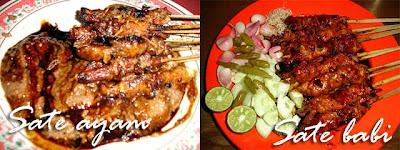
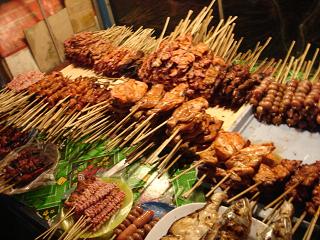
On top of that list is the sate ayam or grilled chicken skewers in Jalan Sabang, Jakarta. What makes this dish a winner, given that there are sate or satay is found around the Malay region, is the saos kacang or peanut sauce which tastes like heaven! I also had sate babi or grilled pork skewers in Kelapa Gading, but the accompanying sauce was the regular barbeque sauce we have here in the Philippines.

Of course, there are the nasi or rice dishes. I enjoyed the really sweet nasi gudeg in Yogyakarta. This dish is actually several dishes put together. As I mentioned in an earlier post, I got to visit the kitchen to see it being made. The first component dish, duck eggs are first hard-boiled, then shelled, then re-boiled again with different ingredients and spices until it reaches a dark brown color. Another component is the chicken dish. They were also grating coconuts and chopping some young jackfruit at the back for another dish. There was also a tofu and cow skin dish. The last component was white rice. They prepared large servings beginning the night before for sales the next day.

Nasi liwet is boiled rice with sambal goreng labu siam which is fried labu siam or chayote with chili and coconut milk. The dish is also served with chicken also boiled in coconut milk and a hard-boiled egg. I had this dish in Kelapa Gading and it was quite tasty. I also had ayam goreng (fried chicken) with nasi putih (white rice), lalap (vegetables) and sambal (chili) at a warung in Yogyakarta. They say the chicken is marinated in coconut milk.
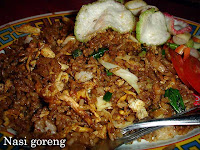
The most popular rice dish is nasi goreng which is literally fried rice. The rice is fried in kecap manis or soy sauce and is often accompanied by additional items such as a fried egg, fried chicken, sate or krupuk (fried crackers made of shrimp or vegetables).

Then there are the salads. Gado-gado is a vegetable salad served with a peanut sauce dressing. The vegetables, which may include shredded or chopped green vegetables such as cabbage, cauliflower, green beans, watercress, and bean sprouts; carrots, cucumber, peas and tomatoes, are either served raw or blanched.

Sliced boiled potatoes and boiled eggs are sometimes added. This whole mixture is topped with the peanut sauce and krupuk.

Ketoprak is another Indonesian salad which is noodles, tofu, bean sprouts and vegetables topped with peanut sauce and served with krupuk. Then there is the tahu goreng medan which is tofu, bean sprouts, vegetables, topped with peanuts, fried garlic and a sweet soy and chili sauce.

A favorite fruit salad is the rujak. The typical Indonesian fruit rujak consists of slices of assorted tropical fruits such as jambu air (water apple or macopa), pineapple, raw mangoes, bangkoang (jicama or singkamas), cucumber, kedondong (great hog plum or hevi) and raw red ubi jalar (sweet potato). Sometimes Malang variants of green apple, belimbing (star fruit or balimbing), and jeruk bali (grapefruit) are added.

But what made this fruit salad really tasty was the peanut sauce. The sweet and spicy-hot bumbu rujak (dressing) is usually made up of water, gula jawa (coconut sugar), asem jawa (tamarind), grinded sauted peanuts, terasi (shrimp paste), salt, and cabe rawit (red chilli). But the one we tried at Plaza Indonesia had rumba, an Acehnese fruit, instead of tamarind to make the sauce sour.

Lumpia semarang is like the regular lumpia we have here. It’s filled with bamboo shoots, dried shrimp (ebi in Indonesian) chicken or prawn. It's named after the capital city of Central Java in Indonesia, Semarang where it was created by Chinese immigrants.

Roti cane, which comes from Aceh, is just like roti canai of Malaysia or roti prata of Singapore. It’s the curry sauce which makes it different since its redder than the others mentioned.

I also had martabak telur sapi, which is thin dough filled with minced beef, garlic and onion, and vegetables, and fried on a griddle until it turns golden brown. In Indonesia, it is served with a sauce made of vinegar and palm sugar. It’s similar to the murtabak in Malaysia.

Pempek, a specialty from Palembang, are large fish balls or fish cakes with an egg inside. They are deep fried and served with a spicy vinegar sauce. It was sold with another dish called tekwan which is pempek with soup if I'm not mistaken. This is a tasty snack.

For dessert, I had es campur, which literally means iced mix. In other words, it’s the Indonesian halo-halo. They put in kelapa muda (young coconut), avocado, cincau, jackfruit, kelapa kopyor (kaong), and tape (fermented cassava). It is then topped with shaved ice, condensed milk and pisang ambon (banana) syrup.

In Kota, we bought cincau from one of the street hawkers. It’s a cold drink of cincau (grass jelly) with ice and pandan syrup. Anyway, that was just the tip of the iceberg when it came to Indonesian dishes. But it kept me busy eating the whole time I was there!

Saturday, March 10, 2007

Street food in the Philippines


Just as I was bloghopping, I found this post of Sidney Snoeck on street food which was timely since I had been planning to blog about the street food we ate the past few days. As he puts it, "food is a window into culture." So here is a sampling of some of the tried and tested street food outlets.

When a friend from China arrived, I took him straight to UP Diliman. The best thing to do of course was eat since the UP campus in Diliman is a haven for street food.

We dropped by Mang Larry's isawan in front of the Kalayaan Residence Hall. Since I was a resident there for a year when I was a freshman, I saw that stand everyday. And that's how I became a fan of isaw. Aside from pork barbeque, the selections of grilled chicken and pork innards, collectively referred to as isaw, include isaw baboy (pork intestine), isaw manok (chicken intestine), tenga ng baboy (pig's ears), goto, botsi, atay (chicken liver), balun-balunan (chicken gizzard), and betamax (pig's blood) among others.

There is another isawan that used to be in front of Ilang-ilang Residence Hall but moved to vacant lot beside the UP Law Center. The main difference is in the sauce since Mang Larry has a sweet brown sauce and spicy vinegar while the other is mostly vinegar-based.


Other selections in UP include the sorbetes, taho, lumpia, banana cue, camote cue, cheese sticks, fish balls, squid balls and kikiam among others. Good thing there was a sorbetes vendor nearby and we got some avocado ice cream. For dinner, we had sisig and rice, and a serving of halo-halo at a street food center in Park 9 along Katipunan.

I've been trying to find hawker centers here in the Philippines just like those in Singapore and Malaysia. And the closest thing we've got is Market! Market! in Fort Bonifacio Global City, just along C5. So after our visit to the Manila American Cemetery, we went straight there.

First thing which caught my eye was the Ilocos empanda stand. We had one each but not too much since we were going to Ilocos anyway to savor the real thing in Batac. Then we had tokneneng (battered, deep-fried quail eggs). The stand also sold day-old chicks and quek quek (battered, deep-fried chicken eggs). I think there was also balut and penoy (hard-boiled duck eggs with and without fetus respectively).

Another stand sold street drinks such as sago't gulaman and buko juice. Shawarma may not be Filipino but it has become a popular local snack that has been Filipinized by adding cheese and sometimes, french fries in it. Then there's the puto bumbong ang bibingka, and turon among many more sweet snacks. The selections there are endless which makes it our local version of a hawker center.

Anyway, there's more food as we go up north.

Dictionary of Philippine street food
I could not find a dictionary of Philippine street food online so I'm starting one here. Please add to the list by commenting below. Help me with the descriptions too. Please take note that this list is for food commonly sold in the streets; or else, we'll have endless possibilities.

  • Abnoy - unhatched incubated duck egg or bugok which is mixed with flour and water and cooked like pancakes
  • Adidas - chicken feet, marinated and grilled or cooked adobo style
  • Arroz caldo - rice porridge or congee cooked with chicken and kasubha; see also Lugaw
  • Atay - grilled chicken liver
  • Baga - pig's or cow's lungs grilled or deep-fried and served with barbeque condiments
  • Balat ng manok - see Chicken skin and Chicharon manok
  • Balun-balunan - grilled chicken gizzard
  • Balut - hard-boiled duck egg with fetus
  • Banana cue - deep-fried saba (banana) covered with caramelized brown sugar
  • Barbeque - marinated pork or chicken pieces grilled on skewers
  • Batchoy - miki noodle soup garnished with pork innards (liver, kidney and heart), chicharon (pork skin cracklings), chicken breast, vegetables and topped with a raw egg; origin traced to La Paz, Iloilo
  • Betamax - curdled chicken or pork blood, cubed and grilled
  • Bibingka - glutinous rice flour pancakes grilled with charcoal above and below in a special clay pot
  • Biko (also Bico) - glutinous rice cake with grated coconut topping
  • Binatog - boiled white corn kernels, sugar, grated coconut and milk
  • Bopis - minced pig's heart and lungs sauteed with garlic and onion and seasoned with laurel, oregano, bell pepper and vinegar
  • Botsi - chicken esophagus, deep-fried or grilled
  • Calamares - deep-fried squid in batter
  • Calamay (also Kalamay) - glutinous rice cakes; varieties all over the country
  • Camote cue - deep-fried camote (sweet potato) covered with caramelized brown sugar
  • Carioca (also Karyoka, Karioka) - deep-fried glutinous rice flour cakes served on skewers
  • Cheese sticks - deep-fried cheese wrapped in lumpia (spring roll) wrapper
  • Chicharon baboy - pork skin cracklings, made from pork rind boiled and seasoned, sun-dried and deep-fried
  • Chicharon bituka - pork or chicken intestine boiled, seasoned and deep-fried
  • Chicharon bulaklak - pork omentum boiled, seasoned and deep-fried
  • Chicharon manok - chicken skin cracklings
  • Chicken balls - balls made with chicken meat, deep fried and served in skewers with a sweet, sour or spicy sauce
  • Chicken skin - chicken skin battered and deep fried
  • Cutchinta - see Kutsinta
  • Day-old chicks - literally day-old chicks deep-fried to a crisp, served with sauce or vinegar
  • Empanada (Batac) - pork longganisa, egg and grated green papaya in a rice flour shell, deep-fried and served with vinegar
  • Fishballs - balls made with fish meat, most often from pollock, deep fried and served in skewers with a sweet, sour or spicy sauce
  • Goto - rice porridge or congee cooked with beef tripe
  • Halo-halo - translated as "a mix of many things" or "an assortment," it is a dessert topped with shaved ice that may contain sweetened saba (banana), camote, macapuno (young coconut), kaong, nata de coco, pinipig (rice crispies), gulaman (agar), sago (tapioca balls), brown and white beans, garbanzos, ube (purple yam), and leche flan (creme brulee), with milk and sugar; Pampanga has three popular versions in Guagua, Arayat and Angeles which may include pastillas, crushed white beans and corn
  • Helmet - grilled chicken head
  • Hepalog (also Toknonong) - hard-boiled duck eggs dipped in orange batter and deep-fried
  • Isaw - collective term for different types of grilled chicken and pork innards; varieties include isaw manok, isaw baboy, atay, goto, botsi, balun-balunan, and tenga ng baboy
  • Isaw baboy - grilled or deep-fried pork intestines on a skewer, served with sweet, sour or spicy sauce
  • Isaw manok (aslo IUD) - grilled or deep-fried chicken intestines on a skewer, served with sweet, sour or spicy sauce; also referred to as IUD because it resembles an intra-uterine device
  • Iskrambol (also Scrambol) - frostees; shaved ice, diced gulaman, sago and condensed milk
  • IUD - see Isaw manok
  • Kakanin - collective term for snacks made with kanin (rice), particularly malagkit (glutinous) rice; varieties include puto, kutsinta, calamay, sapin-sapin, suman, palitaw, biko or sinukmani, and espasol among many others
  • Kalamay - see Calamay
  • Kamote cue - see Camote cue
  • Kikiam - the special ones are made of ground pork and vegetables wrapped in bean curd sheets, deep-fried and served with sweet, sour or spicy sauce; those in the street are seafood-based, usually made of fish meat and cuttlefish
  • Kudil - deep-fried pork skin
  • Kutsinta - steamed bahaw (boiled rice) with lye and brown sugar; has a gelatinous consistency
  • Kwek kwek - see Quek quek
  • Lomi - noodle soup made with thick fresh egg noodles or lomi
  • Longganisa - pork sausage grilled or fried on a skewer
  • Lugaw - rice porridge or congee; varieties include arroz caldo (with chicken and kasubha) and goto (with beef tripe)
  • Lumpia - spring rolls; varieties include lumpiang basa; lumpiang hubad - fresh spring rolls wothout the wrapper; lumpiang prito; lumpiang sariwa - fresh srping rolls; lumpiang shanghai; lumpiang ubod; and turon
  • Mais - boiled sweet corn seasoned with salt, butter or margarine
  • Mais con yelo - sweet corn, milk and sugar topped with shaved ice
  • Mami - noodle soup
  • Manggang hilaw - green mango served with bagoong (shrimp paste)
  • Mani - peanuts either boiled, roasted or deep-fried and seasoned with garlic and salt
  • Maruya - banana fritters
  • Nilupak - mashed kamoteng kahoy (cassava) or kamote (sweet potato) with brown sugar and served with butter or margarine
  • Palitaw - glutinous rice flour pancakes topped with grated young coconut, sugar and roasted sesame seeds
  • Panara - deep-fried crab and grated green papaya empanda sold in Pampanga during Christmas season
  • Pancit - noodles; varieties are batchoy (Iloilo) - see Batchoy; batil patung (Tuguegarao) - local noodles topped with hot dogs, chicharon, ground meat, fried egg, and vegetables; pancit bihon; pancit canton - a kind of pancit guisado flavored with ginger and soy sauce; pancit guisado, pancit habhab (Lucban) - sautéed miki noodles served on and eaten straight from banana leaf sans utensils; pancit lomi - see Lomi; pansit luglog (Pampanga and Tagalog Region) - it has a distinct orange shrimp-achuete sauce and is topped with chicharon, tinapa, wansoy and shrimp; pancit malabon (Malabon) - made with thick rice noodles tossed in shrimp-achuete oil topped with shelled oysters, squid rings, suaje or hipong puti and wansoy; pancit molo (Iloilo) - clear chicken broth with wonton, garlic and crushed chorizo; pancit palabok; pancit puti (Manila); and pancit sotanghon among many others
  • Pandesal (also Pan de sal) - breakfast roll; rounded bread
  • Pares - translated as "pair," means the pairing of rice with beef; beef pares is characterized by very tender meat, usually with a lot of litid (ligaments)
  • Penoy - hard-boiled duck egg without fetus
  • Proven - hard portion of chicken entrails that is either marinated and grilled, battered and fried or cooked adobo style
  • Pusit - squid grilled on skewer
  • Puto - steamed rice cake
  • Puto bumbong - purple glutinous rice snack cooked in a special steamer
  • Quikiam - see Kikiam
  • Quek quek (also Toknanay) - hard boiled chicken eggs dipped in orange batter and deep-fried; also used for quail eggs but some say the correct term for the quail egg version is tokneneng; the balut version is sometimes referred to as hepalog
  • Sapin-sapin - layered glutinous rice and coconut milk cake usually topped with grated coconut and latik (residue from coconut oil extraction); different flavor per layer such as ube (purple yam), macapuno (young coconut), kutsinta and langka (jackfruit)
  • Scrambol - see Iskrambol
  • Sinukmani - see Biko
  • Siomai - steamed pork dumplings
  • Siopao - steamed pork buns
  • Sisig - roasted pig's head, chicken liver, onions and chili, chopped and flavored with calamansi served on a hot metal plate
  • Sorbetes (also Dirty ice cream) - street ice cream made with local fruits and ingredients; common flavors include ube (purple yam), mango, avocado, queso (cheese), chocolate, langka (jackfruit), buko or macapuno (coconut); strawberry is common in Baguio City
  • Squid balls - balls made with squid or cuttlefish meat, deep fried and served in skewers with a sweet, sour or spicy sauce
  • Suman - glutinous rice snack steamed in banana or coconut leaves; varieties include binagol (Leyte) made with glutinous rice, gabi (taro), coconut milk and chocolate; budbod sa kabog (Tanjay, Negros Oriental) which uses millet instead of glutinous rice; 
  • Taho - bean curd snack topped with arnibal (liquefied raw sugar similar to molasses) and sago (tapioca balls)
  • Tenga ng baboy (also Walkman) - marinated pig's ears grilled on skewers; see also Kudil
  • Toknanay - see Quek quek
  • Tokneneng - hard boiled quail eggs dipped in orange batter and deep-fried; also called kwek kwek by others
  • Toknonong - see Hepalog
  • Tupig (also Itemtem) - glutinous rice, grated mature coconut, coconut milk and molasses rolled in banana leaves and grilled; varieties in Pangasinan, Ilocos Norte (Batac) and Isabela
  • Turon - saba (banana) with with sugar and sometimes langka (jackfruit) wrapped in lumpia (spring roll) wrapper and deep-fried
  • Walkman - see Tenga ng Baboy

Thursday, April 27, 2006

Pampanga: Pampanga's pride

Pampanga's pride is indeed its heritage and cuisine. I got a lot of texts yesterday since my blog was mentioned in the article Hit the Road in 2bU in the Inquirer Lifestyle section. And people had been calling the Center for Kapampangan Studies for information. Anyway, the article information was based on entries 9 and 10 of my blog.

Just some corrections, what was mentioned as Furniture Clay (yes we had callers asking about the clay furniture) is actually Furniture City in Mabalacat, Pampanga. This is a complex of world-class furniture factories which export their products worldwide. Before you visit, please call Lisa Samia at (045) 8930092 to 93.

Abe's Farm is actually the Mt. Arayat resthouse of restaurateur Larry Cruz of the LJC Restaurant Group which includes Cafe Adriatico and Cafe Havana among many others. The fabulous resthouse is in Magalang, Pampanga, the hometown of Larry's father, journalist and artist E. Aguilar Cruz. Having lunch at his place requires arrangements made much earlier though (photo of buffet table is on the left). For more information, click here.

Another must try lunch or dinner venue is Claude Tayag's residence Bale Dutung in Villa Gloria, Angeles City. This P1800 per head Kapampangan feast has to be pre-arranged as well and you must have at least 12 persons in your group (photo of Claude's paella is on the right). Claude has a shop in his house where you can buy bottled buro and taba ng talangka but the Claude 9 brand is also available in Pampanga supermarkets such as Essel Supermarket. You can also pass by Tita's or Pampanga's Best along Gapan-Olongapo Road for even more Kapampangan delicacies.

C Italian Restaurant is among the many international offerings that line Fields Avenue and Friendship Highway beside Clark. You can check out Zapata's (Mexican), Salvatore's (Italian), Subdelicious (American), Cottage Kitchen (Cajun), and a host of Japanese and Korean restaurants among many others.

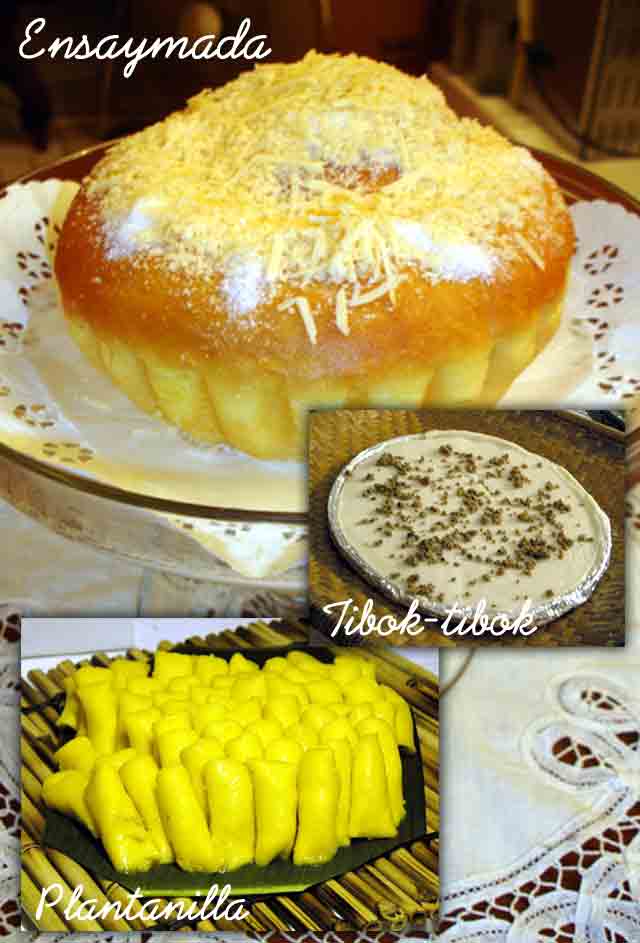
The ensaymadas in San Fernando are made-to-order and you have to call them at least 2 days in advance. But Imang Salud Dayrit's San Fernando ensaymadas are actually available in Manila. These melt-in-your-mouth wonders are six inches in diameter, made with the finest ingredients and topped with a generous serving of queso de bola. You can visit the Legaspi Sunday Market organized by San Lorenzo Village and open every Sunday from 7:30 a.m. to 2 p.m. behind the Corinthian Plaza building. Make sure you look for the Imang Salud booth. Also on sale are atcharang gule, atcharang ubud, balu-balo, tibok-tibok and pickled mangoes. Another signature dessert but made-to-order is plantanilla, sweet egg crepes with latik filing. Yummy! You can call (0920) 9478819 for orders.

But one thing the article was not able to mention (since it wasn't in my blog article) was Everybody's Cafe where Kapampangan food is available everyday in their turo-turo style display. Try out the pako salad, calderetang baka, morcon, chicharon bulaklak, tortang bangus, inihaw na hito or bulalo soup. For the brave, go further and savor the buro with hito (fermented fish paste with catfish), betute (deep-fried stuffed frog), camaru (fried cricket adobo), dumara (wild duck adobo) or pindang damulag (carabeef tapa). They have branches in San Fernando along MacArthur Highway in Barangay Del Pilar, and Angeles City in Nepo Mart.

Other must tries are the Kapampangan halo-halo places. In fact, there are three distinct halo-halo varieties in Pampanga. These are Guagua (Razon’s), Angeles (Corazon’s) and Arayat (Kabigting's and Jurado's) halo-halo. It must also be noted that Kapampangan halo-halo is distinct from the other halo-halo served in the country because it uses only three or four ingredients or sahog. However, the richness of these ingedients more than compensates for the number of types thrown in the glass. Arayat for example is distinct for its pastillas, crushed beans and saging combination; Guagua for its macapuno, saging, and leche flan; while Angeles is distinct for its mais, saging, pastillas and crushed beans combination.

Also check out Aling Lucing's at the Crossing (Henson Street, Angeles City) which is the birthplace of Pampanga sisig and the steakhouses in Marisol Subdivision, Angeles City. Luring's of Guagua (with branches all over Pampanga) serves some of the best barbeque and other grilled meat products. Ikabud (the contracted form of ika kabud which translates as only you) is another restaurant that serves grilled food and is located in Hensonville, Angeles City.

If you want to try out everything, go for Smorgasbord, the buffet Kapampangan lunch and dinner offered at Partyland (MacArthur Highway and SM City Pampanga) and Holidayland (Gapan-Olongapo Road) both in San Fernando.

Visiting Pampanga has now been made easier and carefree with a tour entiled Pampanga's Pride offered through the Island Caravan. Visit their website for more information or e-mail skoal@skyinet.net.

The tour includes a visit to...

  • Bacolor Church - this is the half-buried San Guillermo Church in Bacolor. Entering what was once the largest church in Pampanga, visitors enter the church through the choirloft windows, and are greeted inside by beautifully restored retablos dug up from several feet of lahar. The citizens of Bacolor take pride in their rich heritage which is why they painstakingly excavated the ornately carved wooden main and side altars which are now back to their pristine condition;
  • Betis Church - a must visit church in Pampanga, the centuries-old Betis Church in Guagua is nicknamed the "Sistine chapel of the Philippines" because of its wall ceiling murals. It is the second oldest church in Pampanga and one of the 26 churches declared by the National Museum as national cultural treasures;
  • Archdiocesan Museum and Archives - savor the grandeur and elegance of religious art in Pampanga with a visit to the repository of Pampanga's church treasures housed inside the University of the Assumption; and
  • Center for Kapampangan Studies - a museum, archives, library, research center and theater rolled into one, the Center for Kapampangan Studies was put up by Holy Angel University in 2002 to preserve, study and promote Kapampangan history and culture
Lunch is at Everybody's Cafe while afternoon snacks includes halo-halo at Corazon's. There are also optional visits to any of the following: Pampanga's Best Factory (for big groups), Lantern Factory, Minalin and Apalit Churches, or the pottery area in Sto. Tomas.

For those who could afford to splurge, go for the overnight tour package which includes dinner at Claude Tayag's Bale Dutung, lunch the next day at Abe's Farm of Larry Cruz, and overnight accomodations at King's Royal Hotel and Resort.

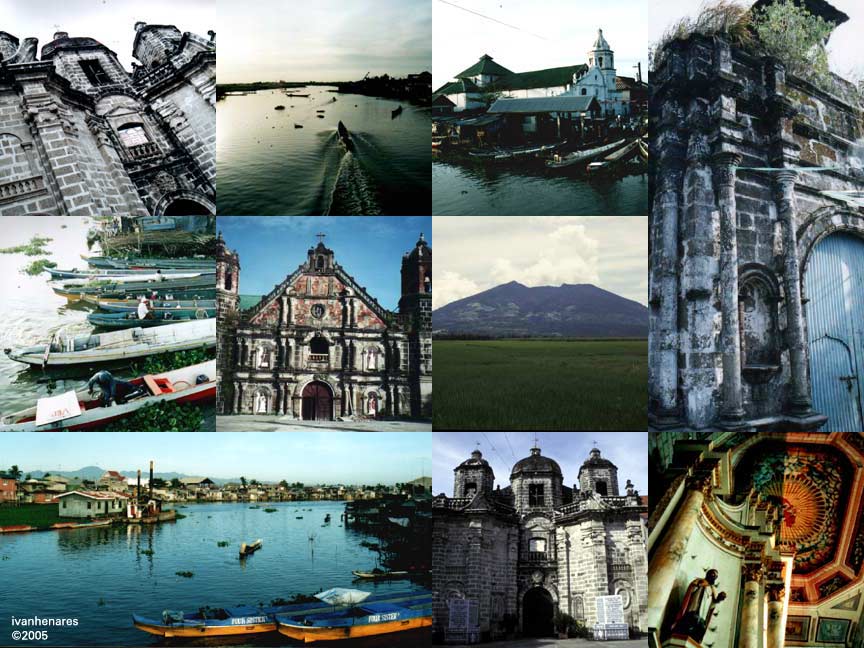
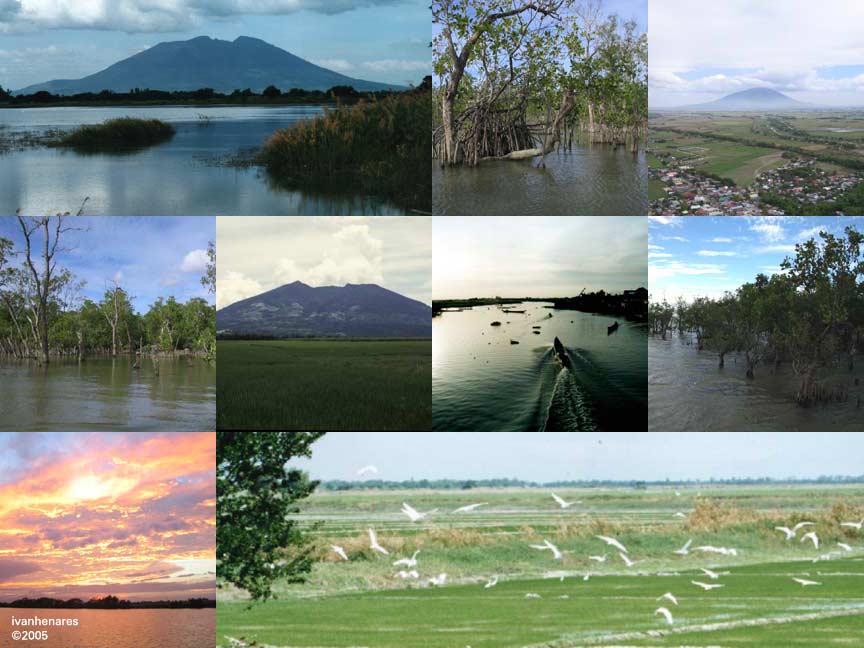
Above are some photos of the natural heritage of Pampanga which I took way back in college in 2001 and 2002.

Saturday, March 25, 2006

Cebu: Heritage trail south of Cebu City

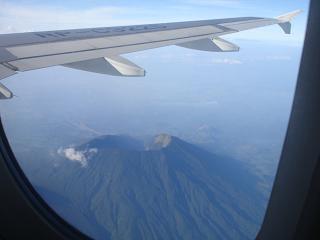
I'm finally back in the Queen City of the South after an afternoon spent in the southern half of Cebu Island. I left Manila at 7:30 a.m. via Philippine Airlines and arrived in Mactan about an hour and a half later. It's great looking down on a clear day since you see the very same attractions from a different view. When flying south, you can't miss Mount Makiling, Taal Lake and its volcano, the seven lakes of San Pablo and Mount Banahaw from the sky which you see in the photo.

My brod Ryan Caparas met up with me at the airport but since he had work today, I told him to drop me off at the South Bus Terminal so that I could spend the day following the Southern Heritage Trail. I decided to start at the southernmost town on the trail, Oslob, and work my way northwards back to Cebu City.

The trip was three hours so I took an air-conditioned bus so that it would be a comfortable ride. The fare was PHP108. I was asleep for most of the first part, obviously tired from driving the past few days, as well as from lack of sleep. But later on, I tried to keep myself awake or else I would miss one of the best coastline sceneries in the country. In fact, the entire national highway hugs the shoreline and you are offered spectacular views of white sand beaches and mangrove forests along the way.

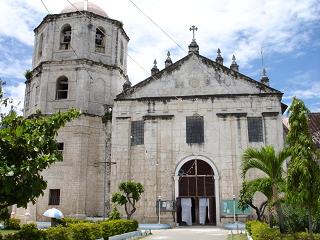
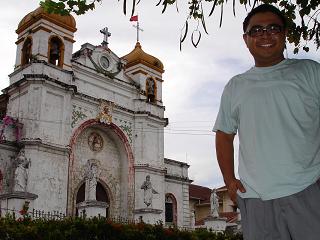
I arrived in Oslob at about 12 noon and went straight to the church. Wow! The Immaculate Conception Church was a magnificent coral and limestone structure with ruins of some Spanish period government building at the side. After some photos, it was time for lunch. And like a true backpacker, I went for one of the carinderias (canteens) near the bus stop. An ulam (viand) and a heaping cup of rice costed me only PHP25.

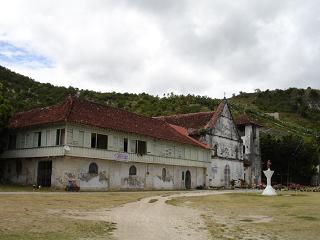
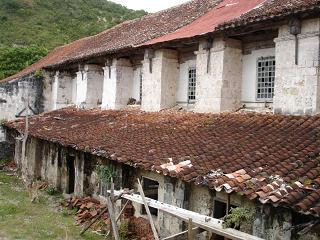
It was off to the next town for me, Boljoon, home of the Church of the Patrocinio de Maria, declared by the National Museum as a national cultural treasure and by the National Historical Institute as a national historical landmark. The fare from Oslob on an ordinary bus was P11. Between Oslob and Boljoon were several watchtowers which are featured in Fr. Rene Javellana's book Fortress of Empire.

The setting of the church was stunning, an open view of the white sand beach and blue waters in front, and hills towering at the back. The roof of the church and convent are still the original clay tiles from the Spanish period.

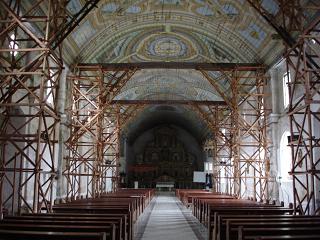
When I entered, just like in Masinloc, there was ongoing restoration work. Again, good news for heritage. The convento was also very much intact. Thumbs up to the Boljoon Heritage Foundation!

I strongly believe this church should be included in the Baroque Churches of the Philippines UNESCO listing if ever it is expanded. Or better yet, create a new listing incorporating the best of southern Cebu's coral and limestone churches!

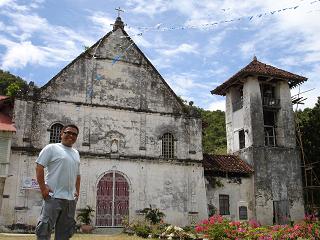
Just when I thought Cebu was doing everything right for church heritage, there was Argao. The fare to the place was P30. When I got there, I was impressed that the local government was blending the architecture of the new buildings with that of the old. The St. Michael the Archangel Church itself could have, on its own, been declared a World Heritage Site had it not been touched.

I was excited to enter since I've seen pictures of the interior in books. And did I get the shock of my life! The parish priest had converted the ornate polychrome rococo retablo into the country's biggest trophy case! Yes folks! He had the retablo painted gold and silver! The santos are all painted gold! What is wrong with our priests?! Don't they have anything better to do? People like him should be transferred to Siberia where they won't do any more damage to Philippine church heritage. But I guess that is a tall order because rumor has it that this monsignor is very close to the cardinal.

To let you know the sentiments of the heritage community, here is the column of Bambi Harper in the Philippine Daily Inquirer on the sacrilege committed. The entry is aptly entitled A Crying Shame. In another of her columns lauding Albay, Bambi writes, "Bishop Jose C. Sorra (of Albay) gave an impassioned and stirring address that the Cebu cardinal should have heard so that the parish priest of Argao, guilty of erasing 200 years of history, could be exiled to Burias or perhaps to the Marianas, which unfortunately doesn't belong to us anymore."

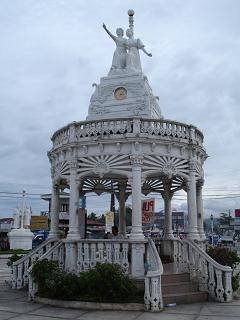
I was off to a very popular heritage town of the province of Cebu, Carcar! Fare from Argao to Carcar was PHP20. The first landmark you will see is that heritage gazeebo at the center of a rotunda in front of the market. That is where I got off to take some photos.

Carcar is also known for its chicharon (pork skin crackers) and lechon (roasted pig). So how could I resist even a small pack of chicharon for a snack! Yummy! Anyway, I'll talk more about Carcar in a future entry.

The Church of St. Catherine of Alexandria was just a short walk up a hill in the center of town. Indeed, the church and the structures around its plaza are splendid! While in Carcar, I visited the Noel Ancestral House owned by the family of Jerry N. Alfafara, a member of the Carcar Heritage Conservation Society. He gave me a tour around his house.

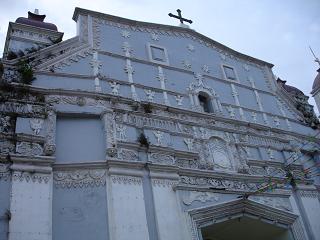
The last stop for the afternoon was Naga which had a very ornate facade. It seemed to have Moorish influences as seen from the elements of the design. From Carcar, the fare was PHP15. With that settled, it was back to Cebu City. Fare from Naga was PHP20.

If only I had my own vehicle, I would have wanted to stop to take photos of all the Gabaldon schoolhouses. In each town, I would believe there were at least three! But that is one of the limitations of backpacking. You have to travel within a tight budget.

Back in Cebu, I met up with Ryan near the bus station and we went to a well-known street food area of Cebu City called Larsian. Why it's called Larsian, I don't know since I tried asking the locals myself. The place is right beside the Osmena Circle (It's actually one of the side streets).

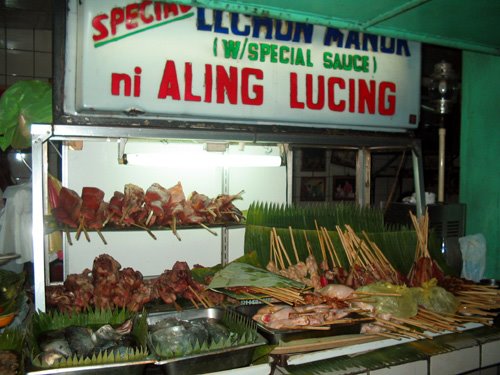
They serve various ihaw-ihaw (roasted) items such as chicken and pork barbeque, longganiza (local sausage), hotdogs, isaw manok (chicken intestines), etc. The rice was also unique since it was served in what seemed to be woven coconut leaf-containers just like suman (rice cake). The meal was not bad at all!
After Larsian, we looked for a place for me to stay for the night. One of the cheaper pension houses was fully-booked. I fear that since it is peak season, when I go to Bohol tomorrow, I might find it difficult to get lodging as well. Anyway, right now, I'll get some rest since I'm waking up early to visit the heritage area of Cebu City. Then I'll most probably leave for Bohol by lunch. That's it for now.

Related articles
Bantayan Island, Cebu is rich in heritage and great beaches!
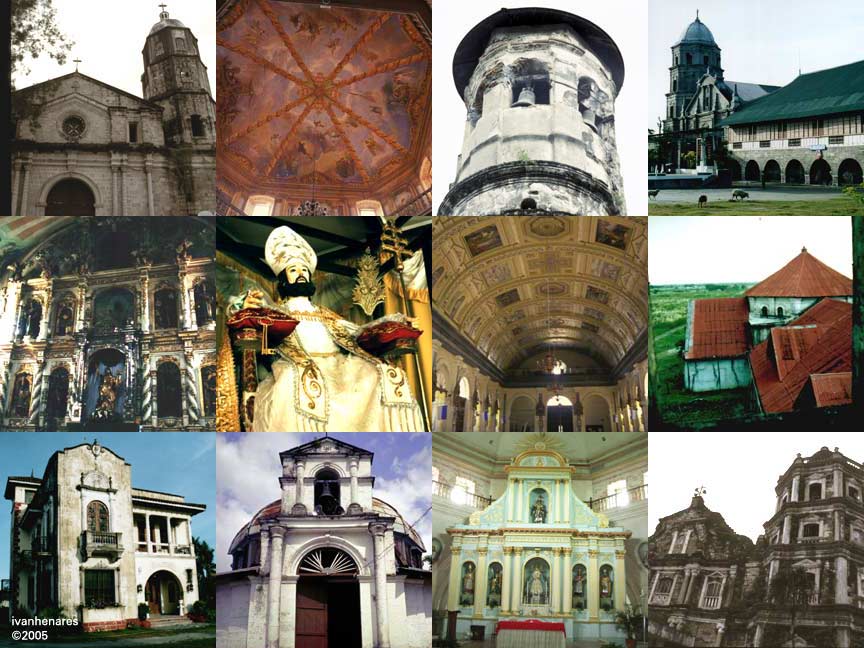
Visita iglesia in Northern Cebu
Lechon, chicharon and more from Carcar
Visita iglesia in Southern Cebu
Related Posts with Thumbnails