Friday, April 07, 2006

Cambodia: Around Phnom Penh

I was off to Suwannabhum. That is the nickname the Khmers call their country which literally means land of gold. The flight from KL to Phnom Penh was quite short. As we prepared for landing, below us was a vast expanse of rice fields up to the eye could see. Wow! I arrived in Phnom Penh at 4:10 p.m. It was a quick transit through the airport and I was out in about 10 minutes. Meeting me outside were SSEAYP batchmates Mongkol and Rathana.

We went straight for Mongkol's place where I was going to stay for the next few days for me to rest and freshen up. We were meeting more PYs for dinner at Lucky Bright Restaurant for my introduction to Cambodian cuisine. Hehe!

For dinner, we had octopus with young pepper seeds, fried fish with pineapple, and green mango salad with smoked fish. Really great! And I had the local beer, Angkor Beer, to go with it. In the photo are Thyda, Sophy, myself, Theary, Mongkol, Lucy, Rathana and his friend Vinh Anh.

After dinner, Mongkol and I went for some coffee at a local coffee shop. I ordered caramel cake only to realize it was leche flan. Hehe! My earlier order was durian, taro and jackfruit ice cream but it was out of stock. Sigh! Then it was late night on the net. Hehe!

I had planned to wake up at 7 a.m. the next day to accompany Mongkol to his workplace but I was in deep sleep when he checked on me so he just came back for me. Hehe! Anyway, for breakfast, we had kuay teow with soup and beef balls, cha kwai which is the Chinese version of churros, and dimsum. Then it was off to the Royal Palace and Silver Pagoda.
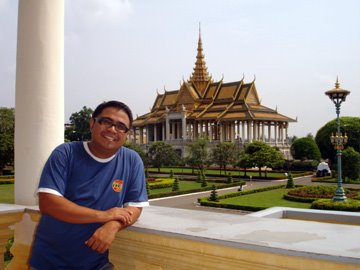
The ticket was US$3. I was pleased to find out that US dollars were accepted all over Cambodia and can be used together with the local currency, riels. Prices in establishments are quoted in both riels and dollars and the usual exchange rate is US$1 is to KHR4,000. So I didn't need to have my money changed. Good!

At the center of the grounds was the Prasat Tevea Vinichai or the throne hall which was quite grand inside. However photos aren't allowed inside! Sigh! Beside the throne hall was a Western building which was actually a gift of Napoleon Bonaparte to King Norodom. The adjacent complex is that of the Wat Preah Keo Morokat or the Silver Pagoda which got its name from the over 5,000 solid silver floor tiles that line the vihear or temple. Inside is an emerald Buddha as well as other important artifacts including an 80 kg gold Buddha statue encrusted with 1,086 diamonds, the largest being 25 carats!

Outside the temple where stupas honoring the kings and queens of Cambodia. This is where the ashes of the late rulers are laid to rest. After the Royal Palace, we went to get my bus ticket to Siem Reap.

The ticket to the gateway to the temples of Angkor costed US$9. I was to take the last bus which was going to leave at 12:30 p.m. I should be there in 5 hours or so just in time to watch the sunset at Phnom Bakheng. Hehe!

Then it was off to the highest point of Phnom Penh which is Wat Phnom. The place marks the legendary founding of the city in 1372 A.D. when a lady named Penh fished out a floating Koki tree from the Mekong River and found four Buddha statues inside. She built a hill and a small temple on what is not Wat Phnom. The area surrounding the hill came to be known as Phnom and its builder Penh which thus became Phnom Penh. At the bottom of the hill, we bought some chook or lotus seeds for me to munch on. Hehe!

Then is was time for lunch. We had pizza at the Pizza Company in Sorya Shopping Center which is among the few modern malls in the city. From there, I was able to take photos of Psah Thmei or the Central Market. Although it literally meant new market. One of the city's unique landmarks, this gargantuan art deco building towers over the vicinity.

After lunch, we went to Mongkol's workplace at the Institute of Foreign Languages of the Royal University of Phnom Penh since he had a class to teach. Since it was very hot outside, I decided to stay indoors and check mail for the meantime.

After class, we took a drive along Norodom Boulevard which had elegant colonial mansions. Some of these mansions have been freshly painted and restored and are serving as offices of institutions such as banks and embassies. We stopped by Sisowath High School which was a complex of large colonial school buildings (above right). Wow!
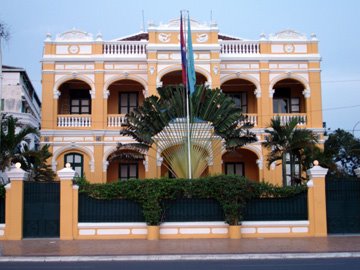
Here are photos of some of the houses. The one on the left is being used as the UNESCO office in Cambodia. Really nice!

For dinner, we had some lot cha or fried noodles (being prepared below), ku chai which were fried rice pancakes stuffed with vegetables, and sugar cane juice with lemon. Accompanying us was Mongkol's former classmate Sok.
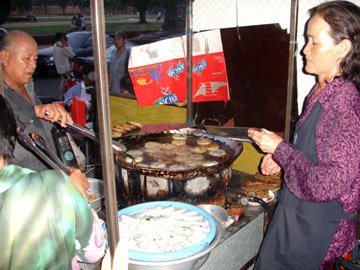
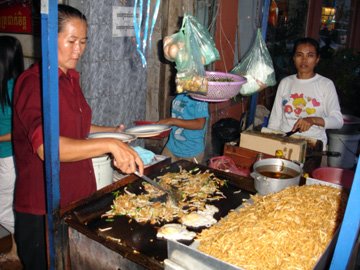
After that we then went for a stroll along Sisowath Quay which becomes so alive in the evening. On one side, you hade dozens of hotels, cafes and bars filled up with foreign tourists. On the other side of the road, you had the locals enjoying street food, playing New Year's games since the Khmer New Year was fast approaching, or just hanging around.
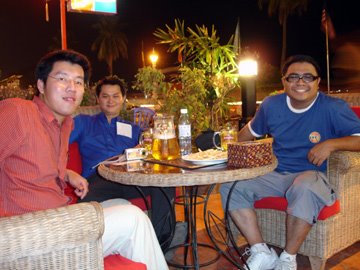
We had a pitcher of Angkor beer at one of the cafes while we enjoyed watching the hustle and bustle of Phnom Penh's nightlife. After the beer, Mongkol and I went for a traditional Khmer massage. Hehe! What a way to cap a great day in Phnom Penh. It's off to bed now for me. I still have a lot to do tomorrow before I leave for Siem Reap.

Thursday, April 06, 2006

Malaysia: Lessons and notes from Kuala Lumpur

Since the room I was staying in had no windows, I didn't know it was already morning. I think I was up by 9 a.m. After freshening up, I was off to the KL Sentral Station where buses to the LCC-T left every 15 minutes. It was a short walk from the lodge to the nearest MRT station. But I got to marvel at all the freshly painted pre-war buildings and shophouses. I also got to see KL Tower from a distance. I've been up there twice before.

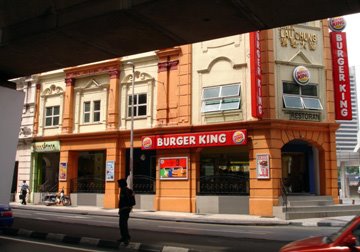
Talking about adaptive reuse, check out the photo of Burger King in a 1909 building! They do not touch the building at all! I saw a McDonald's in an old building in Singapore as well. Really nice! Attention Vigan, your biggest crime was demolishing the remains of a centuries-old convento and replacing it with a McDonald's building which most heritage people have been criticizing. Sorry to say, it does not blend with the rich heritage fabric of your historic city. You don't put a belltower replica right beside the real belltower.

This goes as well to the parish priest of Lingayen. Instead of demolishing that perfectly preserved convento of yours, you could have done some adaptive reuse instead. And for Mayor Lito Atienza, adaptive reuse was the best thing to do with the Jai Alai Building. The City Government demolished it and now they do not even have funds to build the proposed Hall of Justice when they could have used the Jai Alai Building for the very same purpose. Oh well!

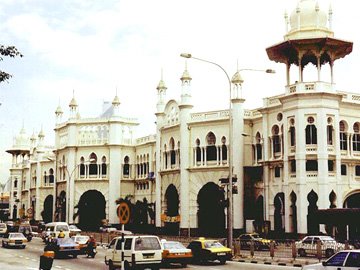
I got to the station and took a short subway ride to KL Sentral which was a kilometer away from the old KL Train Station. I saw the old station on the way to KL Sentral. Magnificent old building! I wonder what got into Mayor Atienza when he had most of the Paco Train Station demolished into oblivion.

Finally got to KL Sentral and went straight for the bus. An middle-aged Chinese Malaysian businessman sat beside me and he started a conversation. When he found out I was from the Philippines, he started reminiscing. He said he had wanted to visit the Philippines for the longest time. When he was in high school, the Philippines was a leader in Asia. Everyone wanted to go there. It was so well-developed. It's sad that because of political instability, the country is now at the bottom.

Tourism was so strong then. He said that today, no one hears about the Philippines anymore... attention DOT, I think this is a comment from a Malaysian who knows much about the Philippines but hasn't seen it yet. Word of mouth is the most powerful advertising tool and in order to utilize that, we have to attract the ordinary backpacker to visit the country among others.

He was well-read since he knew all our presidents from Marcos to GMA. He said that the people power thing is not giving a good image of the country. It makes investors feel that the Philippines is unstable and that anything could happen anytime. I guess one EDSA was enough for a proud moment. But the second, the third or even a fourth is just too much.

He said that people like him were very scared to invest in the Philippines. And it also has a lot to do with how the media projects the country. Attention Philippine media, he was right in saying that you have the prerogative on how to present the country. There are so many good things you can show the world and yet you chose all the negative things since that is what sells. Can we please do something constructive and productive.

In the eyes of a foreigner, the coup was bad and the fact that it was immediately crushed sent good signs abroad. Listen up GMA and the opposition, quit the bickering! If you really love our country, sit down, settle your differences and start doing your jobs right. No more family members and their cronies taking advantage of the people's money, no more unlawful arrests or human rights violations, no more street rallies and other disruptive exercisies, no more grandstanding at legislative inquiries. Stop it! While both sides are in a power struggle, Juan de la Cruz is getting poorer, his standard of living going down ever further. Sigh!

Then he said it was good that I travelling while I was young. While one is not yet committed to his family, he should try to visit the world since the knowledge one gets from travel is much more than what we get from any formal education. Once you have a family, you will no longer have any time for educational travel.

It was nice listening to his thoughts. Anyway, I arrived at the LCC-T at about 1 p.m. and had lunch at a fast food which served local food. It was another nasi lemak. Ever since that trip to Kota Kinabalu last year, it's one of the dishes I crave for especially the sambal sauce. When I get back to KL on the 17th, it's Indian food I will be looking for.

On another note, Kota Kinabalu is one of only 12 cities in Malaysia. In fact before 1994, there were only five. At least they know what a city means. Here in the Philippines, some rural municipality for some reason becomes a city only because it satisfied land area and population. Hehe! At the same time, they are merging localities globally. The opposite is happening in the Philippines since we have so many LGUs. I think we should cut the number in half!

I was quite early for check-in for the Phnom Penh flight but it's better to be early than to be left behind. On the bus, there was this American girl who was close to tears since she was already late for her flight. Low cost carriers are very strict with time and counters close exactly one hour before departure. So don't even think of being late. Hehe! Left Malaysia at about 3:30 p.m.

Wednesday, April 05, 2006

Singapore: Sunny island set in the sea

I had been travelling for over four hours by now but it was still a long way to Singapore. It was a one hour and a half bus ride from the new KLIA LCC-T (Low Cost Carrier Terminal) to Kuala Lumpur. I reached KL Sentral Station at about 10:15 p.m. and took another bus from there to the Pudu Raya Bus Station. From there, I took a bus to Singapore which was about six hours. For dinner, I had nasi lemak on the plane and mee rebus at the stopover midway between KL and Singapore. This is the second time I've done this border crossing to Singapore so it wasn't much of a hassle. I got there at 4 a.m. after 12 hours of non-stop travel!

As soon as I got down, I gave my SSEAYP friend Leon Ong a ring. Hehe! He had thought I was arriving the next day but he went straight
to fetch me at the Golden Mile Food Centre where the bus dropped us off. And of course, since we were in Singapore, we went straight for food. Hehe!

Breakfast was soya... tau huay and soya milk. I hope I got the spelling right but that is taho to us Filipinos, although the Singapore version does not have syrup or sago, just boiled peanuts. After breakfast, we went straight to Leon's flat and it was off to bed for me.

Obviously, I slept the whole morning. I had been to Singapore several times before so I've seen most of the sights. Things you shouldn't miss include walking tours around the colonial district or even better, a boat ride on the Singapore River which comes complete with a narrated recording of the history of the former British colony and the buildings you pass by; and trips to Sentosa Island, Clarke Quay and Boat Quay and of course, Chinatown and Little India. In the evenings, there is the Night Safari at Singapore Zoo.

Anyway, I had breakfast take two when I woke up prepared by Leon's mom since he was at work. After lunch, we bought my bus ticket back to KL. Driving around Singapore is indeed refreshing. It's an urban jungle. Not the concrete one but literally, the island is very green with trees! You have modern buildings right beside virgin forests. I hope Mayor Atienza learns to follow the Singapore example. He should stop cutting trees at the Arroceros Forest Park and should even start planting trees all over Manila! I also wonder where Bayani Fernando got this idea that trees cause slow traffic. I still remember that Katipunan incident where he wanted to get rid of all those big trees. I heard Singapore even imports big trees for their downtown areas.

Check out the photo of the East Coast Parkway (ECP). In the middle island, you have trees and bougainvillea shrubs in full bloom. At the sides, you also have trees and flowering shrubs. All pedestrian overpasses and flyovers have hanging bougainvillea shrubs on either side and ivy crawling up the concrete posts. It saves up on paint since the green ivy does the trick of covering the concrete. I laud Bayani for the cadena de amor but I think he should first make ivy crawl up the MRT posts then let the cadena vines to grow over them so that even if the cadena vines dry out which happens quite often, it's still green underneath. Maybe the NLEX and SLEX could also learn a lesson or two from the ECP.

Another thing is the urban planning is nothing but excellent! You feel there is so much space despite the fact that land is scarce in Singapore. In the Philippines, it's the opposite. We have so much land but everything feels so cramped up. Sigh! Can our mayors please create forest parks in their jurisdictions. We need trees to breathe! At the same time, Singapore was able to eradicate its slums thanks to the Housing and Development Board (HDB). Maybe Gawad Kalinga and the HUDCC could learn a thing or two from the HDB.

And all over Singapore, you had centuries old buildings and shop houses freshly painted. Hello again Mayor Atienza, please see how Singapore does it. They don't go around demolishing old buildings like the Jai Alai, YMCA and San Lazaro or plan trashing the Army Navy Club and Elks Buildings. In fact doing that in both Singapore and Malaysia is a crime. The trend in most old cities all over the globe today is urban renewal and renaissance or "re" which stands for restoring, regenerating, rebuilding, reviving, resurrecting these old urban centers, not demolishing old buildings like Mayor Atienza does.

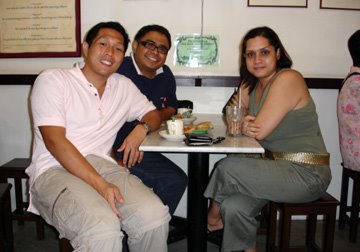
Later in the afternoon, we met up with Dawn Pereira, another SSEAYP batchmate and went for some kaya roti at the Ya Kun Kaya Toast along China Street. Yummy! Hehe! I had a Horlicks drink to go with it. I wonder why those Horlicks candies are no longer available in the Philippines. I used to love them as a kid.

After that snack, it was off for early dinner. I really consider Singapore and Malaysia as food havens since there is so much to eat thanks to the mixture of many cultures which includes Chinese, Malay and Indian. The photo of the hawker centre above is in Ang Mo Kio. It is however a regular Singapore scene which you can find almost everywhere. I definitely had to have some char kuey teow which is a fried noodle dish with scallops. But aside from that, we also ordered oh-luak which was oyster omellette with wansuy and green onions, and chendol for dessert.

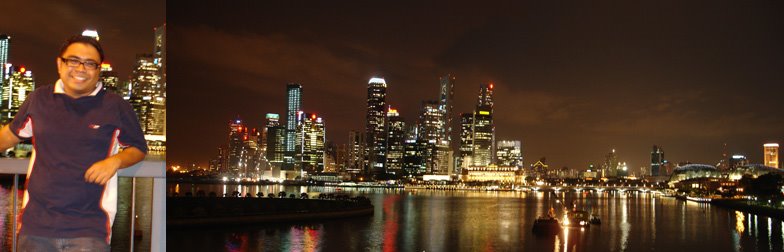
Then is was off to somewhere I haven't been to before. The best place to take a photo of the Singapore skyline is a bridge which is rarely visited by tourists. You park at Suntec City and it's a short walk from there. Wow! Great view!

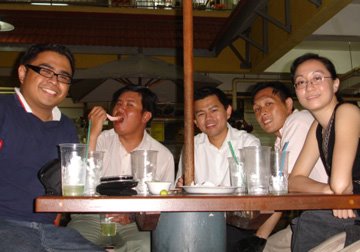
And we weren't done eating yet since we met up with Singapore PYs Vincent and Francis. I had satay which is the Malay version of our barbecue, ice-cold sugar cane juice, chai tow kway the Chinese version of carrot cake and roti john. We were done eating at 10:30 p.m. since I had to catch my bus back to KL which was the last bus for the night. The first one in the morning was at 7:30 a.m. and I would be late for my flight if I took that one. So it was less than 24 hours in Singapore but it was most worth it.

I arrived in KL at 4 a.m. Tired from all that travelling, I got myself a room at a backpackers place for less than US$10 which was good enough for a few hours of sleep and a shower before I left for the airport. Zzzzzzzz!

Tuesday, April 04, 2006

Cavite: Corregidor Island fortress from the sky

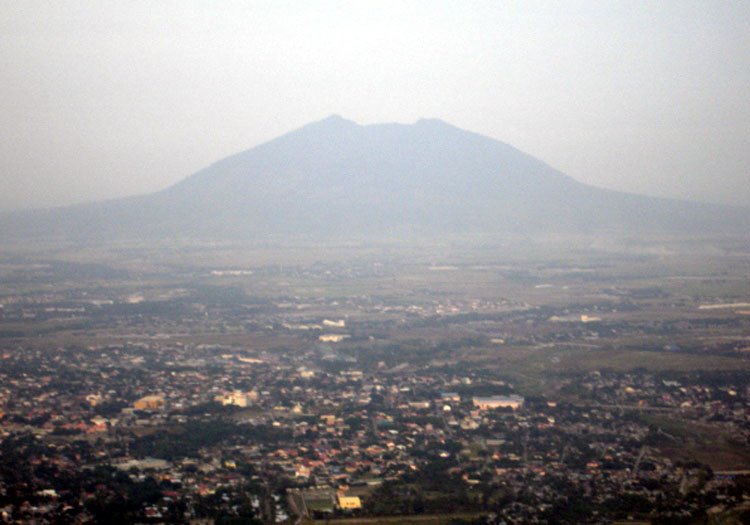
As I mentioned in my earlier entry, it's fun seeing the things down below from a bird's eye view. From the DMIA, you see a different landscape. The most prominent of these attractions is Mount Arayat which towers over the central plains of Luzon. I was able to recognize the City of San Fernando as well. From there, you also see the towns at the Pampanga River delta and Manila Bay.

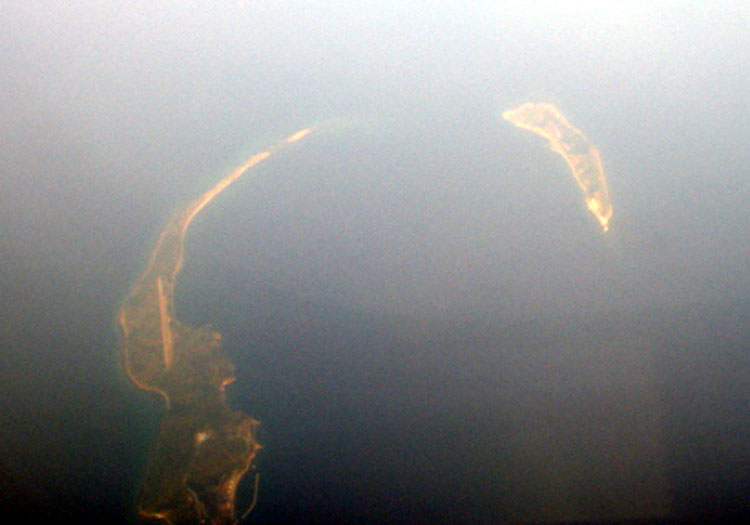
Then Corregidor came into view, like a little tadpole swimming at the mouth of the historic bay. Since we've touched on the island, might as well talk about it. A few years back, I got to take an alternative route to Corregidor, faster at that. We're all familiar with those fastcrafts which leave from the CCP Complex. They charge quite a hefty amount if I remember it right. But if you are vacationing in the Subic or Morong area, you might want to consider visiting the island since it is only 30 minutes by pump boat from a certain barangay in Mariveles.

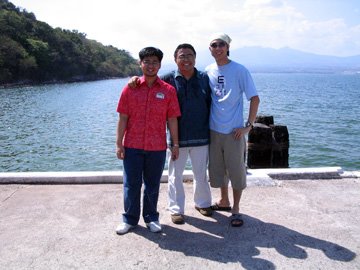
At that time, I think the boat ride costed us PHP1500 total. Imagine the savings if there were more of us. I and a brod, Felix Lopez dared another brod Ryan Tan that we could meet up with him and his family in Corregidor. He thought we were joking since we were in Bataan, hours away from the port in Manila. Hehe! So to make the long story short, we were able to reach the island just as they were about to depart. The good thing about pump boats is that you had your own departure time.

So after Ryan left, we had our own tour of the island. I contacted Col. Art Matibag, head of the Corregidor Foundation, who was kind enough to lend us a vehicle around the island. I had met Col. Matibag when we were actively pushing for the preservation of the San Fernando Train Station which is a very important Second World War site.

Corregidor is actually part of
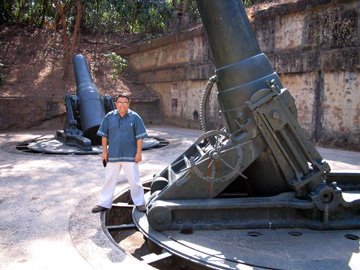
Cavite City although it is closer to Bataan. The other island you see at the tip is Caballo Island. Known as "the rock," it was host to Fort Mills during the American colonial period which is when most of the artilery was placed there. Today it is one of the most important Second World War shrines in the country having been the site of one of the bloodiest battles of the war, the Battle of Corregidor.

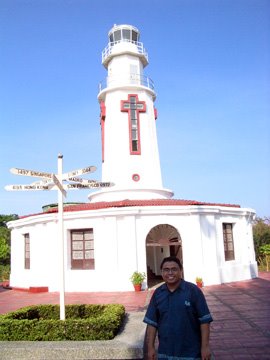
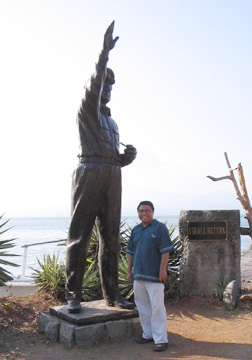
Some of the more popular sites on the island are the batteries, the Corregidor War Memorial, the Corregidor Lighhouse which is one of the few remaining Spanish structures left standing, and Lorca Dock where MacArthur uttered his famous lines, "I shall return!"

Anyway, we flew down the coast of Cavite and Zambales, then over the island of Mindoro. Sigh! And we all wonder why we have all these landslides. The forests were all gone. Just a few patches of green. I hope the DENR focuses on protection of what's left as well as reforestation.

From there, we made a right turn toward continental Asia. Didn't see much since it was dark. We arrived in Kuala Lumpur at about 8:30 p.m. after a four hour flight.

Monday, April 03, 2006

Learning from our Southeast Asian neighbors

I will be flying in a while to KL from the Diosdado Macapagal International Airport in Clark. This is my transition post of sorts. Hehe! From backpacking in the country, it's time to visit our Southeast Asian neighbors and see what they are doing right. The plan is, from KL, I will take a bus to Singapore and back, after which I will take an AirAsia flight to Phnom Penh in Cambodia. From there, I travel by bus to Siem Reap to visit the temples of Angkor.

From Siem Reap, it's another bus to Bangkok in Thailand from where I will take another bus to Vientiane in Laos. A few hours north is the UNESCO World Heritage town of Luang Prabang. Then its back to Bangkok where I take an AirAsia flight back to KL and back to Clark. Let's see how things go.

I purchased the Lonely Planet book Southeast Asia on a Shoestring, and from the data I read, we can see why the Philippines is doing badly with regard to visitor arrivals. To Secretary Durano and our policy makers in the DOT, the advertising is good but unless we sit down with the tourism industry players and work out ways to lower costs of traveling here in the country, the funds spent for advertising would be a waste. At the same time, target backpackers. They are the reason behind the bustling tourism industry in Southeast Asia.

Please see the data below of the average daily budget spent traveling in Southeast Asian countries. I'm not surprised that Brunei Darussalam is at the top, and so is Singapore since the cost of living there is quite high. I'm also not surprised that East Timor is on top since they do not have the necessary tourism infrastructure to bring costs down since they are just a new nation. But the Philippines having the same cost as Singapore?! Hmmm, now Mr. Secretary, that is something we have to consider.

Budget per day (US$)
Brunei Darussalam: 30 to 50
East Timor: 25 to 25
Philippines: 25
Singapore: 25
Vietnam: 23
Indonesia: 15 to 30
Cambodia: 15
Myanmar: 12 to 20
Malaysia: 12
Thailand: 11 to 15
Laos: 10

Friday, March 31, 2006

Negros Occidental: Silay, the Paris of Negros

Silay City, this genteel and elegant town north of Bacolod was once an important commercial hub thanks to the introduction of the horno economico (sugar mill) by Yves Gaston, a Frenchman turned Silaynon. What Bacolor was to Pampanga (Athens of Pampanga), Silay was to Negros (Paris of Negros) since it was the cultural and intellectual hub of the province.

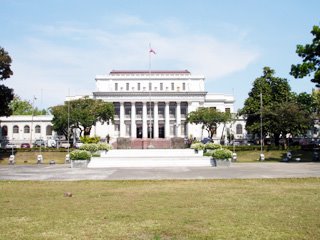
I began my day by taking a walk to the Provincial Capitol of Negros Occidental which was just a few minutes from our house. This magnificent structure was designed by none other than renowned architect Juan Arellano and was declared a national historical landmark in 2004. Indeed, it is one of the most monumental provincial capitols ever constructed in our country. Sigh! Reminds me again of the current state of Philippine architecture. Our government engineers don't know the meaning of aesthetics and build structures that simply have four walls and a ceiling! The less materials you use, the more goes into the pockets... Oh well!

From the capitol, I took a jeep that would drop me off further down the road where jeeps and buses to Talisay, Silay and other northern towns and cities are located. The trip was about thirty minutes and costed me only PHP10. Now that gas is so expensive, prices like these make you want to commute even more. The only thing I didn't like about it was the heat and the drivers stopping too long to attract passengers. In fact, it became so annoying when they'd even back-up to try to lure passengers!

As soon as you exited the city limits of Bacolod, you saw vast fields of sugar cane on either side of the road in Talisay City and then Silay. Sugar really made Negros a very prosperous island which explains why there are so many cities in both provinces, one highly-urbanized city and 12 component cities in Negros Occidental and 5 component cities in Negros Oriental.

I knew we were in Silay when the surroundings changed. If not for the jeepneys and other vehicles, you would think you are in another country.


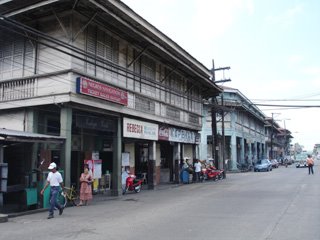
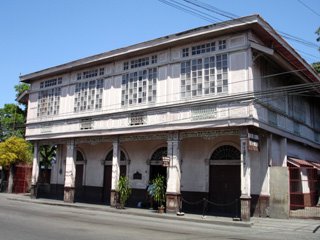
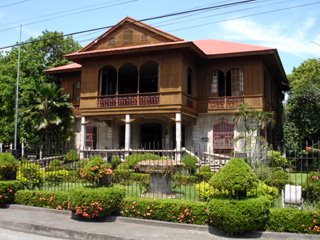
I took a walk around the town and checked out the different houses. At the center of town was the San Diego Pro-Cathedral and its clock tower. Along the main street were old homes and shophouses. Wow! They don't make buildings and houses like this anymore. The designs were so intricate and grand!

Actually, the City of Silay has the most number of NHI-declared heritage houses, twenty-four if I'm not mistaken. A distant second to Silay is San Fernando, Pampanga with four. The numbers are not conclusive though. It simply shows which cities are most interested in heritage since San Fernando, I would have to admit, will not stand a chance if compared to towns like Sariaya in Quezon, San Juan in Batangas and San Miguel de Mayumu in Bulacan. At the same time, the numbers show how slow it takes the NHI to declare structures! With the speed these structures are demolished, the NHI must match that speed if it is to protect what remains of our national heritage after most of it was flattened during the liberation.

A visit to Silay would not be complete without passing by Balay Negrense, the Gaston Ancestral House which has been converted into a museum. There is another house open to the public, the Jalandoni Ancestral House, but I didn't have much time since I had to go back to Bacolod to prepare for my late afternoon flight.

Back in Bacolod, I finished some concerns with the house and I was off. On the way to the airport, I passed by the Bacolod Memorial Park to visit the graves of my grandparents for the very first time. Sigh!

The PAL flight was one-hour delayed. Just great, I shouldn't have rushed. Hehe! And now, I'm back in Manila. I've done a lot of travelling in the Visayas, it's time for a break. I got free AirAsia tickets to Cambodia during their anniversary promo last December (of course we still pay for taxes and insurance so it amounted to about PHP4500). So for next two weeks I'll be blogging about my backpack trip to Cambodia and Laos. But Mindanao here I come coz I was able to purchse the PHP1 tickets of Cebu Pacific. I'm off to Zamboanga and Davao later this year!

Wednesday, March 29, 2006

Iloilo: Around Iloilo City

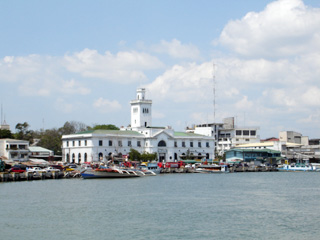
Welcoming us in Iloilo were a few colonial warehouses and the pre-war customs building. I decided to walk around the area to check out the buildings. Wow! Iloilo still had a lot of remnants of its past scattered all over the place. It would be nice to work on an urban renewal plan for Iloilo highlighting all this built heritage. I hope the HCS gets to work on it with Mayor Trenas ASAP since I feel we could replicate the Macau urban renewal success story in Iloilo!

A few meters away from the port was the San Jose Church in downtown Iloilo City. The city is actually composed of several districts which include Jaro, Molo (which was the Chinatown or Parian), Villa de Arevalo (a former capital of Iloilo province which today is called as Villa for short), La Paz (most known for its batchoy), and Mandurriao.

After brunch, I took a jeep to Villa and got off near the UP Visayas campus where jeeps to Miag-ao were waiting. My next destination was a UNESCO World Heritage Site, the Church of Sto. Tomas de Villanueva.

The trip took me about one hour passing through the towns of Oton (the old church of Oton was the pinnacle of religious architecture in the Philippines but was toppled by a strong earthquake in 1948), Tigbauan and Guimbal. Finally, I arrived in Miag-ao! The facade of the church was a work of art and every inch a testament to the craftsmanship of our Filipino ancestors.

So it was back to Iloilo City to try to visit Molo, Jaro and La Paz. The church of the town after Miag-ao, San Joaquin, was another national cultural treasure. But I didn't have the luxury of time today.

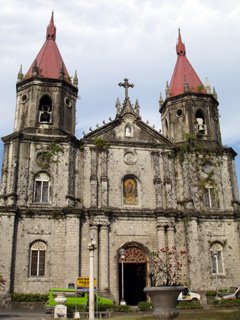
At least Molo was along the way to downtown. So I got off at Molo to check out some churches and houses. I would say that Molo Church is a symbol of feminism because it is a shrine to female saints. The Church of Sta. Ana has on nine statues of female saints on either side of the church, one on every column. At the center
retablo is Sta. Ana, mother of Mary. The houses left standing around the area were stunning as well.

With Molo done, it was off to Jaro. But traffic was moving really slow. And by 4 p.m., I was still in the public market so I decided not to push through since I could be left behind by the last ferry which left at 5:30 p.m. So I checked mail to kill time.

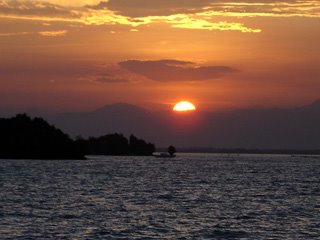
Watching the sun set behind the customs building was just enchanting. On the way back, I took photos of Guimaras Island. Seeing the island, green and untouched, made me realize that the country still had hope if we took care of what was left of it.

I got back in Bacolod at about 6:30 p.m. Near the cathedral was an area called manukan country, which was a cluster of restaurants ans stalls which served Bacolod's famous chicken inasal. And when in Bacolod, you must try the chicken!

I leave for Manila tomorrow. But I have only last stop before going home, the Paris of Negros.

Check out this Inquirer article which came out today for my two seconds of fame! Hehe!

Negros Occidental: Mapa-uli na ko sa Bacolod

Ang indi makahibalo magbalikid sa iya nga ginhalinan, indi makalab-ot sa iya padulungan. Some refer to it as the national proverb and yet few Filipinos ever put it to heart. That's the Hiligaynon translation. The moment I got off the tricycle in front of our house in Bacolod, I knew I was home.

It was refreshing seeing a familiar place although I've been there only thrice in my life and not in the past ten years. As I opened the gate, I felt a surge of energy. Walking around brought back memories more so as I looked at a photo of myself as a kid on the walls of one of the rooms. My grandparents died a few months apart in September 2002 and February 2003. I never got to attend their wakes since for some reason, I was out of the country when it happened. It's a coincidence that they died a few months apart since they were born just two months apart as well.

Tired from the non-stop travel, I went straight to bed.

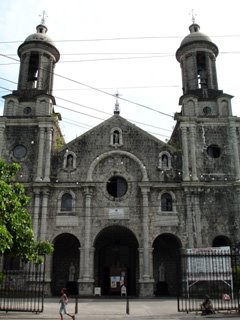
I woke up the next day to catch the ferry to Iloilo City. I had wanted to see Iloilo for the longest time and now that I was in Bacolod, this was my chance. But before that, I walked to the Cathedral of Bacolod which was on the same street as our house, to take photos.

Bacolod is called the City of Smiles. Just like the City of San Fernando in Pampanga, Bacolod City is the capital of a rich sugar-producing province, Negros Occidental. It's also a coincidence that both my mom and my dad are from sugar-producing provinces.

According to oral tradition, the Henares clan were weavers from Iloilo. During the middle of the 19th Century, there was an exodus of migrants from Iloilo to the sparsely-populated island of Negros due to a boom in sugar production. Having been orphaned, the siblings led by Mateo, my great-great grandfather, and his brother Esteban, joined the migration to Negros and upon arriving, armed only with the knowledge of the Spanish language, secured a loan that would serve as capital for what would become a plantation in Talisay.

To make the long story short, the venture boomed. Mateo managed the plantation in Talisay while Esteban took care of business in Bacolod. The brothers were able to build their homes in an area along what is now Rizal Street. This area during the early post-war years was fondly referred to as Henares block since everyone in the block was a Henares. As a result of this hardwork, they were able to send their children to the best schools in Manila, among whom were my great-grandfather Pedro G. Henares (UP College of Medicine, 1915; Bacolod's first health officer, 1917 to 1919; and municipal councilor, 1925 to 1928), and his younger brother Hilarion G. Henares, Sr. (UP College of Engineering, 1917; and a government pensionado), the father of journalist and former cabinet secretary Larry Henares. Esteban Henares even became municipal president (mayor) of Bacolod from 1913 to 1916. Well, that's a little bit of family history and I'll stop here lest I bore you. Hehe!

From the cathedral, I took a pedicab to the pier since it was in the reclamation area, quite far for a walk and since no jeeps passed that area. There were a lot of fast ferries available and I picked the one that would bring me there the fastest. Hehe! The student fare on Ocean Jet is PHP221 one-way. Hmmm, I didn't expect it to cost that much for such a short trip. Well, you get what you pay for. The seats were in good condition and they get you there in exactly an hour.

Tuesday, March 28, 2006

Negros Oriental: Strolling down Rizal Boulevard in Dumaguete

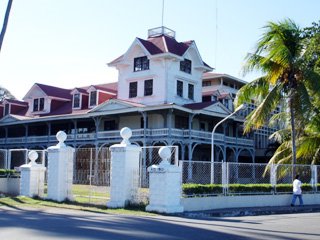
I finally stepped foot in the City of Gentle People. It was said that Dr. Jose P. Rizal himself created this nickname for Dumaguete City during his brief stopover in the town on August 1, 1896 en route to Dapitan. I arrived in Dumaguete at 4 p.m. after a quick trip via fast craft from Siquijor. Right by the port were the famous buildings of Silliman University. After taking a few photos, my SSEAYP batchmate Tere Sicat arrived at the port and took me around town. We first went to the neighbring town of Bacong where another national cultural treasure could be found, the San Agustin Church.

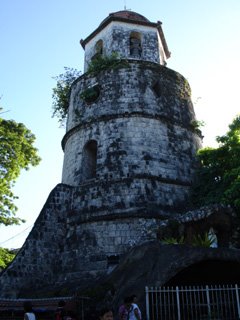
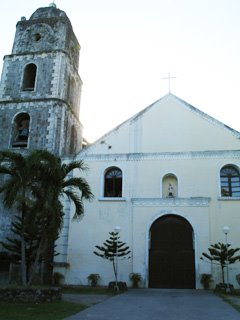
It was about thirty minutes south of Dumaguete. On the way to Bacong, we passed by the Dumaguete belltower and several Gabldon schoolbuildings to take photos. When we got there, the first thing I noticed was the charming presidencia in front of a wide lawn, typical of many Negros towns and cities.

It was quite a while before we got in the church since we had to look for the key. But when we entered, I thought it was not that much impressive for a national cultural treasure. It had an old pipe organ and well-preserved retablos but that was it. I wonder how this church got chosen for the list of 26 but nevertheless, that was fine with me. But just to clarify, there are more than 26 national cultural treasures. Others got declared during the time of Marcos.

After Bacong, we went back to Dumaguete to stroll down the "boulevard" along the sea. You've never been to Dumaguete if you haven't strolled down the promenade beside Rizal Boulevard. It was a great view since to your left, you could see the island of Cebu, while Siquijor was to your right. It just shows how close the islands of the Visayas are to each other. It's funny though how sand along the Negros coastline was mostly gray when it's neighbors had a lot of white sand.

I really liked the lamp posts. It was good that they were able to preserve them. Along the road, you could see nice pre-war homes and even a hotel that was restored to its original grandeur.

Another must do in Dumagute is a visit to the tempurahan at the end of the boulevard. Again, it's another you-haven't-been-to- Dumaguete kind of thing which one should include in a trip.

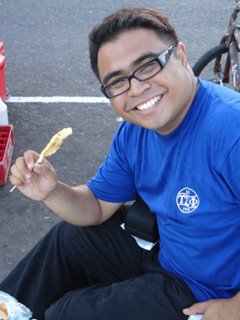
It may be called tempura because it is shaped like the Japanese fried shrimp dish. But it tasted more like kikiam to me. You had neatly arranged carts, seats and tables lined up in clean rows and columns. Each was sold for PHP3 a piece. They also had squidballs as well as balut and penoy for sale. I really look for these places everytime I travel thanks to my friends in Singapore and Malaysia who went out of their way to let me have a taste of the best hawker food when I was there.

They told me that when they came to the Philippines, they also wanted to eat hawker food which didn't get a good response from me obviously since I didn't want to bring any of my guests to the hospital. Haha! At the moment, the only safe place for hawker food I know in Manila is UP Diliman. For some reason, I feel it's safer eating hawker food in the provinces. After that tasty snack, it was off to Teresa's house for dinner.

They prepared a lot of food. Really great! We didn't have much time to chat since I was after the last bus to Bacolod which left at 7:30 p.m. It was midnight again when I arrived in my dad's hometown.

Siquijor: Siquijor, the mystic island

I took the M.V. Don Martin from Tagbilaran to Larena in Siquijor. People told me that the ship left the port at 10 p.m. But by 8:30 p.m, my traveller's instincts were telling me to go. And I got there in the nick of time since the ship was scheduled to leave at 8:45 p.m.! Everything has been so photo finish for me when it came to ship departures. Hehe! Lesson number one, always ask schedules from people at the pier. They know best! Hehe!

The trip took a little over three hours and costed PHP246.40. On the way, friends were warning me about the island and teaching me ways to counteract the spells of the magbabarang or mangkukulam (black witches), that I should find the nearest lodge available and close all the windows, etc. Thanks! That wasn't any help since I was arriving at 12 midnight! Hehe!

Mysticism in Siquijor becomes most active on Black Saturday. In the belief that with the death of Jesus Christ, creatures not of this realm roam the earth and share their healing powers, albularyos or mananambal (witch doctors) converge in the barangay of San Antonio in Siquijor to prepare healing potions. Using ancient incantations, they throw into a big cauldron a mixture of coconut oil, herbs, tree bark, roots, insects, dirt and other secret ingredients to create a potent brew that is said to cure various ailments.

Anyway, I arrived in Larena in one piece. Hehe! At the port, I immediately asked for the schedules to Dumaguete and the nearest lodge. It turns out, the nearest lodge was a few meters from the port. Thank God! The trips to Dumagute left from the neighboring town of Siquijor which is the provincial capital. I had wanted to leave by lunch but they had a 10 a.m. and a 3 p.m. departure closest to lunch so I didn't have any choice.

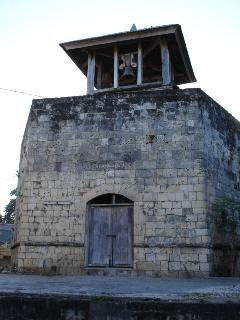
The lodge was very basic. A room, bed and electric fan all for the price of PHP150. Good enough for a few hours of sleep. I woke up at 6 a.m. and got ready for the trip around the island. But first, I stopped by the bell tower of Larena in the town proper which was a short walk up. The lodge owner told me that they used to have an old church just like the rest of the towns, but it was demolished by some priest and replaced with a new one. Just great! At least the bell tower was still there.

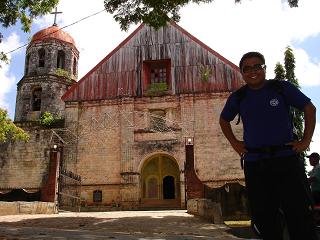
From Larena, I took a jeep to Lazi. The Church of San Isidro Labrador is a national cultural treasure. Anyway, what I expected to be an hour took close to three hours! Jeeps in Siquijor drive extremely slow and I mean an average of 20 to 30 kph! And we stopped here and there to pick up passengers and load stuff on board. So instead of catching the 10 a.m., I had no choice but to take the 3 p.m.

On the way to Lazi was Maria where another bell tower and church stood. While the jeep was waiting for passengers at the market, I took some photos of the bell tower. The Church of the Nuestra Senora de Providencia was still intact. Good! After a few minutes, we were off to Lazi. Finally, after a long and slow trip, I was in front of the church.

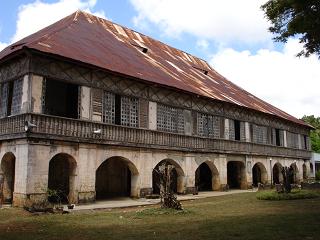
The convent in front of the church is said to be the biggest in Asia. Sigh! I wished that we had this grand architecture in the Philippines today. The last great builder was none other than former First Lady Imelda Marcos whose edifice complex envisioned the Cultural Center of the Philippines and its adjacent buildings done ny national artist Leandro Locsin. But everything today is stunted by our tingi culture. Many, if not most Filipinos have small dreams. It is time to make this country great again by encouraging young people to think big!

I had wanted to go to nearby Cambugahay Falls. I tried looking for a habal-habal (motorcycle taxi) to take me there but then given the time it may take to get to Siquijor, I decided to forego the trip and go straight to Siquijor. It was another slow trip to Siquijor. It was so slow, I thought I might even miss the 3 p.m.!

When I got to Siquijor, I went straight to the
Church of St. Francis of Assisi. In front of the church was another fortress convent. Impressive! Like most convents, it was being used as the parish school of Siquijor.

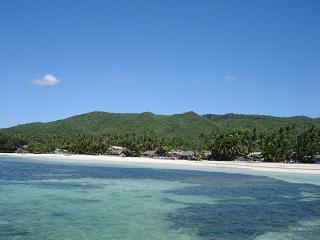
While waiting for the ship to arrive, I trekked to the nearby beach to check it out. Photos are at the top. Although the better beaches are a few minutes away.

Then I had lunch at this lodge beside the port. At least it was a real meal. Hehe! I had survived on crackers and other snacks the whole day. The Delta fast ferry for Dumaguete left at 3 p.m.
Related Posts with Thumbnails