Wednesday, March 22, 2006

Pangasinan: Driving to the edge of Pangasinan

Another road trip today. It's so difficult when you don't have a digital camera so I had to rely on my mobile phone. I was in Rosales, Pangasinan this morning to do some research. And I decided to finish my work here in Bolinao right by the beach. At least the atmosphere is more relaxed. And I was able to check mail thanks to my brod Sasa Miralao who is a marine biologist at the Bolinao Laboratory of the UP Marine Science Institute (UP MSI) which has WiFi access. Hehe!

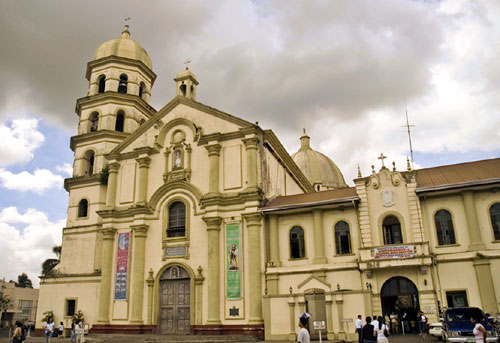
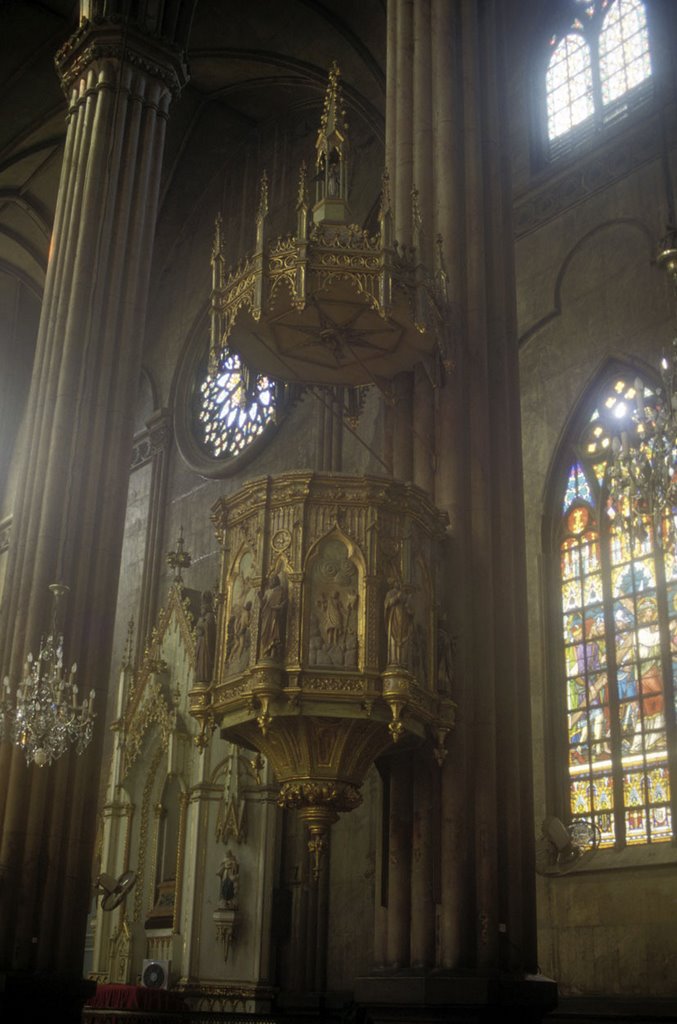
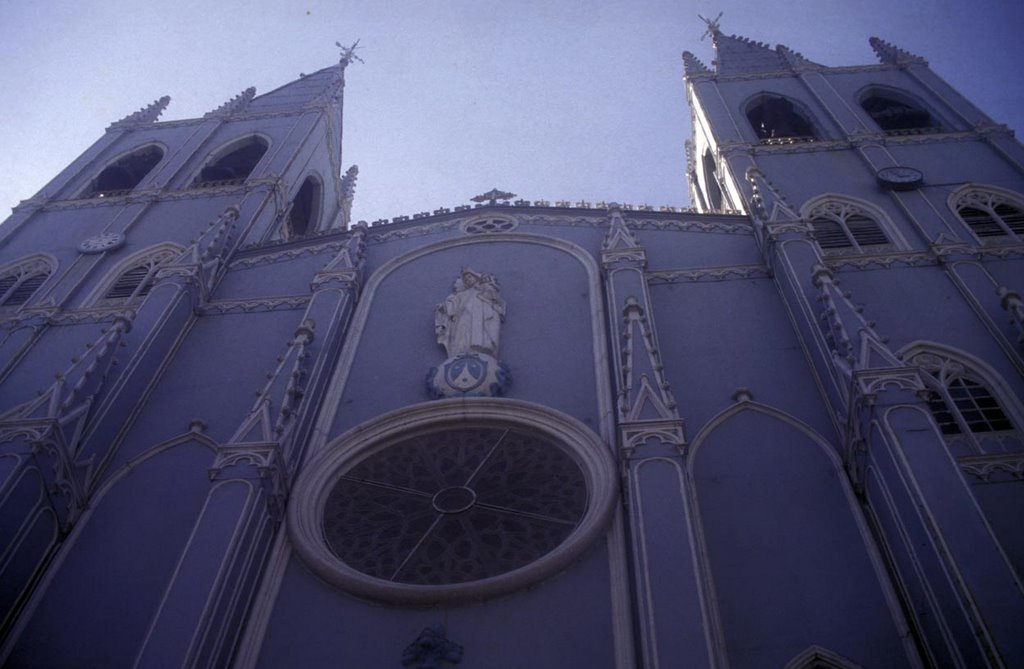
It was quite a long but leisurely drive from Rosales to Bolinao. It takes you from the southeast to northwestern tip of Pangasinan. I made a stop at San Carlos City since I was attracted by its old church (above). Lo and behold! It was very much intact but there was evidence of ongoing renovation which could be potentially destructive. Will someone please tell these priests and parish pastoral councils to stop touching all these heritage churches. In fact, they were painting the old floor tiles white. Duh! That is not the way to clean tiles!

After San Carlos was Calasiao. The old church and convento, and even the lot around it was very well- preserved. But for crying out loud, they plastered the walls of both buildings with cement! Strike two for the Archdiocese of Lingayen-Dagupan. It was then off to Binmaley (both photos on the right). Really nice church! Red brick like San Carlos and Calasiao. But when you enter, another horror renovation... modernized to look like some European church. Please, please... we have our own church heritage to be proud of here in the Philippines. Let's keep these old folksy Filipino churches Filipino! Strike three!

It was off to Lingayen, the provincial capital, which I featured in an earlier entry. Hats off to Gov. Victor Agbayani for restoring the provincial capitol. But thumbs down to the Lingayen parish priest who demolished a charming brick convento, replacing it with a new shopping arcade right beside the church! Strike four for the Archdiocese of Lingayen-Dagupan! I'm surprised Archbishop Oscar Cruz is allowing this to happen under his watch, especially since during the time he was Archbishop of San Fernando, Pampanga, he moved heaven and earth to create the Archdiocesan Archives and Museum. I hope he puts his foot down and stops this destruction from continuing in his jurisdiction. More than the jueteng, I think he should keep his eyes on the whims and caprices of these construction-frenzied priests. Again, stop touching heritage churches! And if you plan to restore them, get technical support from the Heritage Conservation Society, NCCA, NHI or National Museum.

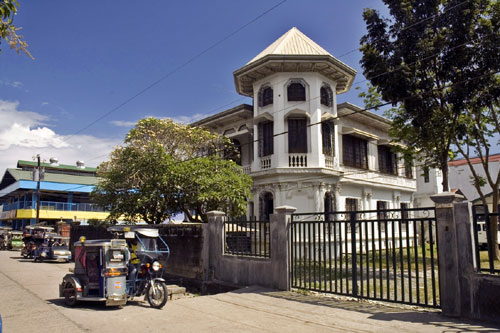
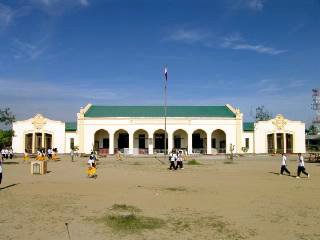
Ligayen still has a lot of government buildings intact, as well as charming houses along the streets of the poblacion. One of these is the old casa municipal of the town (above). Beside it is the the provincial jail which is a heritage building itself (right). I hope Gov. Agbayani is able to convince LGUs in his jurisdiction to follow his lead.

It was off to Alaminos City, home of the Hundred Islands National Park. And just like the rest of the churches I passed by, the interior of Alaminos has been modernized beyond recognition. But there are still a number of well-preserved houses which have been put into good use. At least these owners are doing adaptive reuse without knowing they are!

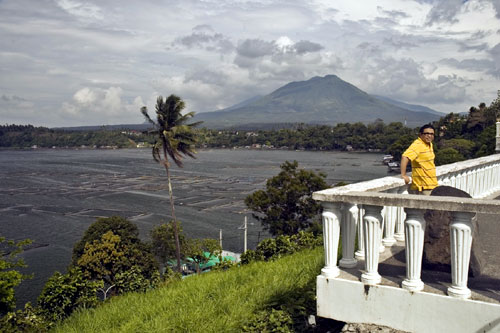
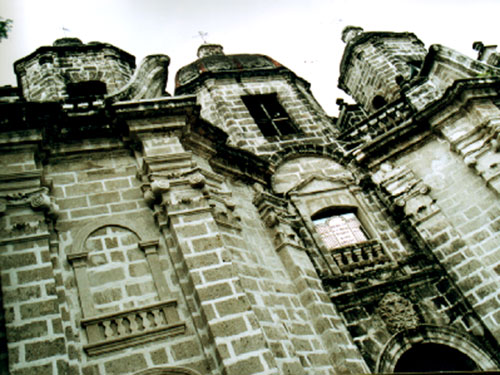
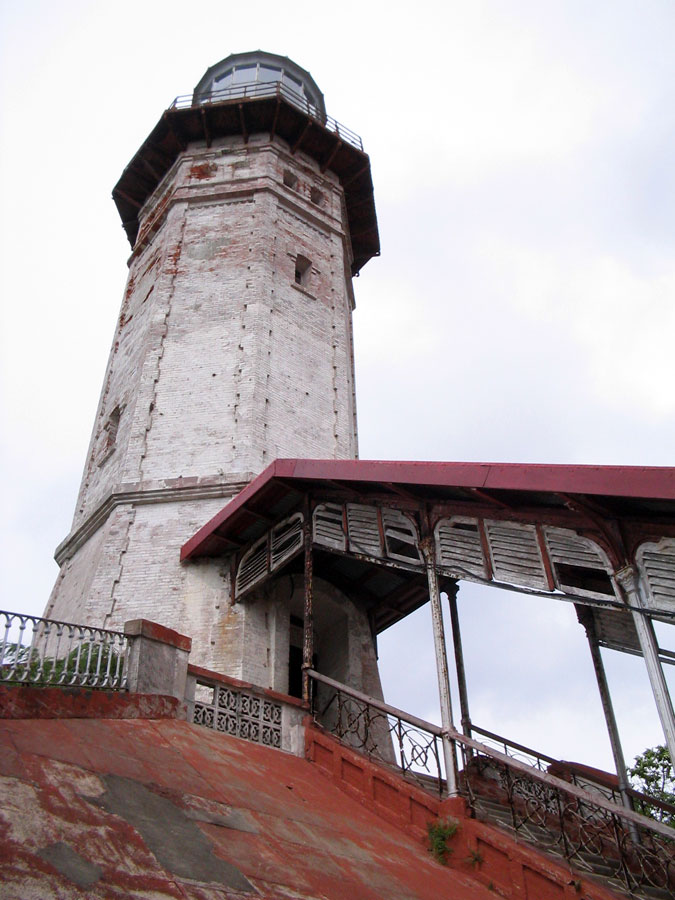
Since it was already late, I decided to forego the Hundred Islands visit for another day. Bolinao was still quite a distance away. But the trip was most worth it. I was greeted by an old limestone church in the poblacion which looked like a fortress (left). Sasa met me there and we both went to the Bolinao Lighthouse in Patar which was about thirty minutes away (below).

The view from the foot of the 1905 lighthouse was spledid. It would be nice to watch the sun set on the South China Sea from there but we didn't want to drive in the dark so we went back to town after taking some photos.
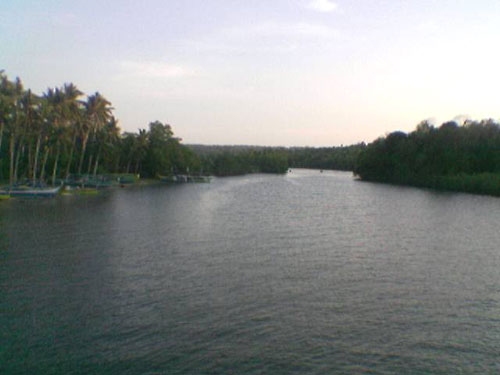
On the way back, we stopped along a bridge to take photos of the mouth of the Balingasay River, which the Municipal Government of Bolinao declared a marine protected area in 1999. The initiative to protect this marine sanctuary came from the local government unit (LGU) for which they won the Philippine Wetlands Conservation Award in 2004. Had the LGU not stepped in, Balingasay's mangrove area could have been a part of the quarry area of a cement plant complex proposed by an international consortium of companies or damaged by environment-destructive fish pens and fish cages.

For dinner, we had street food at the plaza. I bought their native kakanin (rice cake) which they call binungay. It's suman (glutinuous rice cake) roasted in bamboo. They sell it in various sizes depending on the diameter of the bamboo stalk. And they have a funny way of opening it. According to the tindera (hawker) you had to smash the bamboo container by either pounding it on a rock or slicing it open with a bolo in order to eat the rice cake. So smash it we did. Hehe! Like most suman, it is best eaten with ripe mangoes or coco jam. I also had isaw baboy and manok (roasted pork and chicken intestines), mami (noodle soup) and fried chicken as well.

After I checked-in, we went straight to the UP MSI so that I could check mail and type my blog entry for today. Tonight, I work on the project I need to finish. Tomorrow, I join Sasa to nearby Santiago Island to help him out with his sea cucumber experiment. Then its back to Pampanga after lunch via Zambales.

How to get to Bolinao, Pangasinan
Victory Liner and Five Star have several bus trips from Manila to Bolinao daily. Trips begin at about 7 a.m. and leave at intervals of 2 to 3 hours.

Monday, March 20, 2006

Batangas, Laguna & Quezon: Yet another serving of BLT

I'm not talking about bacon, lettuce and tomato. If you've heard about that bus company with the acronym BLTB Co. and know what it stands for, then you know where I was this time around. Hehe! Yup, it was another round of Batangas, Laguna and Quezon Province (Tayabas). The main destination was another heritage town which I've been wanting to visit since my trip to Sariaya, Quezon last year.

It was just a few kilometers away, separated only by the town of Candelaria. Had I known during last year's Pahiyas trip what was waiting to be seen there, we would have stopped by. That town is San Juan, Batangas, another community that prospered early in the 20th Century as a result of the coconut boom. It is more known for its popular beach resorts such as La Luz. But few people realize that just like Sariaya, the town is littered with elegant pre-WWII mansions.

We left Manila after rush hour for what was to be a quick leisurely drive to Batangas. We were quite surprised we were in Sto. Tomas, Batangas in no time, which is the entry point of the STAR Tollway to Lipa City. I hope they make more of these roads in the provinces since passing by town poblacions is just too frustrating no thanks to the tricycles.

Before proceeding to San Juan, we decided to make a stopover at the San Sebastian Cathedral, the seat of the Archdiocese of Lipa. The Romanesque church was completed in 1865 but just like much, if not most of our architectural heritage, it was devastated during the war with the current cathedral a result of massive reconstruction and restoration. What attracted me to the cathedral were photos of its wall and ceiling murals. But upon entering, I was quite disappointed.

At the back were paintings of the twelve apostles. But the images and poses were so Hollywood, most probably taken from Franco Zeffirelli's 1977 movie Jesus of Nazareth! Talk about taste in a heritage church! The rest of the murals were ok and thankfully not as bad as those at the back. I guess Betis, Pampanga still tops the list for the best church murals, living up to its moniker of Sistine Chapel of the Philippines.

With that done, it was off to San Juan. We arrived just in time for lunch. So after a short familiarization drive around, we looked for a place to eat. And since the summer heat was getting to be unbearable, we looked for the first air-conditioned restaurant we could find. I think the place we ate at was the only one in the poblacion... hehehe!

After lunch, it was time for photos. My Canon camera is still under repair (they recalled certain models due to manufacturing defects), so I'm relying on Karlo de Leon's photos for this entry. If documenting heritage were a crime, then I guess partners in crime would be an apt description since we're both heritage addicts. Hehe!

The houses are scattered around the town. But it was obvious that the San Juan mark was fast disappearing due to modernization, possibly evolving into another nondescript Filipino town. Unlike Sariaya which has its town character quite intact, modern structures sprout like mushrooms in between heritage houses, obviously out of place. If San Juan is indeed serious in maximizing its heritage potential, it should enact a local ordinance that would regulate the scale and facades of new structures, similar to what we've done in the City of San Fernando. If we only had that much heritage in San Fernando intact! But we lost a lot in the Philippine-American War, WWII and the floods that hit Pampanga after the Mt. Pinatubo eruption. In fact, the chalets in our American quarter are half-buried after the roads were raised by at least a meter.

We didn't want to go back via Lipa since traffic management there was bad. So we decided to go home via Tiaong and San Pablo City, Laguna. And since we were in the City of Seven Lakes, we decided to check out some of them.

Of course, the most prominent of the lakes is Sampalok. At 104 hectares, it is the biggest of the seven lakes and located in the city proper. It was the first lake we visited. The view of Mount Banahaw as a backdrop to the lake was just awesome. But we were in the mood for adventure so we asked around how to get to the others. Since we didn't have time to visit all, we asked for the best one, regardless of distance. And according to those we asked, it was Calibato Lake in Barangay Sto. Angel, which was at the boundary with the town of Rizal, Laguna.

On the way they, we passed by Palakpakin Lake in Barangay San Buenaventura. It has an area of 43 hectares, and looks similar to Sampalok. This time, there were lesser signs of progress and thus, a better view of Banahaw. We took shots from a bridge and moved on to our final destination, Calibato.

It was difficult looking for Calibato since it was not along the road and you had to hike a bit to get there. After asking around, we finally found the point from where to start the hike down to the 42-hectare crater lake. We didn't know what to expect or how far the lake was from where we parked. Just looking at the downward steps made us imagine the effort it would entail to get back up. Pant! Pant! Hehe! But as we neared the lake, the narrow canyon carved by the small stream increased the level of excitement. I hope we are able to preserve what is left of nature here in the county.

The effort was most worth it as we were rewarded with a spectacular view surrounded by the charm of a traditional fishing community. What a way to cap another day of pleasant surprises.
Thursday, March 16, 2006

Pampanga: Rio Grande de Pampanga

The rivers in Metro Manila are so polluted, river cruises are no longer enjoyable no thanks to the stench. I envy other countries which have river cruises showcasing the skylines, heritage and culture of their capital cities. I guess for now, while government tries to clean up the Pasig and other major rivers in Manila, the second best option is visiting nearby rivers. And few people know that just a few minutes drive north of Manila is one of the country's most important rivers before the arrival of the Spaniards.
The Rio Grande de Pampanga or Pampanga River for short, was a major thoroughfare before roads were constructed and host to major prehistoric settlements along its pampangs. Hence the name Pampanga. It's source is somewhere in the mountains of Nueva Ecija, flowing down to the Pampanga towns of Arayat, Candaba, San Luis, San Simon, Apalit, Macabebe and Masantol at the mouth of Manila Bay.

In the genteel and once elegant barrio of Sulipan in Apalit, there is a boat yard which rents out boats of different sizes from kayaks to two-story air-conditioned house boats for various purposes such as rest and recreation, sight-seeing and birdwatching or sports such as angling and kayaking.

I've personally taken their boats twice. The first was during an exploration and research cruise with the Center for Kapampangan Studies. The second was with my brod Mark Jomalesa and members of the UP Maroons who were looking for an out-of-town nature trip close to Manila. Although I've cruised along the Pampanga River before that during the Apo Iro Fluvial Processions every June.

The usual starting point is from their boat yard in Sulipan. But you could make arrangements for them to pick you up in Manila. Heritage stops along the river include the churches of San Luis and Apalit. I really do suggest you stop over since both churches have ceiling murals worth visiting and are very much intact. I hope the parish priests keep them that way.

You could also take a detour in Candaba and visit the Candaba Bird Sanctuary which is host to migratory birds. The cruise itself is quite relaxing, perfect for an afternoon nap especially if you are taking a house boat which has lounge chairs on the second floor.

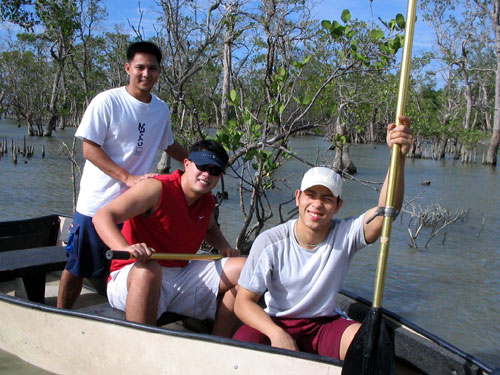
One of the secrets of Pampanga are found along the shores of Manila Bay. These are the mangroves of Masantol where the water is quite shallow, perfect for kayaking and birdwatching. The photos here are from a February 2004 cruise with Mark Jomalesa, Marvin Cruz and Kenneth Robin. As I've said, I have a lot of archived photos which are worth featuring in this blog.

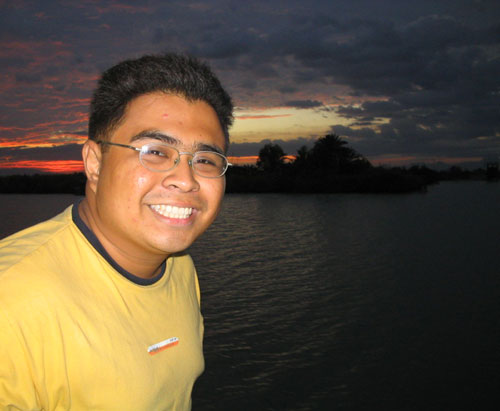
The best part of the cruise is watching the renowned Manila Bay sunset from a different place, far from the hustle and bustle of Metro Manila. As the boat speeds back to Apalit and civilization, the Philippine sun colors the sky with a dappled palette, a perfect close to a relaxing day with nature.

For more information about this cruise and other destinations in Pampanga, you can contact the Center for Kapampangan Studies at (045) 888-8691 loc. 1311 which could link you to the said boat yard.

Monday, March 13, 2006

Manila: Basilica Minore de San Sebastian

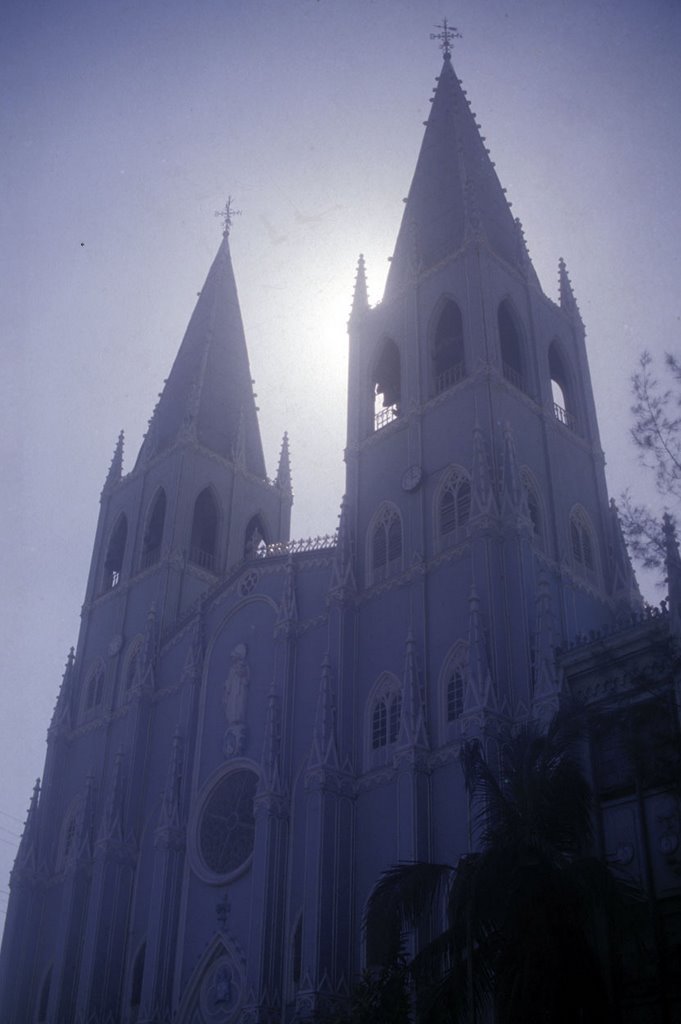
When we say Quiapo, the first things that come to mind are images of the Black Nazarene, the multitude of people that makes an annual walk of fate with the image during the 9th of January processions, and the Basilica Minore of the Black Nazarene (Quiapo Church) with the myriad of hawkers and stalls, herbal medicine and anting-anting vendors and fortune tellers abundant in adjacent Plaza Miranda. But unknown to many, Quiapo is home to an even rarer gem, another basilica minore in fact in Plaza del Carmen. This is the Basilica Minore de San Sebastian, the first all-steel church in the Philippines and in Asia, and the second in the world.

I was looking through my archive of photos which I took long before I started to blog. In fact, several were taken even before I enjoyed internet access. And among them were photos of the San Sebastian Church which I shot way back in high school during an alternative class day exposure trip to old Manila. I realized that my photo archive was a wealth of untapped material and not featuring these places I've been to and documented would be a waste.

It was sometime in 1995 or 1996, my third year in the Ateneo and we were the beneficiaries of the first-ever alternative class day called KLIK... Klaseng Ibang Klase. We had a choice of selecting three talks throughout the day or pick a day trip for a fee. And I chose this trip to old Manila, with social studies teacher Estela Banasihan and Fr. Mac Reyes, S.J. as tour guides. I consider this trip my introduction to Philippine architectural heritage. The trip tickled my fancy in fact that the next year, I chose another heritage tour during KLIK, a church tour in Rizal and Laguna.

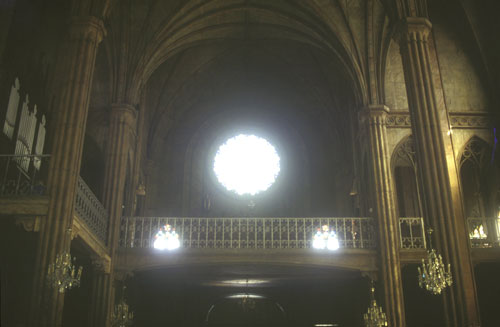
One of our stops was the San Sebastian Church. And to tell you honestly, I was not ready for what I was going to see. Upon entering, this young high school student never realized that such a treasure existed in the country. And I remember distinctly Fr. Mac knocking on the walls of the church to prove to us that the structure was indeed made of steel!

I would later find out that the Philippines used to have much more than that. But the very structures which made us the Pearl of the Orient, architectural treasures that spanned hundreds of years, were flattened by the American Army in a few days during the liberation of Manila.

The structure was prefabricated in Belgium, dismantled and shipped back to the Philippines. It was said that after three earthquakes that leveled the earlier San Sebastian churches, the Recollects decided to use an unconventional material to build an earthquake proof church. Which explains why the structure is entirely made of steel. But nothing is decay-free and we all know that the biggest enemy of steel is iron oxide, more commonly known as rust!

This is why the World Monuments Fund (WMF) included the structure in the List of 100 Most Endangered Sites in 1998. Inclusion in the World Monuments Watch entitles the structure to grants for restoration. And I find it stupid that the custodians of the church rejected the $25,000 grant given by the WMF simply because of jurisdiction issues with the Philippine government. As a result, the Philippines had to do the embarrassing act of returning the $25,000 to the WMF!

It reminds me of the lack of appreciation for heritage rampant in the Catholic Church. In fact, priests are the number one destroyers of Philippine church heritage. They sell off antiques to raise money, lured by heavenly sums offered by sneaky antique collectors. A big number renovate their heritage churches according to their whims and caprices simply to leave their mark, damaging or even eradicating centuries of work in a few months. Right at this very moment, the hard-headed parish priest in Paoay, a UNESCO World Heritage site, is plastering the walls of the church with cement! When will this carnage to heritage churches end? Will the CBCP please put its foot down and end this wanton disregard for Philippine architectural heritage. In Mexico, after their own revolution against Spain, all church property became state property which is why all their churches are untouched and well-preserved. Sometimes, I wished that happened in the Philippines as well.

Back to San Sebastian, rumor has it that the metal structure of the San Sebastian Church was designed by Alexander Gustave Eiffel himself. But I have yet to hear the official word from the NHI or NCCA.

Metro Manila is host to more heritage churches or what's left of them. You can check out the Visita Iglesia Manila Project for a complete listing.

Saturday, March 11, 2006

What's next for UNESCO?

After that blunder by some local government officials from Batanes last year, we will have to wait again another year until a new Philippine site is listed in the UNESCO World Heritage list. They thought they could handle the inscription process on their own, purposely left out all the experts who prepared the bid of the Batanes Protected Landscapes and Seascapes, and got a painful rejection from UNESCO. What were they thinking? It turns out, the papers were simply not in order and had they included the heritage people involved in documenting Batanes, it would have been listed with UNESCO last year. Sad part is there is a limit to the number of sites listed per country per round. And because of Batanes' deferment, the slot meant for another Philippine site in the next round will be used by Batanes. Oh well!

I chanced upon a list of proposed UNESCO World Heritage sites. I've always known that Batanes is the next Philippine site for inscription in the prestigious list. There are more candidates on the shortlist and it may take several years before we get them in the UNESCO list. Sad to say, I've only visited one of the proposed sites, the San Sebastian Church which I will talk about in my next entry. But I wonder which churches will be included in the listing Jesuit Churches of the Philippines and and which forts in Spanish Colonial Fortifications of the Philippines since I may have seen some of them. Let me try to ask Fr. Rene Javellana since those groupings are actually books which he had written, namely "Wood and Stone for God's Greater Glory: Jesuit Art and Architecture in the Philippines" and "Fortress of Empire: Spanish Colonial Fortifications of the Philippines 1565-1898."

Another proposed site are the Angono Petroglyphs were declared a national cultural treasure under Presidential Decree No. 260 of President Marcos in 1973. Together with the San Sebastian Church, both sites were included in the biennial World Monuments Watch: List of 100 Most Endangered Sites in 1996 and 1998 respectively.

Most of the sites are featured in the book "The National Parks and Other Wild Places of the Philippines," which came out during the term of Gemma Cruz-Araneta as DOT Secretary. These are Batanes, Mt. Pulag National Park (at 9, 586 feet, Mt. Pulag is the highest peak in Luzon) and Northern Sierra Madre Natural Park in Luzon, the El Nido Marine Reserve, and the Agusan Marsh Wildlife Sanctuary in Mindanao which is one of four Philippine sites listed in the RAMSAR List of Wetlands of International Importance.

The tenth site listed is the Turtle Islands Wildlife Sanctuary in Tawi-tawi. Composed of six islands in the Sulu Sea, the marine park is part of a transnational protected area together with Malaysia that is believed to be the only remaining nesting islands for Green Turtles in the ASEAN region.

Another proposed listing which I've been hearing about but not found in the tentative list are the Spanish Lighthouses of the Philippines, many of which are featured in the book of Arch. Manolo Noche entitled "Lonely Sentinels of the Sea: The Spanish Colonial Lighthouses in the Philippines."

I guess the Philippines has a long way to go in raising the consciousness of its citizens on the importance of preserving heritage. But what can we expect from a Third World country which obviously has more pressing needs? That is why heritage conservationists have to be vigilant in protecting what is left of our built heritage resources. Because when the time comes that Filipinos are mature enough to realize why heritage needs to be protected, there might not be much of it left to appreciate.

Tuesday, March 07, 2006

Pangasinan: Pangasinan pilgrimage

I'll definitely be blogging quite more often now that I'm done with my MBA. I just came from a business trip to Pangasinan last Sunday. While checking out some properties in Rosales, my brod Ryan Tan mentioned to me that Li-an Ramos (my kabarkada, blockmate in the UP School of Economics and co-dormer at the Kalayaan Residence Hall way back in 1997) was crowned Binibining Pilipinas Universe 2006! Wow! It seemed like only yesterday when we were freshmen at UP. Since we had the same class schedule, and stayed at the same dorm, we often walked to and from the dorm together. Good luck in the Miss Universe pageant in Vanuatu! I'm sure you will take home the crown!

Anyway, we had lunch at Matutina's Seafood Restaurant in Bonoan, Dagupan City managed by the Balingit family which finds its roots in the culinary capital of the Philippines... Pampanga. It's a great beach front restaurant frequented by GMA. Sad to say, the beach area in Bonoan is not well-maintained and badly-planned. It was a chopsuey government, judicial, civic and tourist center with a jail on one end of the road and a cemetery and garbage dump on the other end. Along the road are restaurants, a Masonic lodge, the Bangko Sentral ng Pilipinas, the Hall of Justice and a Muslim community among others. And the whole stretch of the road is connected to various beach resorts and rest houses. Talk about urban planning.

On the way back, we heard Mass in Manaoag. Finally, I was able to visit the miraculous image for the first time! Located 205 kilometers north of Manila, the Church of Manaoag is a major pilgrimage center of the Philippines owing to the popularity of the miraculous image of Our Lady of Manaoag, an image of the Nuestra Señora del Rosario. I remember passing by the old church during the HCS trip to San Fabian but we were not able to stopover. That's it for now.

Wednesday, March 01, 2006

Pampanga: Pampanga High School soars above lahar

After that anxious wait, the restoration of the Pampanga High School main building, a Gabaldon schoolhouse built in the early 1930s, is finally complete. As always, members of the Heritage Conservation Society trooped to the inauguration and turnover ceremonies. And since this time around, the event was in my own turf, I was the designated driver... hehe! In our group was HCS president Gemma Cruz-Araneta, restoration architects Toti Villalon and Melvin Patawaran, and Carmen Prieto of the Dagupan Heritage Foundation.

With a current enrollment of 11,000 students, the Pampanga High School is the biggest public high school in Pampanga. Its early roots can be traced back to 1902 when the Americans established the first high school in San Fernando. But due to the lack of students who made it to senior year, students were forced to finish their secondary education elsewhere. So it was not until 1912 that the first class graduated from the Pampanga High School.

The restored main building is actually the second one since there was an earlier Gabaldon building completed around 1908 together with the Pampanga Capitol building. When the current building was completed in 1935, the older structure was reused as an annex. From 1980 up to 1995, it was used by the University of the Philippines Extension Program in San Fernando, Pampanga. What remains of that historic structure today is a result of the merciless looting and pillaging by some public officials. It stands as a harsh reminder of how badly certain leaders value their own heritage.

But even the newer Gabaldon almost became a victim of well-meaning but misinformed efforts of certain indiviuals and groups. Good thing the Department of Education, through Undersecretary Mike Luz, intervened and saved the structure from a merciless renovation, including it in the DepEd-HCS Heritage Schoolhouse Restoration Program.

Today, it stands as a testament to how heritage should and could be conserved. The Pampanga High School itself is a monument to the many leaders it molded, most prominent of which is former president Diosdado P. Macapagal of the Class of 1929. As a young kid, I was already familiarized to this outstanding group since my grandfather, Mariano D. Santos, his sister Felicidad, and their first cousin renowned pre-war journalist Amando G. Dayrit, were all members of the Class of 1929. And my lolo always beamed with pride when he showed us photos of himself together with the former president (my lolo is the one on the left). A sampling of PHS' prominent graduates can be found here.

After the program, the group proceeded to Betis and Bacolor to visit their heritage churches. And our visitors were not disappointed. PHS photos courtesy of Arch. Melvin Patawaran.

Related articles
PHS alumni, city government clash over heritage building

Monday, February 27, 2006

Manila: Tomb raider adventures in Manila's necropolis

The HCS meeting at Gota de Leche ended shortly before lunch. And as expected, when there is a large gathering of heritage buffs, an impromptu adventure is in the works. And guess where we decided to go?! Yup, it was a three-in-one afternoon since it was off to three of Manila's historic cemeteries. And we had the best tour guide to take us there, none other than Binondo's street walker and my tokayo Ivan ManDy. With us was Prof. Jojo Mata and Chinatown heritage denizen Jeffrey Yap.

You must be thinking we were all crazy! Why would someone in his right mind visit cemeteries for a leisurely afternoon adventure. Well, the answer is simple... these old cemeteries are the last bastion of Philippine architectural history. They were one of the few areas that were not bombed during the Second World War for obvious reasons which is why the architectural treasures inside were preserved for this generation to see. In fact, a visit to these three cemeteries should be an SOP, a must if I may say so, for any architectural history class since all architectural styles that ever reached Philippine soil from the 1870s to the present are represented in these cities of the dead. From the grand to the whimsical, the numerous mausoleums give today's generation a picture of how rich Philippine architecture was before and shortly after the war. Indeed, this necropolis is a time capsule of Philippine history and culture! Sad to say, my camera is still out of commission, and I had to borrow Ivan ManDy's camera to take shots. There are more but I will have to meet up with him to get the files.

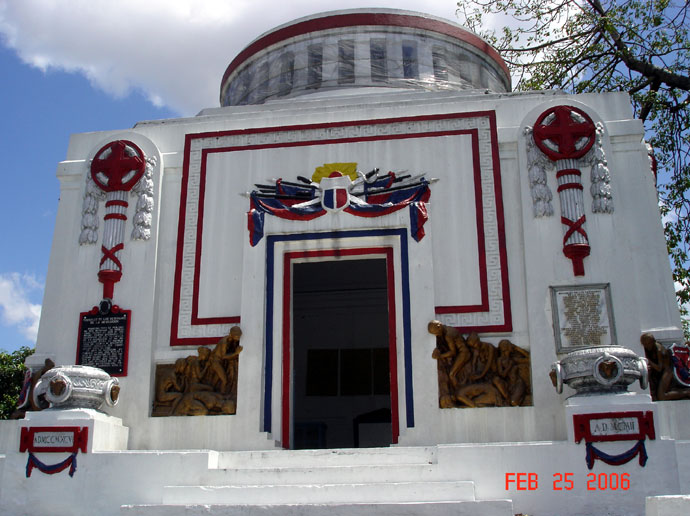
Our first stop was Norte or the Manila North Cemetery. Before the Libingan ng mga Bayani, there was Norte. And that explains the heavy concentration of who's who in Philippine society in it such as revolutionary generals honored in the Mousoleo de los Veteranos de la Revolucion (photo at left) together with other prominent Katipuneros; Philippine presidents Sergio Osmena, Manuel Roxas and Ramon Magsaysay, senators Isauro Gabaldon, Pedro Guevara, Claro M. Recto and Gerry Roxas, House speaker Quintin Paredes, Malolos Congress delegate Benito Legarda, former Manila mayors and other prominent politicians who led our nation during a time when being called a politician was an honor; renowned boxer Pancho Villa; and big names in the arts such as painter Felix Resurrecion Hidalgo, composer Julio Nakpil, architects Arcadio Arellano and Juan Nakpil, and the giants of Philippine cinema which includes Fernando Poe, Sr. and just recently, Fernando Poe, Jr. Prominent foreign citizens can be found here as well including well-loved American governor-general Francis Burton Harrison.

Each stratum of society was represented, with special plots reserved for certain groups such as the Jewish cemetery, the Masonic burial grounds, the military and police plot, the Thomasites' plot, and that of the twenty boy scouts who died in a 1963 plane crash on their way to the 11th World Jamboree in Greece. Their names are memorialized in a series of streets in Quezon City.

The tombs and mausoleums are reminders of an architectural era gone by, designed by the best architects of their time and rendered by top sculptors and builders. From art deco to neo-romanesque and neo-gothic, these monuments stand-out as cultural relics. But Norte is just the tip of the iceberg and our next stop was an even more exciting collection of architecture, a fusion of East and West that results in an ecclectic mix of architectural style and detail only found in the Philippines. And one can never prepare himself for the surprise that beckons at the Chinese Cemetery on a first visit.

The 54-hectare neighbor of Norte, with areas known as Millionaire's Row and Little Beverly Hills, and temples and monuments to heroes and martyrs as well as grave villas all around, the Chinese Cemetery is a cultural treasure. Indeed I was not prepared for what I was going to see.

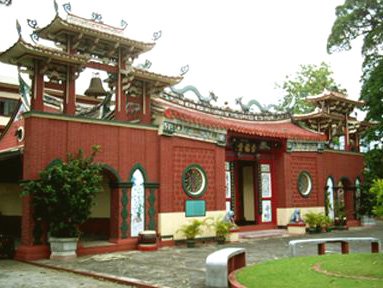
Cultures mix in every corner, with Buddhist, Confucian and Taoist practices blended in with Catholic tradition. I was surprised to see Catholic images hidden behind Taoist deities at the country's oldest Chinese temple, the Chong Hock Tong temple (photo above left). The group was lucky to see the arrival of a Chinese funeral procession with all its pomp and pageantry. And yet the tolling of the temple bells was distinctly Catholic.

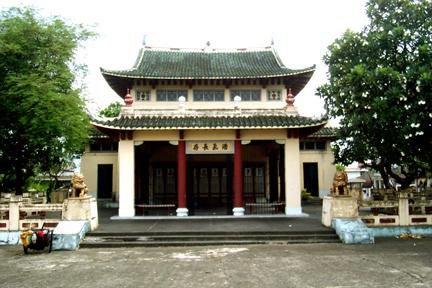
Near the temple were various monuments to war heroes and martyrs. Most imposing of these is the Japanese War Memorial Mausoleum (photo at left), a large hall with photos of ten Chinese community leaders who were executed by the Japanese at the onset of the Second World War. During the Japanese invasion of China in the 1930s, nationalistic passions among the Chinese was very high and these leaders called for a boycott of all Japanese products. Little did they know that the Japanese had them on their watchlist. So when the rising sun arrived in Manila, they were the first to go.

Speaking about executions, the cemetery was witness to many of them during WWII. Have you ever wondered who that lady in the 1000-peso bill is? That is Girl Scouts organizer Josefa Llanes Escoda who was martyred in the cemetery. Her name is one in a list of prominent Filipino and Chinese-Filipino citizens martyred in the grounds which includes literary geniuses Rafael Roces and Manuel Arguilla, and Chinese Consul General Yang Guangsheng. Behind the mausoleum are more memorials to war heroes.

Moving up and down the alleys and roads of the Chinese Cemetery makes us wonder what ever happened to the architectural savvy of today's Filipino. From burial mounds and traditional Chinese architecture, to East-meets-West fusion architecture that can't be found anywhere else in the world, to sleek Miami-inspired buildings that would get you loco over art deco, the clean and streamlined post-war modernism, the funky 1970s and 1980s post-modernism and today's 21st Century structural modernism, outstanding examples of these styles and even more can be found in the Chinese Cemetery. Size and detail of structures are testaments to the status and wealth of the owners when they were among the living. It is no surprise for example that Chinabank founder Dee C. Chuan had a towering deco edifice for his final resting place (photo 2nd from left).

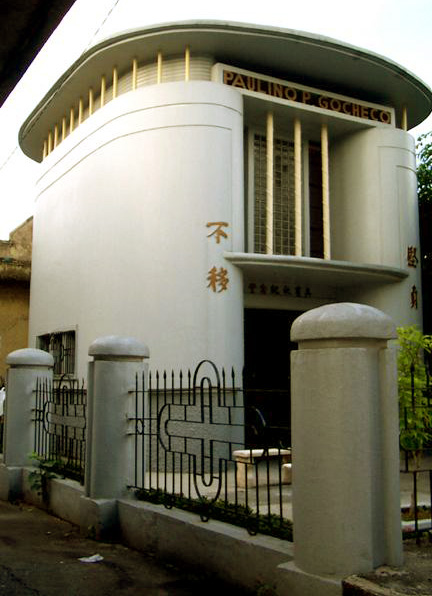
Each mausoleum in the art deco area is a work of genius. Who could miss for example Paulino Go Checo's spaceship deco (photo at left). There also mausoleums of Chinese-Filipino personalities and under this category is that of "mami king" Ma Mon Luk, one of the cemetery's more popular residents. More photos in Ivan ManDy's webshots page.

I did hear one trivia about the Chinese Cemetery though... that it is the most expensive piece of real estate in the country! Anyway, one really needs a lot of time to explore the place in detail. Maybe next time since we had one last stop for the afternoon cemetery tour. If Norte is the secular cemetery, the last stop was the main Catholic cemetery of Manila. To cap the day was a visit to the last of the three neighbors, the Campo Santo de la Loma.

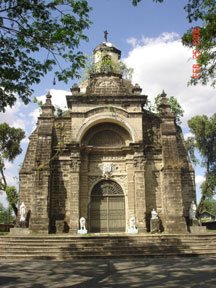
The La Loma Cemetery sits on a hill that bears its name. Near the old entrance is the 19th Century chapel of St. Pancratius (photo at left) which has already been decomissioned with the construction of a modern parish church near the new entrance. The chapel was locked but I was curious what could be found inside. I guess the photos of La Loma can speak for themselves so here is the blog of my tokayo which he has filled with La Loma's architectural works of art.

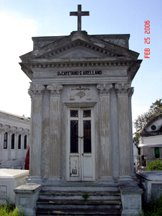
Buried within La Loma's walls are more who's who to add to our growing list. I remember seing among others the mausoleums of chief justices Cayetano Arellano (photo below) and Victorino Mapa, and Malolos Congress delegate Pablo Ocampo.

There are also a lot of prominent Kapampangan families who've chosen this cemetery as their final resting place. There are the Pamintuans of Angeles, the Dayrit y Pamintuan and Salgado clans of San Fernando (revolutionary women Felisa Pamintuan Dayrit and Teodora Salgado-Ulmann are buried in La Loma), and the Alvendia y Guanzon clan of Sta. Rita and Floridablanca. Norte also has Kapampangan families such as the Escaler y Ocampo clan of Apalit and San Fenando. Also in La Loma are the parents and siblings of Rufino Cardinal Santos of Guagua. I was surprised to find members of my own family there, Maria Santos vda. de Pekson (the eldest daughter of my great-great-grandfather Don Mariano Leon Santos y Joven) and her two daughters who both died in a plane crash in 1946. I wonder who visits since they died without children.

The three cemeteries of La Loma hill should be declared a part of our national heritage. They are repositories of our history, heroes and heritage, and should thus be protected and preserved for future generations of Filipinos. Other cemeteries worth visiting in Metro Manila are the Paco Panteon (now known as Paco Park), the Libingan ng mga Bayani and the Manila American Cemetery and Memorial. Photos of Chinese Cemetery courtesy of Ivan ManDy.

Related article
Cemeteries are a time capsule of RP history, culture

Sunday, February 26, 2006

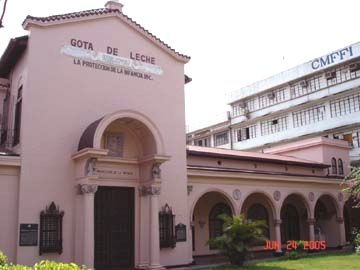
Manila: Gota de Leche... una gota lleno de esperanza!

My comprehensive exams are finally over... I hope! Hehe! So that's one load off my shoulders. Now it's time to catch up with the backlog, that is work which has piled up since I had to drop everything and focus on my exams. That's the same reason this blog had been untouched since Christmas! Hehe!

Anyway, I was at the Gota de Leche building yesterday to attend the general assembly and elections of the Heritage Conservation Society (HCS). Located along Lepanto (now S.H. Loyola Street) in Sampaloc, Gota de Leche was saved from years of neglect after a 2002 restoration that won the UNESCO Asia-Pacific Cultural Awards for restoration in 2003. The project summary reads: "The Gota de Leche building, situated in a congested area of Manila, was restored to its original appearance of 1917. The rental building attached to it in a recent past has been removed to offer clear sight lines from the street and vehicular access. The charitable program of providing free pediatric care and milk to poor children through the Gota de Leche (drop of milk) activities has been maintained since the original completion of the building."

Today, it may be the last remaining heritage property of value on historic Lepanto. And as the proposal says, "this (restoration) project shows to the anti-heritage conservation Manila authorities and population that heritage is valuable, viable, and applicable to the lifestyle of the contemporary Manileno."

Back to the HCS meeting, I was one of those nominated to the 2006-2008 Board of Trustees. And to make the long story short, I'm in. Congratulations as well to the other members of the incoming HCS Board of Trustees: incumbent HCS president Gemma Cruz-Araneta, former DepEd undersecretary Juan Miguel Luz, former ambassador Raul Goco, urban planner Nathaniel von Einseidel, restoration architect Melvin Patawaran, and Prof. Rene Luis Mata of the UP College of Architecture. Photo of the HCS board courtesy of the Philippine Tatler; Gota de Leche courtesy of Ivan ManDy.

To be continued...
Related Posts with Thumbnails