Sunday, September 10, 2006

Pampanga: Culture is alive in San Fernando!

It was the first time I attended the festivities of the Virgen de los Remedios last Friday. Malcañang had declared it a non-working holiday in Pampanga since this year is the 50th anniversary of the canonical coronation of the said image. What I saw touched me and just proved that culture is very much alive in San Fernando and the province of Pampanga!

Although not as widely-known around the country as the Peñafrancia festivities in Naga City or the La Naval de Manila of the Sto. Domingo Church, the feast of Pampanga's patroness has a large following locally. Literally thousands lined the streets of San Fernando along the procession route from the Metropolitan Cathedral to the Mass site at Villa del Sol a little over two kilometers away. Amidst the loud applause of adoring devotees, the pealing of San Fernando's Cathedral bells and the music of several brass bands, the image was brought out together with the Santo Cristo del Perdon on a charming anda borne on the shoulders of devotees.

Here is a video I took. Pardon the quality since I had my camera on the wrong settings...


Despite the scorching heat of the early afternoon sun (PAG-ASA had said that it would feel like summer during that day) Kapampangans walked the entire two kilometers to the Mass site. I heard that Cardinals Rosales and Vidal were supposed to attend. But rumor has it that they begged off after hearing GMA was going to crown the image. Ironically, GMA was a no show too! Oh well!

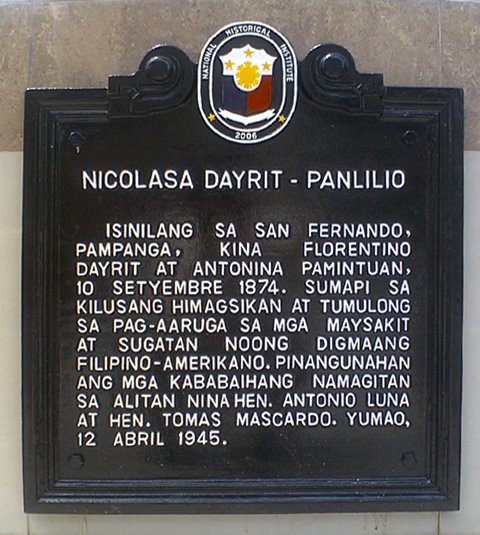
After one day resting at home, I woke up quite early today for another cultural activity, the unveiling of the marker of the National Historical Institute (NHI) in honor of revolutionary heroine Nicolasa Dayrit-Panlilio. This marker is the tenth located in San Fernando, Pampanga and I'm crossing my fingers we will have more within the year.

In attendance were none other than NHI chairman Prof. Ambeth R. Ocampo and board member Dr. Serafin D. Quiason, both fellow Kapampangans; San Fernando Mayor Oscar S. Rodriguez and the city council, members of the San Fernando, Pampanga cultural community, as well as the family of Doña Nicolasa, particularly her surviving children who are all in their 90s.

One thing I always tell the city is that we should do these ceremonies properly, strictly following all the necessary protocol accompanied with dignified pomp and pageantry befitting these kinds of ocassions. Way back in 2004, we brought back the remains of Nicolasa Dayrit to San Fernando from the Loyola Memorial Park in Sucat. And as a revolutionary hero, her remains had to be accorded certain ceremonies and military honors as part of the transfer.

I'm sharing with you the videos of those ceremonies two years ago...


Monday, September 04, 2006

Manila: Bravo Makati City!

I don't usually post articles in full here in my blog; but since the Philippine Star website doesn't keep an archive of its past articles, I'm posting this really great article about Makati here. Imagine, if a highly-urbanized city such as Makati thinks this way, then the more other cities and municipalities should!

Makati's other face, the older one, is unknown to most Filipinos since we have always known it as the country's business center. But along the banks of the Pasig River, in the J.P. Rizal and Makati-Pateros Road areas, you'd be surprised to find centuries-old churches and other heritage structures.

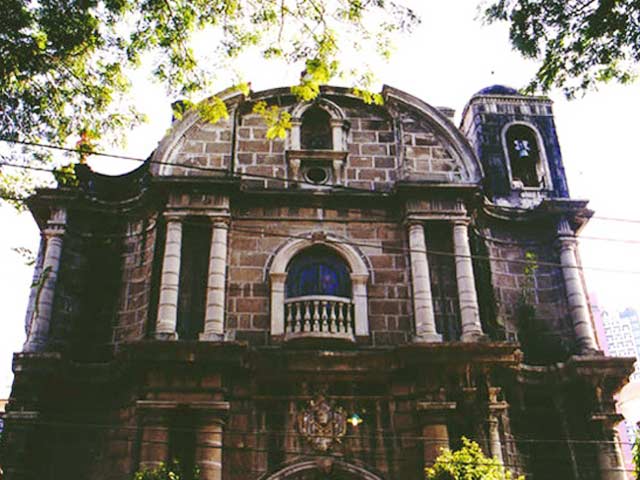
Among its built heritage resources are the ruins of the Church of the Nuestra Senora de Gracia in Guadalupe Viejo (above) and the Saints Peter and Paul Church in Barangay Poblacion (right) which when I visited it a few months back, still had an intact interior complete with a wooden retablo and old floor tiles. While driving along the Makati-Pateros Road, I was also suprised to see an old chapel with an unaltered facade! I wonder how it looks inside. Photos are from the Makati City portal.

Unlike many towns and cities which demolish or renovate their old municipal halls, Makati preserved theirs and built a modern one in a different location. Their old municipal hall is now the Museo ng Makati.


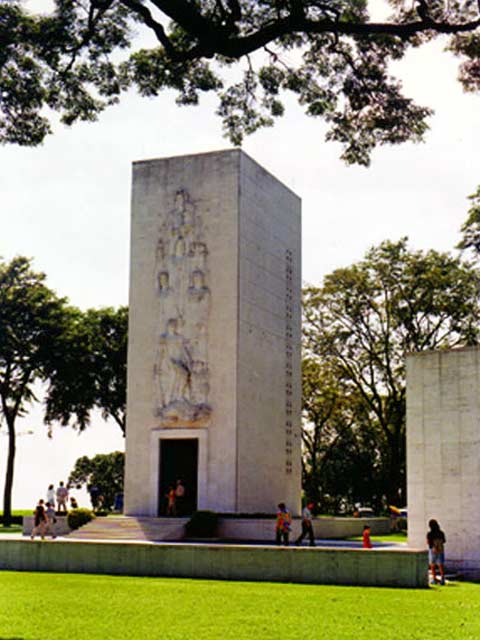
But the poblacion and barangays along the Pasig River are not the only ones with heritage structures. Don't forget the Nielson Tower, our old pre-war airport along Makati Avenue which is now the Filipinas Heritage Library, as well as the Manila Polo Club, the Santuario de San Antonio in Forbes Park, and the Sta. Ana Race Track among others. The Makati portal also mentions the Libingan ng mga Bayani and the American Cemetery and Memorial but these sites are now part of Taguig City.

I'm sure you'll be happy reading the article below. Two thumbs up to Makati mayor Jejomar Binay! I hope Manila mayor Lito Atienza follows your noble example.

Makati seeks to rediscover its past
By Michael Punongbayan
The Philippine Star 08/30/2006

The country's financial capital, known for its high-rise buildings and commercial centers, now wants to rediscover its past as it steps back in time to unravel its rich culture and traditions.

The Makati City government, with the help of historians and other experts, has launched a Heritage Conservation Program (HCP), which will retrace, re-learn and help residents appreciate the city's history with the synergy of past and present to foster future growth and development.

Mayor Jejomar Binay said he has foreseen the value of preserving the culture of Makati City anchored in the old adage, "ang hindi marunong lumingon sa pinanggalingan ay hindi makakarating sa paroroonan."

Barangay Poblacion, the historical seat of Makati City's traditions and governance, has been chosen as the pilot barangay where the first Heritage Zone will rise.

To realize this goal, Binay has sought the assistance of Instituto Cervantes' Spanish Program for Cultural Cooperation (SPCC) and the FEATI University.

Dr. Julio Galvan, general coordinator of the SPCC has signed an agreement with Binay, which releases to the city government a P200,000 grant that will help fund the cultural mapping of Barangay Poblacion.

Binay said completing the three-way partnership is Feati University represented by its president Dr. Adolfo Jesus Gopez.

The academic institution will provide cultural experts, professors and a research staff that will conduct the cultural mapping of Barangay Poblacion.

"They will document historical structures and landmarks and ingrained practices and beliefs," Binay announced.

He said a heritage preservation plan will be created from the data gathered by the study group up to November this year.

Binay added that he has assembled a committee composed of representatives from the city government, residents and the private sector to oversee the heritage project.

With the help of Instituto Cervantes and Feati University, he expressed confidence in the program that will relive the past for the people of the present while inspiring future generations.

Friday, September 01, 2006

Nueva Vizcaya: The citrus capital of the Philippines

Since we're already in the process of digging out those albums from the baul, here is another trip from the archives. The thing I like about conferences is that many of them are out of town and the last day is usually reserved for a tour of the locality. This one was a conference on history held in Nueva Vizcaya, a province most known for its citrus fruits. The Center for Kapampangan Studies sent me and Prof. Lino Dizon to attend in the Center's behalf.

From Pampanga, I passed by for Lino in Tarlac. Then we made an eastward trip towards the Maharlika Highway via Guimba, Nueva Ecija. It was the first time for me to visit Cagayan Valley and the views along the way especially as we entered Carranglan were quite refreshing. It was also significant for us since Carranglan used to be the last town of the original Provincia de la Pampanga. Make sure you have a lot of gas since the distance between the last town of Nueva Ecija and the next town in Nueva Vizcaya is over 40 kilometers!

Along the highway in Santa Fe, I noticed shops selling baskets, salakots and other rattan products. I made sure to buy salakots on the way back to add to my collection.

After several hours of driving, we finally arrived in
Bayombong, the provincial capital. We were already late for the first day (I don't remember why we left late) and arrived just in time for the end of day's activities.

Since the hotels in Bayombong were fully-booked, the Center made reservations for us at the Governor's Hotel in Solano, which is the commercial center of the province and just a few minutes away from Bayombong. Actually, that was better for us since the hotel was among the better ones in the province. Hehe! Also billeted in the hotel was Tingting Cojuangco who was attending the conference as well. Lino was actually one of her doctoral dissertation advisers so we had dinner or breakfast with her every once in a while.

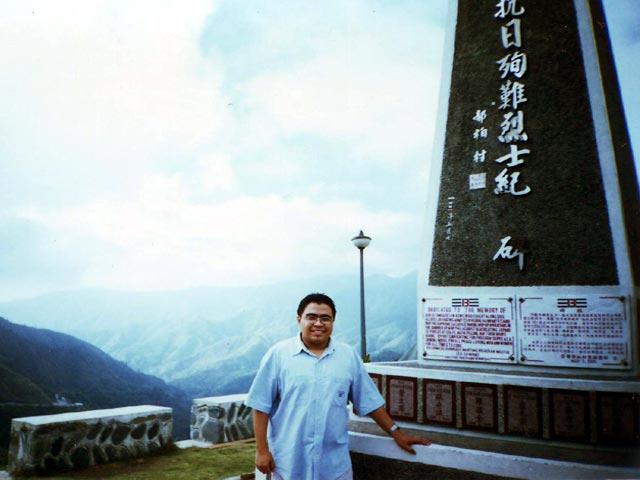
Anyway, during one of the conference days, Lino and I decided to sneak away from the afternoon sessions to make a side trip to Banaue since it was quite close. But we passed by the town of Kiangan first to check it out. Among the places we visited was the 1945 surrender site of Gen. Tomoyuki Yamashita, the Tiger of Malaya. It is now a military shrine known as Bantayog sa Kiangan.

Notice the website of the shrine since it mentions that the surrender of Yamashita was in 1942! Shame on the PVAO since it shows they don't know their history. We all know that 1942 was the Fall of Bataan!

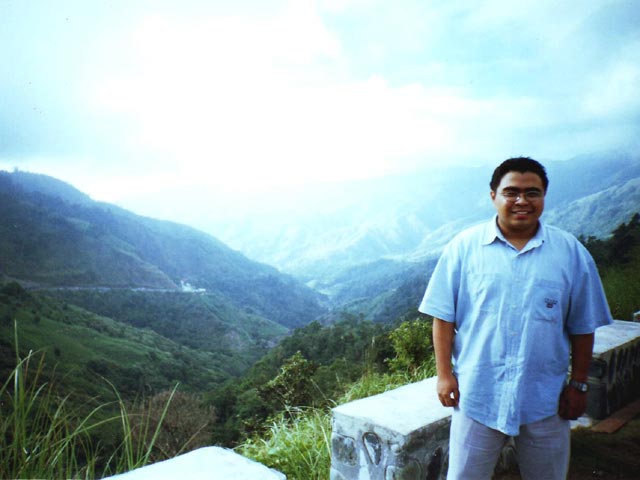
It was getting late and we still had Banaue on our list. The sun was still up when we arrived in the town proper. We could have made it to the viewpoint in time for photos but for some stupid reason, I made a wrong turn somewhere an ended up on the road to Mayoyao instead of the one to Bontoc. So to make the long story short, we weren't able to take photos with the famed rice terraces! Sigh! Good thing I came back this year.

Before we left Banaue, I passed by a souvenir shop to buy some miniature bulol (rice gods) which were dirt cheap! I got them for PHP50 each when a smaller one I bought in Baguio many years back was PHP250!

The next day was our trip around Nueva Vizcaya. During breakfast, Lino handed me a salakot which Tingting had bought for me since she found out during one of our conversations that I was colecting salakots. It was really nice of her. She had already left for Manila.

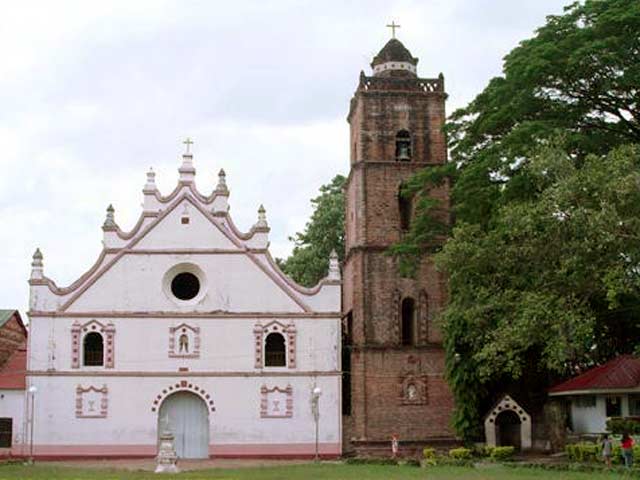
We drove back to Bayombong which was the meeting place for the trip. Our first stop was the Church of San Vicente Ferrer in Dupax del Sur which was declared a national cultural treasure the year before. For some reason, I misplaced my photos of the church since I separated it from the other Nueva Vizcaya photos for scanning. So we will have to make do with a photo from this tourism site.

According to the NCCA website, "this Dominican church was established in the late 18th century and features a baptistery and narthex pillars covered with finely carved stucco. The church’s convent retains some features from its violent past, such as slits on the outer walls which were used by archers to defend against attacks."

From Dupax del Sur, we made a trip further down south to Dalton Pass in Sta. Fe, the boundary of Nueva Ecija and Nueva Vizcaya. According to the DOT website, being "the only access between Pampanga and Cagayan Valley, the pass became the scene of much bloody fighting during the final stages of WW II and bore witness to the death of almost 17,000 Japanese, American, and Filipino soldiers. Commemorative markers stand by the road’s highest point, which also offers a good view into the headlands. The Dalton Pass National Shrine commemorates the death of General Dalton by a sniper’s bullet during WW II. At 3,000 feet above sea level, Dalton Pass is also the gateway to the Cagayan Valley Region and the Ifugao Rice Terraces."

The group stopped over along the road in Santa Fe to buy souvenirs. So I took this opportunity to purchase salakots for my collection. It was then up the mountain trail to the Ikalahan "Mountain Fresh" factory in Barangay Imugan which is famous for its various spreads and dried fruits. The Ikalahan are a tribal minority residing in the Caraballo Mountains.

One of their unique products are the dagwey (Saurauia bontocensis) preserve, jelly and spread. I liked especially the dagwey preserve which is the local version of prunes using the indigenous fruit. There are also guava (Psidium guajava) jelly, jam and butter; dikay (Embelia philippinensis) jelly; ginger (Zingiber officinale) jelly; passion fruit (Passiflora edulis) jelly; roselle (Hibiscus sabdariffa) jelly; and santol (Sandoricum koetjape) jelly and spread. You could read the whole story of this backyard industry in this FAO report.

A trip to Nueva Vizcaya would not be complete without a taste of its famous citrus fruit, the perante. On the way back to Bayombong proper, we bought perantes at popular roadside fruit stand in Bayombong. I also got myself some seedlings which I planted in our backyard orchard in Pampanga.

According to the DOT, "citrus fruits and oranges which are available all year round and being propagated in the towns of Kasibu, Kayapa, and Ambaguio and can be bought along the national highway at Busilac, Bayombong, making Nueva Vizcaya the Citrus Capital of the Philippines. Common varieties include perante, valencia, clementine, satsuma, pongkan, Washington navel, pomelo, calamansi, and others."

Wednesday, August 30, 2006

Ivan About Town in the Manila Standard

Thanks to Bong Austero for that nice write-up about the blog in his column Are We There Yet? (30 August 2006). Here are excerpts from his column:

There are hundreds of thousands of blogs out there. There are blogs that entertain; some intentionally, others purely by accident. There are blogs that educate; some deliberately, others through vicarious and accidental learning. There are blogs that advocate certain causes. And then there are blogs that are able to do all three and more. I have been meaning to write about some of them mainly because of the causes they spouse.

Ivan Henares’s blog (www.ivanhenares.blogspot.com) is one blog that truly deserves to get more traffic. Ivan’s blog is a travel and heritage journal (the blog’s title is “Ivan About Town”) as it documents his many sojourns across the country and other parts of the world. I do not know Ivan personally so I do not know if he is as frisky; but in a way, he is like the local Ian Wright of Lonely Planet sans the television camera. Ian has television, Ivan has the blogosphere. Ivan goes to places and shares the experiences in his blog; he even gives details such as how much a jeepney ride from this point to that point, or how much lodging or dinner costs in this or that place.

But Ivan’s main advocacy is preservation of Philippine heritage. And this is what makes his blog truly worth supporting. His current advocacy is preservation of old churches, which are systematically being demolished to give way to some local parish priests’ demented attempt to establish their “legacy” in their parishes. The extent to which such aspirations of greatness translate into destroying centuries-old churches is already alarming.

Monday, August 28, 2006

Surigao del Norte: Maradjao karadjao Surigao!

Here is another those trips from my archives. I attended an annual convention of the Association of Tourism Officers of the Philippines (ATOP) in Surigao City in October 2003. Since there are no direct flights to Surigao, I had to fly to Butuan City first. From the airport, we were met by the organizers who had a ready vehicle for us to Surigao City, the capital of Surigao del Norte, which was two hours away.

For the first two days, I had to endure the boring part which was the convention proper filled with speeches, lectures and keynote addresses! Hehe! But I was able to venture around the downtown area late in the afternoon when sessions were over. They have an American colonial period city hall in front of what is known as Luneta Park. Some of the better features of the park is a large sundial and pre-war acacia trees bordering the plaza.

As part of the convention, there was also a showcase of ethnic Mamanwa-inspired dances from Surigao's Bonok-Bonok Maradjao Karadjao Festival in the grounds of the Surigao Provincial Capitol, another elegant colonial building.

On the last day, they took us around the city and one of the places we visited was the Mabua Pebble Beach. The beach, which is about 30 minutes from the town proper, is most known for its kilometer-long stretch of fine round stones, native huts set in a natural backdrop of coconut tree-laden hills. We arrived just in time for its famous dramatic sunset.

If only I had more time, I would have joined the trip to Siargao Island the next day. But I had decided to move my return flight to Manila from Butuan to Cagayan de Oro in order to explore more of Mindanao.

So the next day, I took the bus back to Butuan City, the capital of Agusan del Norte, where I stayed for a night at the relaxing Almont Inland Resort thanks to promo rates for Cebu Pacific passengers. Among the places I visited was the Butuan National Museum, the "repository of historical and cultural materials and artifacts that proves Butuan’s prehistoric existence and rich cultural heritage."

One place I missed, and its such a shame that I did, was the Balangay Shrine Museum which is the attraction Butuan in most known for. The balangays of Butuan were declared national cultural treasures. I even bought myself a really nice miniature balangay to take home for display.

The next day, before leaving for Cagayan de Oro, I made a trip to the local market to look out for more cultural souvenirs. I was quite happy to find a shop selling different kinds of local salakots. And I bought several of them for my collection. After lunch, the hotel service took me to the bus station for my three hour trip to Cagayan de Oro, the capital of Misamis Oriental.

In CDO, my SSEAYP batchmate MJ picked me up at the station. The plan was for us to visit the Gardens of Malasag Eco-Tourism Village. But it was raining really hard when I arrived so we weren't able to do much. We met up with another batchmate Andy later in the evening and had dinner at the outdoor ihawans and food stalls along Magsaysay Avenue. But I was lucky since it was fruit season and I got to savor a Mindanao fruit which many of us in Luzon do not know about. I had one whole marang fruit all to myself! Hehe! Yummy!

My flight back to Manila was the next morning so I was not able to really do much. Again it was such a quick trip and I was not as adventurous then as I am now. Hehe! I'll hopefully be back in Cagayan de Oro this September en route to Camiguin.

Friday, August 25, 2006

Vietnam: Hoi An town and the story of my backpack

It was this trip to Hoi An, another UNESCO World Heritage Site, which opened my eyes to the backpacking culture. In 2003, I was introduced to bus travel between countries when I took a bus from Singapore to Kuala Lumpur to visit friends. From Kuala Lumpur, I took a six hour bus up north to Malaysia’s heritage jewel, the city of Georgetown in Penang. But I had always traveled with a large piece of luggage and it was difficult for me to move around. The first thing I would do when I arrived in a place was to look for a hotel and drop off my luggage before I could go around. The Hoi An trip changed that.

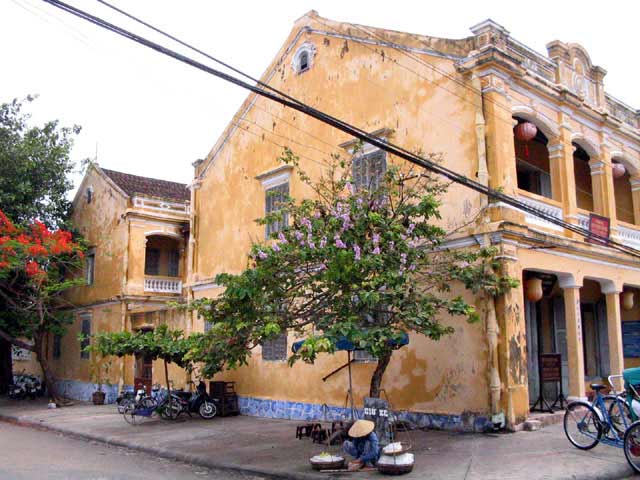
According to UNESCO, Hoi An “is an exceptionally well-preserved example of a South-East Asian trading port dating from the 15th to the 19th century. Its buildings and its street plan reflect the influences, both indigenous and foreign, that have combined to produce this unique heritage site.”

I purchased my bus ticket at an agency in front of our hotel. I was happy that I only spent US$6 for a round trip ticket. The attendant was so surprised that my return ticket was on the same day because tourists who purchased tickets from them usually bought a one-way ticket since their next stop after that would be Ho Chi Minh or they would stay overnight and come back the next day. Imagine catching the first six hour trip down to Hoi An, staying for only two hours, and taking the last bus back to Hue. It’s like commuting to Baguio and coming back down just after two hours of sight-seeing. But unlike Baguio, Hoi An was just a small town and two hours was enough to see the sights but not quite enough to experience the culture. But I was pressed for time so I had no choice.

On the wall were other destinations in Vietnam and the rest of Indochina. It was then that I realized that I could tour Southeast Asia via bus. And it was that realization in 2004 which led to my three-week five-country journey around Southeast Asia last April. I remember e-mailing people about the idea and buying a map of Indochina in Hue to try to plan the trip. And thus, after two years of yearning and planning, the trip finally pushed through.

One of the added attractions of this bus trip were stopovers at other tourist attractions on the way including this place called Marble Mountain. When we arrived there, there was shop after shop of marble souvenirs in all known colors of marble. Unlike those some of those cheap-looking marble souvenirs we have in Romblon (the marble in Romblon is high quality and the souvenirs are carved from whole marble and not molded marble dust and resin like the ones here but there's something about the carvings I don't like, especially the letterings they put which make them look cheap), the shops here had so many quality items to choose from such as animal figures, small busts of Ho Chi Minh and Chairman Mao, Buddha heads and other religious images as well as larger marble items. And the prices were shockingly cheap! I remember buying a 10-inch high brown marble Buddha head for something like PHP300. To make the long story short, I bought more than I could carry and realized that I would be lifting this box of marble stuff as I went around Hoi An.

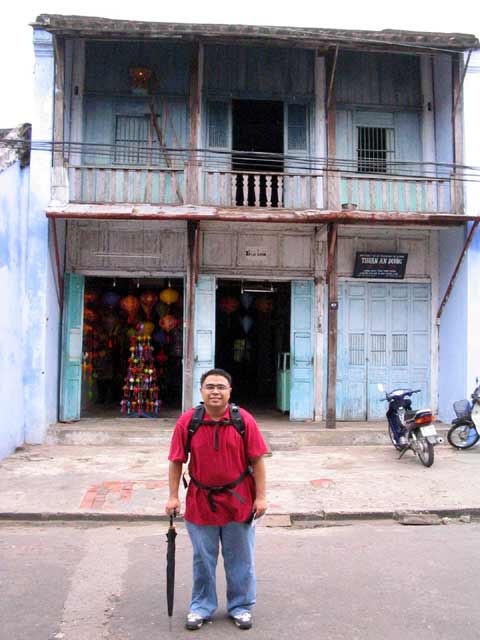
I never intended to buy myself a backpack but I ended up having to do so out of necessity. Yup, the first thing I did when I arrived in Hoi An was to buy a backpack that could carry all the items I bought. And I didn’t have to search far since there were so many shops which sold bags due to the fact that Hoi An was a popular stop in the Southeast Asian backpack trail. When I finally found a backpack which could hold the entire box, it was off for a walk around the old town to check out the sites.

So that's how I got my backpack and started bakpacking! Hehe! Anyway, I was reading Wikipedia and found this brief history of Hoi An: "The former harbour town of the Champa people at the estuary of the Thu Bon river was an important trading centre in the 16th and 17th centuries, where Chinese from various provinces as well as Japanese, Dutch and Indians settled down. During this period of the China trade, the town was called Hai Pho (Seaside Town), during the French occupation. Originally Hai Pho was a divided town, because across the "Japanese Bridge" used to be the Japanese settlement. The bridge (Chùa cầu) is a unique covered structure built by the Japanese, the only known covered bridge with a Buddhist pagoda attached to one side."

I also found this website which has a nice photo of the port area. You can check out my photos in Hoi An here.

Vietnam: Hue, Viet Nam and its Forbidden Purple City

Nope, that isn't in the Philippines. It's a photo of the Perfume River (Huong Giang) in Hue, Viet Nam which I took way back in June 2004.

I was looking through some old files to prepare a module on heritage conservation for local government units and saw a copy of the Hue Declaration on Cultural Tourism and Poverty Alleviation. It's quite significant to me not just because of its content but because I was there in Hue at the very time the Asian ministers of tourism were meeting to draft this declaration. I was lucky enough to participate and listen to the ongoing Ministerial Conference thanks to then Tourism secretary Obet Pagdanganan.

I consider this trip my first backpack adventure. In fact, it was during this 2004 visit to Viet Nam that I bought the very backpack which started my fancy for backpacking. I’ll share the funny story in the next entry. The trip was just for a few days and it should have been longer since I and sculptors Toym Imao and Norman Tiotuico were planning it for quite a while to attend Festival Hue 2004 and the 3rd International Sculpture Symposium which I wanted to duplicate here in the country. But my MBA studies started quite early and I had to cut the trip short so as not to miss too much in class.

From Manila, I took a flight to Ho Chi Minh City where I stayed for a few hours in transit en route to Hue. I had been to Ho Chi Minh in 2002 during the Ship for Southeast Asian Youth Program so I decided not to stopover anymore since I was pressed for time and I wanted to see new places. The flight to Hue was just an hour. You could opt to take a bus but that would take forever and should be reserved for a trip with lots of time to spare.

Hue, the former royal capital of Viet Nam's Nguyen Dynasty, is a UNESCO World Heritage Site. Replete with palaces, temples, royal tombs and other remnants of Viet Nam’s rich past, Hue finds itself in the company of other former royal capitals in Southeast Asia which have continuously aimed to preserve their outstanding architectural heritage. These include Angkor in Cambodia, Ayutthaya and Sukhothai in Thailand and Luang Prabang in Laos among others. In fact, the Purple Forbidden City in the heart of Hue was said to be patterned after the one in Beijing.

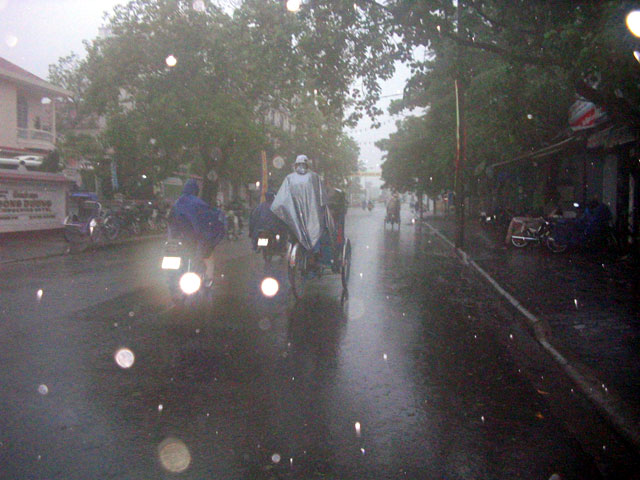
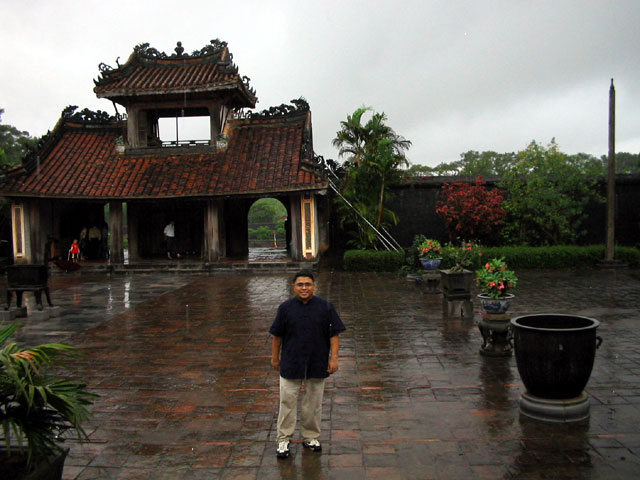
For the most part of the trip, it was raining. In fact, it is said that, "Hue's weather is infamously bad: the Truong Son Mountains just to the south seem to bottle up all the moisture, so it's usually misty, drizzly or outright rainy, and things get even drippier than usual in the winter rainy season. Bring along an umbrella any time of year." So I was always soaked from the torrential rains since our main means of transportation around were bicycles which we rented for the duration of the trip as well as cyclos which were pedicabs with the passengers in front of the biker.

Every two years, the city is alive and bustling thanks to a cultural festival called Festival Hue which attracts thousands of people from all over the country. I was impressed at how the Vietnamese value this celebration which featured various aspects of Vietnamese culture. Most Filipinos today would not “waste” their time watching cultural shows and presentations. I guess things that make us Filipino do not matter to most of us nowadays.

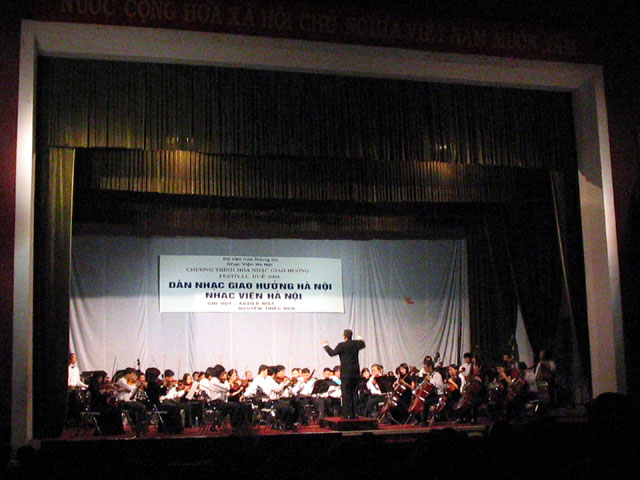
In fact, many of the events at the festival were free. And while I was walking around in the rain, I was lucky to chance upon this concert of an orchestra from Hanoi in one of the old art deco theaters. You just entered and sat down in the hall. I hope we have government-sponsored cultural festivals like these here in the country. It makes me feel sad that we demolish our old theaters here in Manila as well.

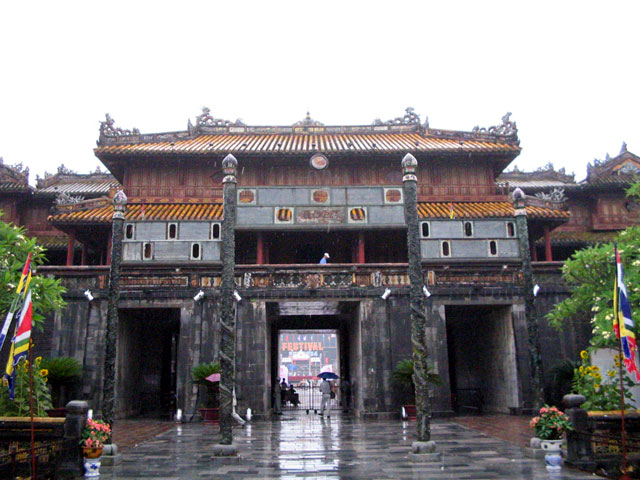
I got to visit the Citadel and the Forbidden Purple City, as well as the tomb of Tự Đức (right) during my first few days. But since it was raining, I didn't get to enjoy the structures as much as I should have.

Food there is cheap and one of my personal favorites was the Bánh Mì Thịt, a Vietnamese submarine sandwich made with a French baguette containing paté, Vietnamese mayo, different selections of Vietnamese cold cuts and deli, pickled daikon and carrots, and cucumber slices, often garnished with coriander and black pepper. These sandwiches are "common everywhere in Vietnam as a favorite of factory workers and school kids and eaten for any meal of the day, commonly breakfast and lunch." There was one stand outside our hotel which sold sandwiches for VND6,000 each (US$1 = 15,000 dong) so I made it a point to try a different one every morning.

I was lucky that during my last day, it stopped raining. So I contracted the services of a motorcycle-taxi who took me around the various royal tombs that lined the Perfume River. The tombs were lavish, housed in vast complexes along the banks of the river. But visiting them and other ticketed attractions was quite expensive if you planned to drop by many of them.

Unlike Angkor which sold passes that allowed you to enter all the sites (Cambodians entered free while tourists paid $20 for a day pass which was still quite expensive), in Hue, each site had its own ticket which would have been perfectly alright if not for the rates.

With the UNESCO World Heritage status, the government really took advantage of this by charging high rates for tourists to enter each one! Vietnamese nationals paid much lower rates while I think I paid VND55,000 (that's US$4) for every tomb I entered. There are eight of them if you have the time and money to visit all. Anyway, at least the fees here are channeled to restoration and not politicians’ pockets.


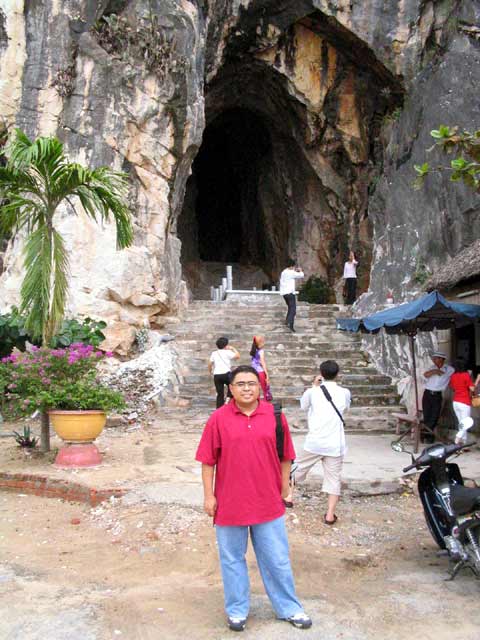
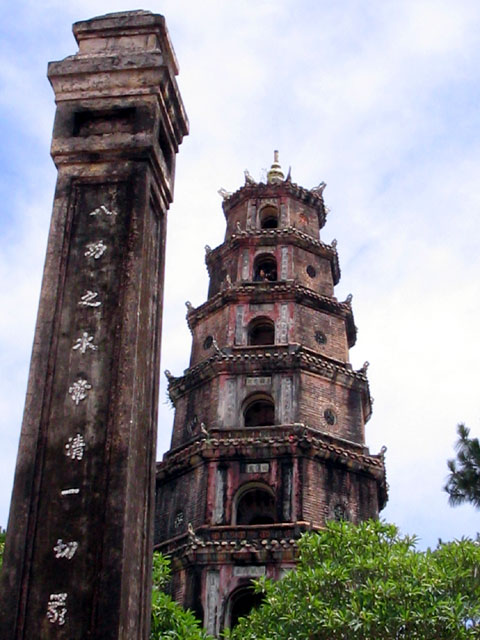
For the last day, I visited two more tombs namely those of Khải Định (above left) and Minh Mạng (above right) as well as the Thiên Mụ Pagoda (left). Anyway, you can check out my Patrimoine Mondial album to see more photos.

OT: To all those generations of kids
like myself who grew up learning about the nine planets of the solar system (I was an astronomy buff way back in grade school and had a monthly dose of Astronomy Magazine delivered to my home), Pluto is no longer a planet! Check out the details here.

Thursday, August 17, 2006

Tara na! Biyahe tayo!

"Tara na, biyahe tayo, nang makatulong kahit pa'no sa pag-unlad ng kabuhayan ng ating mga kababayan. Halika, biyahe tayo, nang ating makita ang ganda ng Pilipinas, ang galing ng Pilipino."

Check out these videos from the Department of Tourism...


Friday, August 11, 2006

Pampanga: Mekeni! Tuki ka Pampanga!

Upcoming events


Grand Assumption Procession
August 15, 2006, 5:30 p.m.
Metropolitan Cathedral of San Fernando
Join us as we revive one of San Fernando's biggest pre-war traditions, the grand procession on the feastday of Our Lady of the Assumption. Relive the good old "pistaym" days as we don our best Filipiniana attires. See you there!

Manyaman Pamangan Kapampangan
August 27, 2006 (Sunday), 9 a.m. to 5 p.m.
Santuario de San Antonio, Forbes Park, Makati City
Invite your family and friends to this one-day Kapampangan food festival. Enjoy home-made ensaimada, pako shrimp salad, San Nicolas cookies, panara, tamales and other delicacies you grew up with. Mangan tamu qng Forbes!

A Taste of Pampanga
August 14 to 25, 2006
Captain's Bar, Mandarin Oriental Manila
Experience the awesome cuisine of Pampanga, also known as the culinary center of the Philippines, as Captain's Bar brings you some of the province's flavourful and exotic fare. Join the reunion of Kapampangan old families during the opening on Monday, August 14 at 11:30 a.m. For reservations and enquiries, call 750 8888 extension 2417 / 2418.

50th Anniversary Celebrations of the
Canonical Coronation of the Virgen de los Remedios
September 8, 2006
Villa del Sol, City of San Fernando, Pampanga
Malacanang declared this day a non-working holiday in the Province of Pampanga. Join in the celebrations as we commemorate the feast of the patroness of Pampanga.

Pyestang Tugak 2006: 4th Annual San Fernando Frog Festival
October 11 to 12, 2006
Poblacion and Greenville Subdivision, San Jose, City of San Fernando, Pampanga
The province of Pampanga is known for its frog traditions and cuisine. These traditions are however fast disappearing due to inevitable progress and urban growth, hence the need to rekindle and promote these traditions.

On day 1, there will be a street dance competition and parade. While day 2 will host the traditional and fun events including the padwasan (frog-catching contest) early in the morning, frog olympics and dress-up your frog contest, and the frog cooking contests. This festival is close to my heart since I was the one who started it in 2003 when I was still tourism officer of San Fernando. So I invite everyone to take part.

Anyway, to those asking about what to see and do in Pampanga, check out the tourism MTV produced by the Pampanga Provincial Government...


Also check out the videos at Indung Kapampangan.

Tuesday, August 08, 2006

Zamboanga: Santa Cruz Island and its pink sand

And now, for the final installment of my recent trip is my visit to the Great and Little Santa Cruz Island Protected Landscapes and Seascapes. I had booked my trip with the DOT regional office. I could have opted to go on my own but that would mean paying for the entire boat. So I kept my fingers crossed hoping that a group would leave Sunday, and that they would allow me to tag along. Good thing there was a group of local teachers and students who booked a trip while I was in the office.
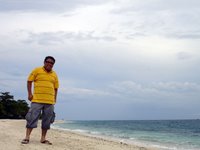
So I was up early to make sure I made the 7 a.m. call time. There was still no sign of the group at 7:15 a.m. so that got me worried. Until finally someone had approached me asking if I was the one who was going to tag along. It turned out, the group had two designated meeting places. And the bigger group which was at the pier was gone before the organizer had arrived. To make things worse, there were just three of us at Lantaka Hotel, myself, the organizer and a student.

After waiting for sometime, we decided to check again at the pier. We would later find out when we got to the island that the group which met at the pier, after seeing the rough waves which were a result of the tail end of "Inday," had backed out! Anyway, after some haggling with the boat owner, we were able to bring down the cost thanks to our appeal to pity.

So the three of us made the trip to Santa Cruz despite the rough seas. And I was tense for the most part as our boat made the slow trip to the island, rocked by strong waves. I was actually praying for sunshine. We got there in one piece. And for some twist of fate, the sun did come out a few minutes after we arrived on Great Santa Cruz Island.
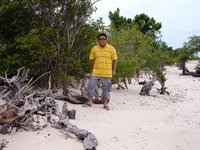
The two islands which are a few meters away from each other, and the waters that surround it form the Great and Little Santa Cruz Island Protected Landscapes and Seascapes. Both islands often play host to environmental activities with students from local universities such as Ateneo de Zamboanga organizing tree-planting activities and coastal clean-ups. There are just about forty families which live on the island, all from the Samal tribe which was allowed to stay in the protected area.

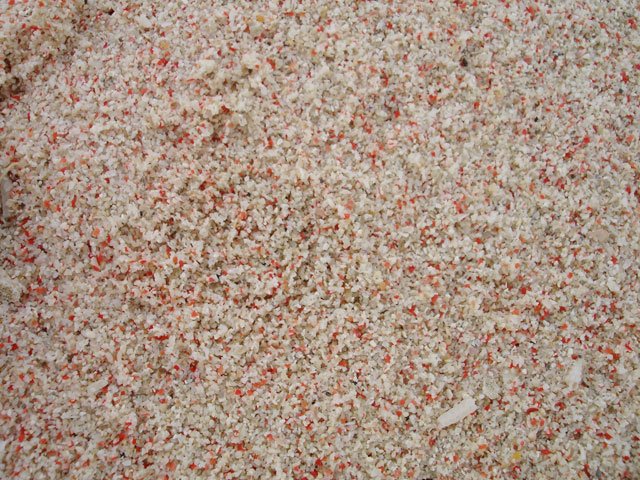
What makes the sand on the island unique is its distinct pink color which is a result of tiny pink coral fragments mixed with the white sand. For a close up of the sand, click here. And just like in Malamawi White Beach, I had the beach all to myself! We learned from the locals there that even before Puerto Galera and Boracay, Santa Cruz was a popular destination among tourists. But after the spate of abductions and kidnappings many years back, its popularity waned.

Anyway, after a brief dip in the blue water, I decided to walk around the island. It would take two hours to walk around from end to end. So I just hiked a few meters to check out the other side. As you can see from an aerial photo which I took from the plane, the center of the island was mostly mangrove swamps and a lagoon.

We went back to downtown Zamboanga at about 12 noon and this time, the water was calmer. But I had a worse headache than the day before. Again, I decided to eat at Tini's where I ordered murtabak daging (beef prata) and roti kosong (flour pancake). Then I walked back to the pension house to freshen up and take a quick nap. I made sure not to sleep too long since I wanted to visit as much as I could during my last 24 hours in Zamboanga City.
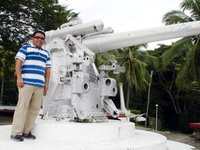
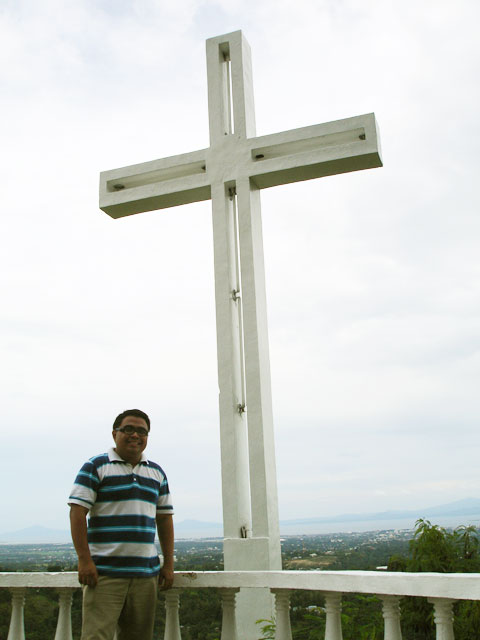
Next on my itinerary was a trip to Mt. Pulong Bato in Barangay Abong Abong from where visitors are rewarded with a breathtaking view of Zamboanga City and the outlying islands. From downtown, I took a jeep to Abong Abong via Pasonanca which was just PHP10. Make sure you mention to the driver that you want to visit the stations of the cross so that he could drop you off at the foot of the mountain. I was dropped off at a place called canyon or Freedom Park which had some military relics, large guns in particular hence the moniker canyon, and a tomb for an unknown soldier.

I thus ended up walking an extra 1.5 kilometers to the foot of the mountain, not including the 750 meter steep climb to the vantage point. On the way up were bas relief murals of the fourteen stations of the cross. That was really exhausting! But the view from on top was worth the climb. Since the road is well paved, you can drive a vehicle up as well.
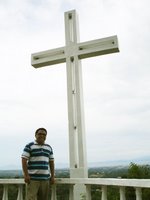
It was about 3:30 p.m. and I had to rush down and back to downtown since I had one more destination on my itinerary, the oldest mosque in Zamboanga in Barangay Taluksangay. People had warned me that it was going to be far but that did not hinder me. So as soon as I got back to downtown, I immediately boarded a jeep to the Muslim community of Taluksangay near the Mercedes District. It was about 17 kilometers away and the fare was PHP20.

I arrived there at 5 p.m. just before the sun went down. I was happy to see a marker of the National Historical Institute which emphasized the significance of the site to our nation's history.
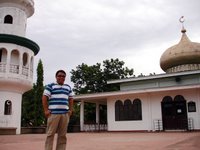
As I mentioned earlier, this was the first mosque in the Zamboanga Peninsula. Built by Hadji Abdullah Maas Nuno in 1885, it was the first center of Islam which was recognized by the international Islamic community.

Anyway, going back to downtown Zamboanga City was going to be a problem since the jeepney driver had mentioned me that there were no more trips back. So from Taluksangay, I took a pedicab to the next barangay which was Talabaan where motorcycles-for-hire were waiting to take me back to the highway. The trip was PHP30 and I agreed since I would be able to stopover at the Gabaldon buildings in the Mercedes Central School. I was surprised to see many of the buildings intact. Aside from the main building, the original home economics and industrial arts buildings were still standing.

From the highway, I took a jeep back to downtown. The good thing about the public transport system in Zamboanga City is that all jeepneys travel to the downtown area so you can easily find you way around. I got off at St. Joseph's Church to hear Mass. The church was air-conditioned which was a welcome feeling after a humid and tiring day.

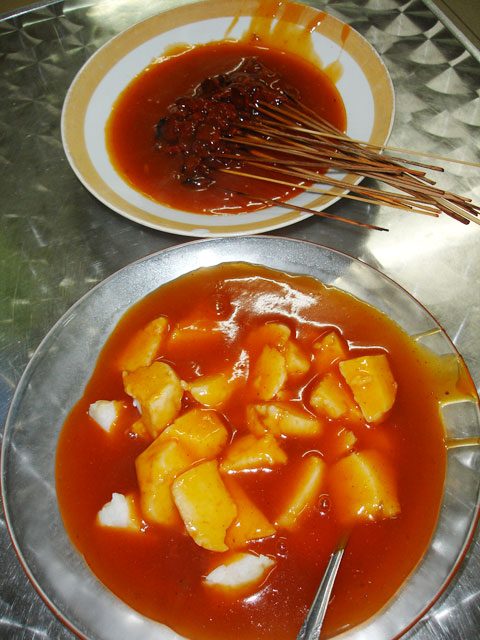
After Mass, my plan was to check out those satti outlets again. It was just 7 p.m. and I was surprised to see all of them closed! So I asked a tricycle driver to take me to the nearest sattihan. The driver mentioned to me that those were the only ones he knew. And that the reason they closed early was because they were open as early as 4 a.m. So that's why! It turns out satti was a breakfast dish in Zamboanga.

Anyway, I went back to Tini's for dinner since this was the last chance I could eat roti in a long time. And I made sure I went to bed early since my plan was to savor the elusive satti before I left on the 9:55 a.m. flight. I was up at 6 a.m. and finally, I was able to treat myself to satti! As I mentioned in a previous post, these were three small pieces of roasted beef on a barbeque stick dipped in a bowl of sweet and spicy sauce served with rice floating in another plate of the same sauce. Each was PHP3.50 and the rice was something like PHP8 per serving (if you remember the rice I had in Larsian which I mentioned in my Cebu entry, it was the same one).

I then went back to the pension house to take a quick nap. After checking out, I took a tricycle to the airport for PHP30. I was quite early for the flight but it was better to be there early than to be left behind. Good thing there was a massage service there so I got myself relaxed before boarding.

One thing I liked about the experience at the airport was that everyone on the runway, from the ground crew to the security guards waved at the plane as it left the tarmac. It was a very heartwarming experience for passengers looking out the windows.

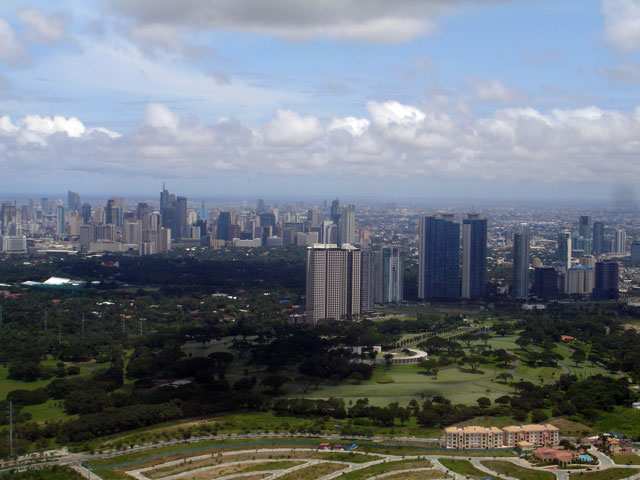
I took a lot of photos on the plane as well. Here are two of them. The first is the Ortigas area with the Pasig River and the old Rizal Provincial Capitol in the green open space along the river close to the center of the photo. The bridge you see is the C5 Bridge.
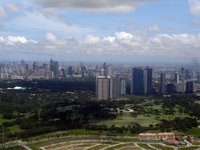
The second photo is Makati with the Fort Bonifacio Global City and American Cemetery in the foreground. I guess that's it for now. Until the next trip.

Saturday, August 05, 2006

Basilan: Off the beaten track in Basilan

Today, I visited Basilan. Just the mere mention of the name evokes fear among those unfamiliar with the place. Every time I told someone that I was on my way to Basilan, I received a shocked response. Who would want to visit Basilan anyway? But if not for the bad publicity brought by the Abu Sayaff many years back, Basilan would be a perfect ecotourism destination if developed properly.

I was planning to get up early today but that didn't work. I was still unusually tired. Anyway, instead of the early morning fast craft to Isabela City in Basilan, I was able to catch the 9:30 a.m. The fare for a first class ticket was PHP130. The ordinary seats at PHP100, although also air-conditioned, are usually jampacked. So the extra PHP30 was worth it. I arrived in Basilan about an hour later.

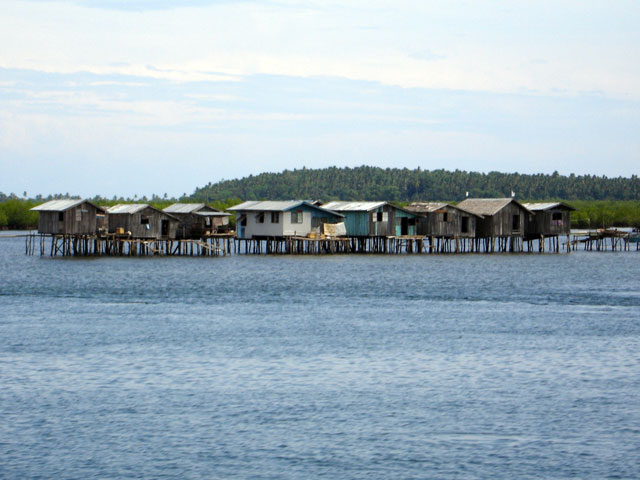
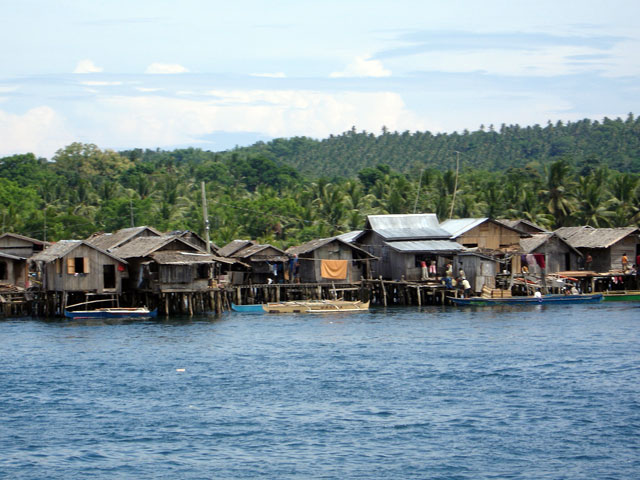
Greeting you as you entered the port were villages on stilts and the minarets of mosques at the center of these communities. From the port, I took a short walk up to the provincial capitol where I decided to take a tricycle to the passenger terminal to Lamitan. My first stop for the day was a waterfalls in the heart of a town made infamous by the sensational clashes between the military and the Abu Sayaff a while back. And here I was on my way there for a visit!

I took a commuter van to Lamitan which was about 27 kilometers away from Isabela. The trip costed PHP40. I was expecting to see bad roads after all that fighting years back but I was impressed since the roads to Lamitan were very well-paved, not a sign of the hostilities that ensued in the past.

As soon as I arrived in Lamitan, I asked around on how to could get to Bulingan Falls. I was pointed to a motorcycle-for-hire who agreed to take me there for PHP100. It was fair enough since the falls were quite far. I would figure it was a 10-kilometer trip from the town proper to the falls, which was bumpy most of the way and quite muddy at times. The trip took me deeper into Lamitan town which I'm sure used to be evacuated often before when hostilities between the Abu Sayaff and the military were ongoing.

You could still feel the turbulent past of the area since we passed by several military check points and camps along the way. One thing which surprised me was that the barangays going to the falls were predominantly Catholic since each had a little chapel. I didn't see a mosque either. It seems most of them could be found in the coastal areas.

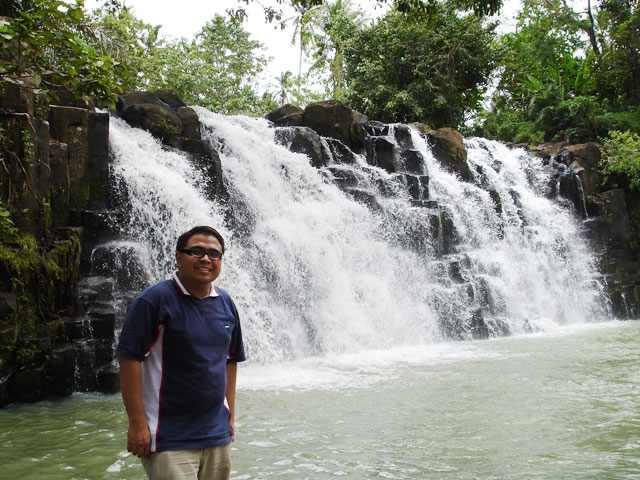
Bulingan Falls was not tall at all. But what made it nice were the square shaped rocks from which the water cascaded down to the pool below. You could see that the falls was frequented by tourists since the mayor had the banks cemented and built several picnic huts on the side. They could have done a better job though.

It was then back down that dirt road to the town proper. Lamitan town has been turned into another of those nondescript Philippine communities. And the only distinguishing landmark in the center of town is the statue of its founder Datu Kalun.

From Lamitan, I took a commuter van back to Isabela City. It was about 1 p.m. and after lunch, I decided to take a walk back to the pier. My plan was to take the last ferry back at 5:30 p.m. but since the weather was unpredictable, it would drizzle then the sun would come out, I decided to take the 3:30 p.m. trip back to Zamboanga.

Since I had time to spare, I asked about Malamawi Beach. It turns out, Malamawi is the island just across the port. And the beach on one side of the island was known to locals as White Beach obviously because of the white sand. There are frequent commuter pump boats which take passengers across the strait for PHP5. So since I had a lot of time, I decided to check it out.

The trip across was just about 5 minutes. At the opposite end, motorcycles-for-hire were waiting to take you to any point on the island. I was charged PHP20 one-way which was not bad. Again, it was off the beaten track since once you left Barangay Carbon proper, there were no roads, just motorcycle trails.

It was quite a distance and the trip took you to the other side of the island, passing by small communities living in vast mangrove forests. Among the obstacles we had to avoid were the occasional cows grazing amongst the thick vegetation along the path.

We finally arrived at the beach. And I wished I had brought my swimming gear! When visiting Malamawi White Beach, it's best that you go with a group and take a pump boat straight to the place. If you're alone, you'll have to make arrangements with the motorcycle to come back for you at a later time.

There were a lot of run down beach huts and picnic tables all over the place; but just a small group of tourists enjoying the white sand. Sometimes you'd realize there are so many underrated beaches all over the country worth visiting, little pieces of paradise secretly tucked away for those diligent enough to search for them and enjoy the serenity they offer.

After a few photos, it was back to Barangay Carbon, and then back to the port of Isabela just across. Again, I purchased a first class ticket which was a passport to comfort since I did not have to join the rat race into the fast craft since only a few people buy the said tickets.
By the time we neared Zamboanga, I was already very dizzy. It was an ordeal walking back to the pension house. But I decided to take a quick snack at Tini's where I bought my favorite roti telor and roti kosong (flour pancakes accompanied with curry dip). When I got back to the pension house, the next thing I knew was I was asleep again. I made sure I got enough rest since I had to be up early to catch the boat to Santa Cruz Island the next day.
Related Posts with Thumbnails