Monday, November 27, 2006

Guam: Snuba diving in Tumon Bay

Today, we visited Tumon Bay, one of four protected marine reserves of Guam. Tumon Bay is actually the area of the hotel row which is why visitors residing in the hotels could easily access it. Our plan was to snorkel from the Ypao Beach Park.

Instead, we found ourselves going snuba diving, which is a mix of scuba diving and snorkeling since although you have the oxygen tank, the tank is floating on an inflated raft above the surface. It was a good thing Snuba, a company which offered this great activity, had clients on Ypao Beach that day. So we were able to join in. A thirty minute snuba tour around the reefs of Tumon Bay would cost you about US$65 per person.

We got ourselves some underwater cameras yesterday night. It was a great deal since we got the reusable ones with flash for just US$15 at K-Mart. So you just have to change the film when it's done. So I'll post the photos of our snuba trip once I get the photos developed.
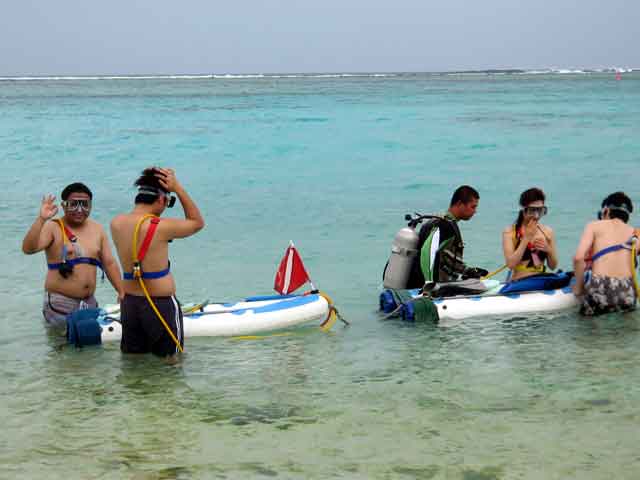
There was a lot of marine life in the reef. Not as much as the deeper reefs but going snuba in Tumon Bay was a good introduction to scuba for a beginner like myself. The fish aren't scared of people since no one is allowed to go fishing in this protected area and they are used to people too. I think I'll try the real scuba diving one of these days since checking out the marine life was really fun! I didn't expect it to be that tiring though because when I got out of the water, I was so exhausted. My throat was dry too!
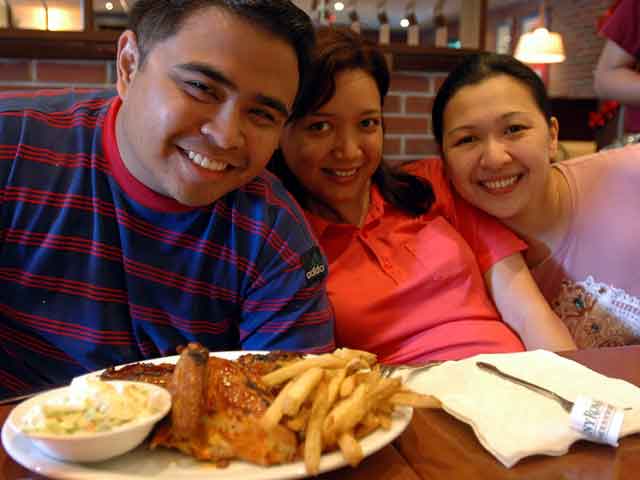
We had to rush and get dressed since we had to catch the rest of the group for lunch at Tony Roma's at the SM Store. Yes people... Henry Sy has landed in Guam! It was hosted by SM Store GM Tes Reyes and the marketing heads of Continental Airlines and the Guam Visitors Bureau namely Lou Sanchez and Pilar Laguana.

My lunch really accelerated my food binge. Talk about American servings! I had a large serving of ribs and chicken, coleslaw and a mound fries all in one plate! And to think I had tortilla chips and salsa before the main course.
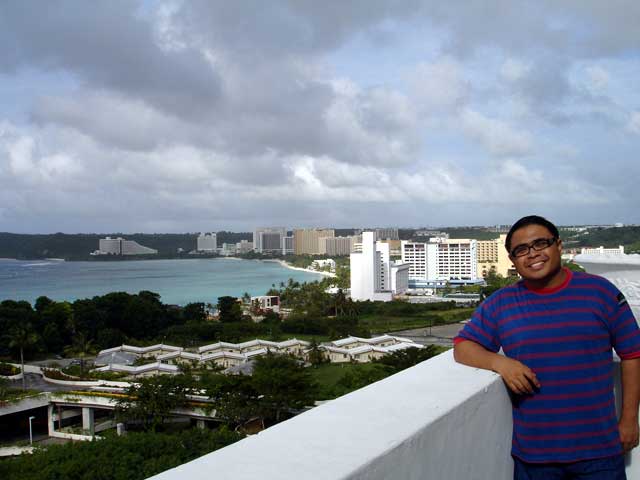
I decided to take a nap after lunch since I didn't want to go shopping anymore plus I slept quite late the night before since I was maximizing my Internet access which was US$15 for 24 hours! So they brought me back to the hotel while the rest went shopping or were doing more interviews.

From the balcony of my room, I took some photos of Tumon Bay. Really great view! It's a really good thing Guam was able to take care of its environment which is why you have these really blue waters right beside high-rise hotels.
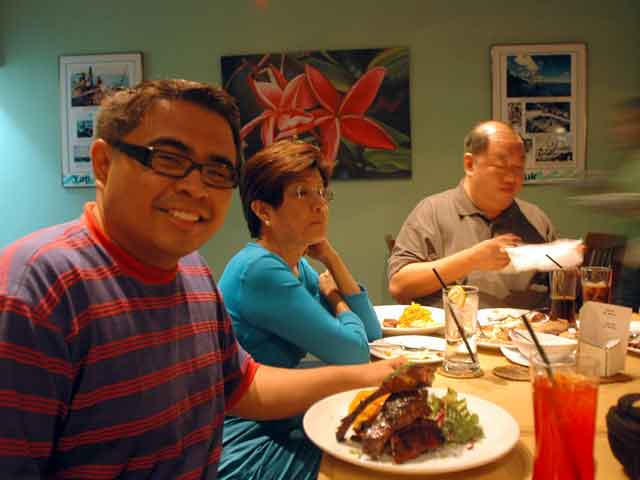

For dinner, we met up with successful Filipino businessman Emilio Uy at Proa Restaurant. Again, another large plate for dinner. I could feel my stomach and my face expanding! Mr. Uy was the owner of a very large office supply store in Guam and was very famous for his generosity to visiting Filipinos. He even sent us some pasalubongs at the hotel.
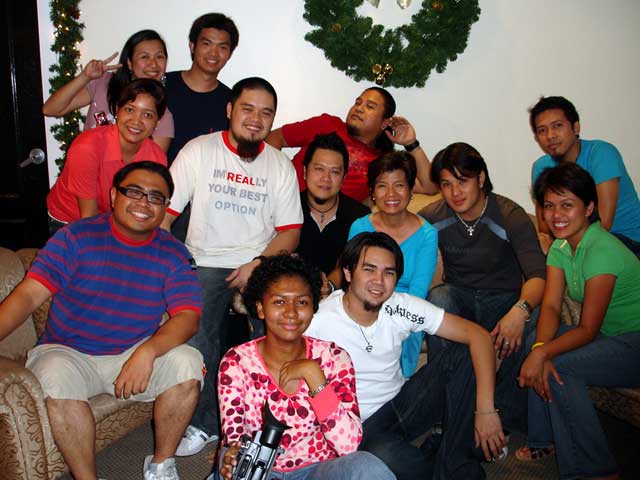
We had to rush back to the hotel since Probe had to interview Cueshe, a popular Filipino band, who was in Guam for a week for some gigs. Cheche Lazaro did the interview and we got to listen in. We found how they started in Cebu and the gamble they took by coming over to Manila without any assurance of gigs and all; how they lived in a single apartment, living on canned foods and noodles. Well, obviously their gamble paid off.

After the interview, I went up again to my room since I wanted to maximize the remaining minutes of the Internet connection. Haha! We leave for Saipan tomorrow.

OT: The M/S Nippon Maru is now docked in Manila. And I missed the SSEAYP reunion on board the ship! Oh well! I will have to wait for 2008 since it's not docking in Manila next year. Thanks to SSEAYP International Philippines for the SIP National Award for Arts & Culture. I apologize for not being there to receive the award personally since I'm still working here. Thanks again!

Photo credits: Karlo de Leon who took most of my photos, Jodi Madridejos and Cheche Lazaro.

Sunday, November 26, 2006

Guam: Road trip to the south of Guam

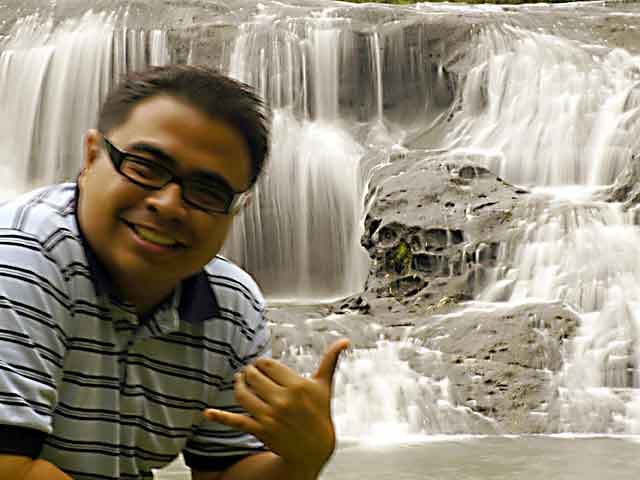
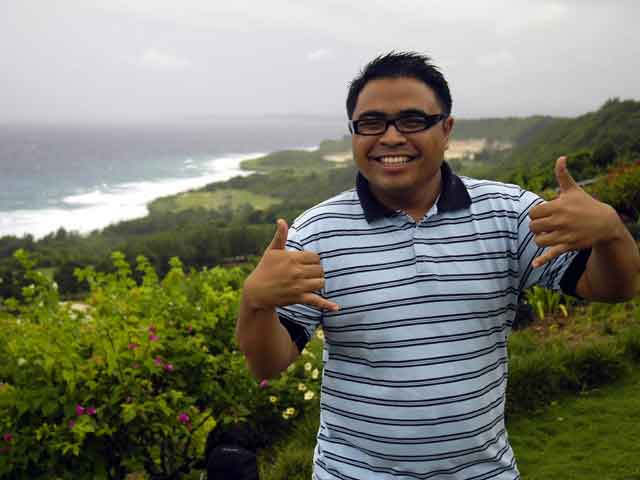
Today we visited the southern end of Guam. It was raining since the tip of a storm was passing through Guam. After breakfast at the hotel, we made our way eastward towards the Pacific side of the island. We stopped by the Mangilao Golf Club to check out the view of the Pacific coast and take some photos. Notice the hand gesture? That's the sign for Hafa Adai which is Chamorro for hello.

From Mangilao, it was a southward drive towards Talofofo. But on the way, we checked out the jungle cruise port but the boat had just left. There are two schedules, one at 9 a.m. and another at 1 p.m.

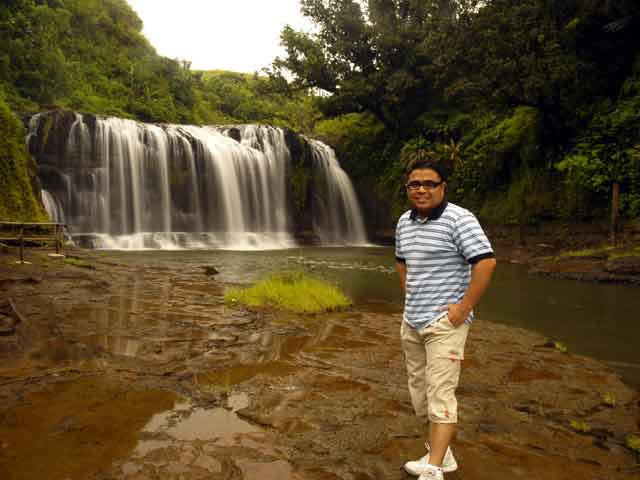
Our next stop was the Talofofo Falls Park. Talofofo Falls is one of Guam's popular tourist attractions. A privately owned area, the entrance fee for tourists is US$20 which includes a two-minute cable car ride down to the falls and back, the amusement park, and a visit to Yokai Cave.

The cave was the hiding place of Sergeant Soichi Yokoi, a Japanese soldier who hid in the Talofofo jungles for 28 years following the defeat of the Japanese in World War II. He was finally captured in 1972 and returned to Japan where he was given his back-pay. From the depiction on the wall, you could see that the cave was actually a small bunker 2.5 meters below the ground, 1 meter high and 1.5 meters wide.

We took the cable car down to the waterfalls area and hiked around. There are actually two waterfalls. Several rope bridges allow visitors to walk across the river to get around the falls area.

From Talofofo, we passed by Inarajan which we visited yesterday. We stopped at the Saluglula Pool which was a popular swimming area with a two-meter deep natural pool popular for diving. This pool was protected from the strong waves by several rocks.

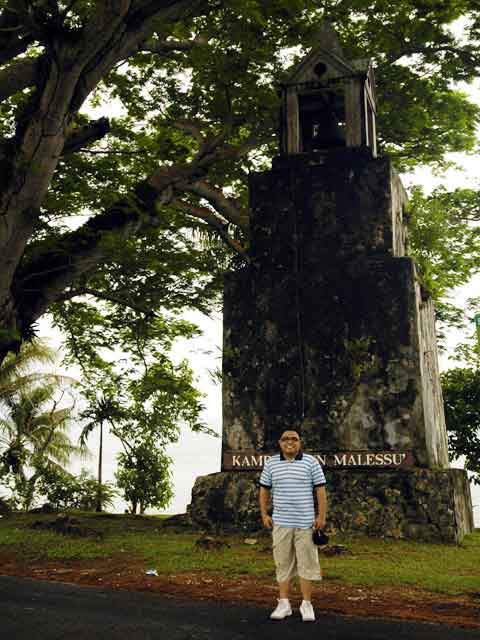
We made our way to Merizo which was celebrating its village fiesta that day, known as Fiestan Tasi. Among the interesting sites in the village is an old convent which is now a school as well as a bell tower. There is also a replica of the image of the Our Lady of Camarin, the patroness of Guam, right in front of the church plaza. Merizo Port is also the jump off point for Cocos Island, a very popular beach among Japanese tourists.

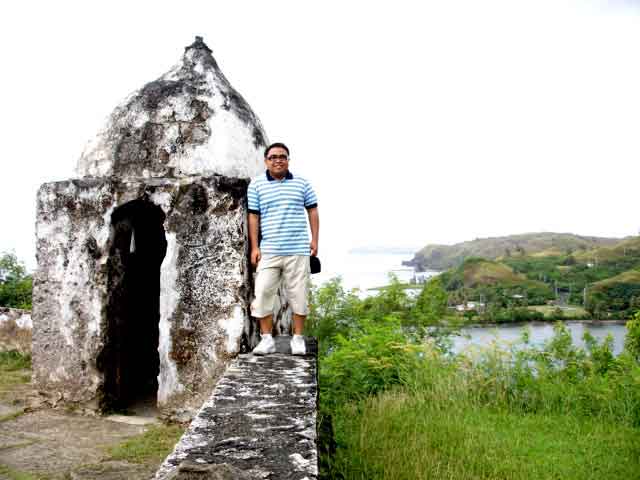
From Merizo, we went to Fort Nuestra Senora de la Soledad in the village of Umatac. Umatac Bay is said to be the landing site of Ferdinand Magellan in 1521 which is why a monument to him could also be found in the village. In 1565, Miguel Lopez de Legazpi arrived in Umatac, claiming the islands for Spain. This would start the long intertwined history of the Philippines and Guam since the Marianas were governed by the governor-general in Manila.

Umatac Bay was very important to the Manila Galleon Trade since it was the last replenishment stop before the long voyage to Acapulco in Mexico. Which is why from 1680 to 1810, several fortifications were built to protect the galleons from pirates and privateers. The last of the four forts constructed was Fort Soledad.

It was already close to 2 p.m. and we realized we hadn't had lunch yet. So our driver took us to a popular Filipino restaurant in Tamuning which is actually an institution in the Filipino community of Guam. Opening its doors in 1987, Rambie’s is said to be the longest-running Filipino restaurants in Guam. Serving Pinoy favorites such as kare-kare, sinigang, caldereta and dinuguan, the restaurant uses the turo-turo concept, enticing customers with its colorful display of different dishes.

From Rambie's, we made our way to the Hyatt in Tumon to pick up the Probe crew who had done interviews the whole day. From there, we went back to the hotel to freshen up for a dinner cruise. But the sad part was the boat cruise cancelled due to the storm. So we decided to go shopping.

Our first stop was Micronesia Mall which is owned by none other than Lucio Tan. I guess the Philippines is completing its invasion of Guam with the arrival of shopping malls. Yes, Henry Sy has his own stake on the island as well. Jollibee is there too and so is San Miguel! After Micronesia Mall which closes at 6 p.m. on Sundays would you believe, we went to K-Mart which was open 24 hours. Anyway, more tomorrow.

Heritage updates
626-year-old mosque named National Shrine

Saturday, November 25, 2006

Guam: Where America's day begins

Hafa Adai from Guam! Today was a full day for me since I’m on a familiarization tour of Guam courtesy of the Guam Visitors Bureau (GVB) and Continental Airlines. Have tons of work to do here for Pilmap Travel & Leisure. So watch out for the December 15 issue.

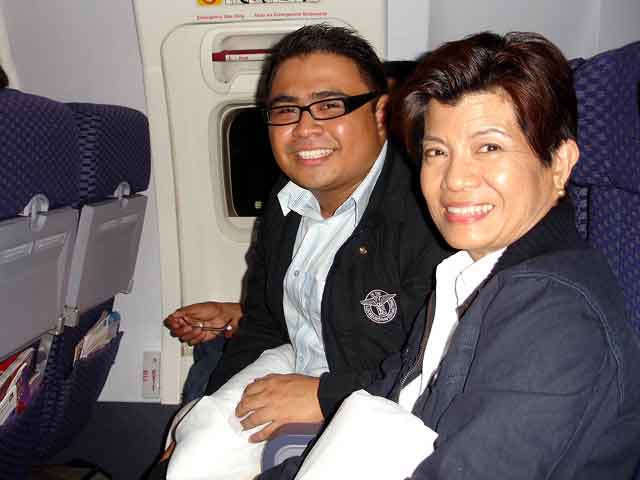
I left Manila yesterday night at 11 p.m. I was at the airport early since I had to get my ticket at the Continental office at the 4th floor of NAIA. Good thing we were given invitations to the MIASCOR Lounge so I was able to relax a bit, check my mail while waiting, eat some dinner and drink a few glasses of red wine. The rest of the group had left the night before. And last night, only myself and Probe Team host Cheche Lazaro were on our way to Guam. I got to chat with her since we were seatmates as well on the plane.

We arrived in Guam at 4:20 a.m. which is two hours ahead of Manila time. That meant we had less than three hours of sleep! Good thing our call time for the day was still at 9:30 a.m. so we had time to sleep some more before we buckled down to work.

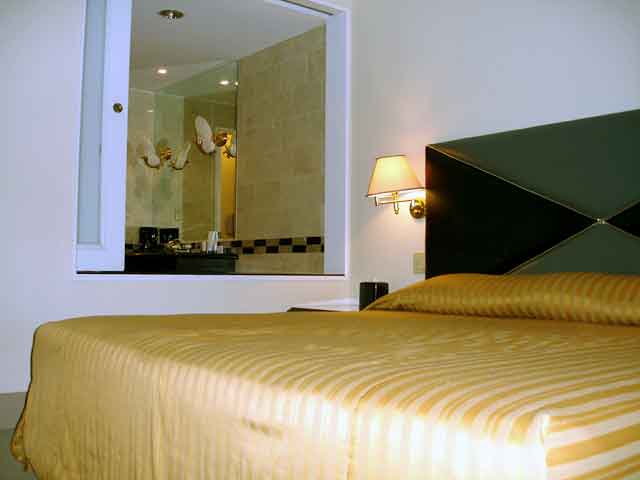
The group was billeted at the Royal Orchid Hotel, a four-star hotel in Tumon which is quite near the airport. The rooms are great. It was funny too because the bathroom area is as big as the sleeping area since it had a dressing room, etc. And you could slide the bathroom windows so that you could watch TV while you’re in the tub.

I was up at 8:45 a.m., took a quick shower and went straight down for buffet breakfast at the Brooklyn Café. Then we were off.

Our first stop was the Gef Pa’go Chamorro Cultural Village in Inarajan were we were given an introduction to the Chamorro way of life. There were several huts which featured various aspects of Chamorro culture such as salt making, rope twining, katupat weaving, etc. They charged US$10 per person.

The village, just a few huts and nothing fancy, was quite ordinary. But you learned a lot since the experience was hands-on. Imagine, we could do something like this in the Philippines such as in the Cordilleras or in Mindanao. And it could help preserve the culture since the income from tourism would encourage the indigenous communities to preserve and showcase their culture.

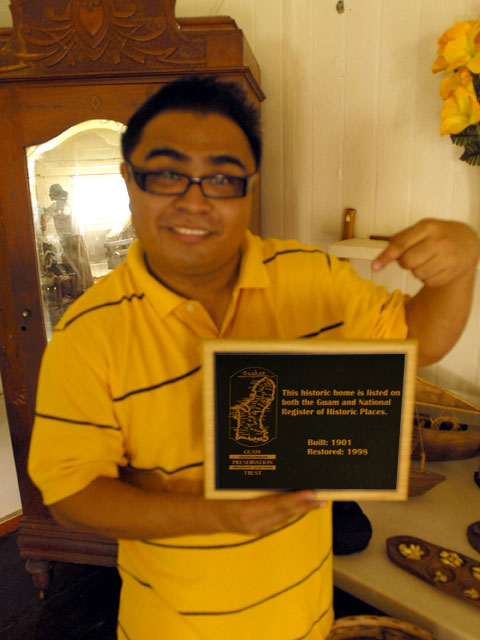
From the village, we walked towards one of the old houses of the village. You could see how much they value their heritage since, for Philippine standards, this was just an ordinary old house. Yet it was listed in the registry of heritage houses both in Guam and the United States because it represents the common folk, the Chamorro people.

In the Philippines, commoners’ houses would most probably not be considered as heritage houses by the NHI since they may not fit in their criteria as “exemplary” examples of Philippine architecture.

The house had a little marker inside made of wood designating it as a heritage house both locally and nationally; unlike at home wherein the NHI, at times, has to consider its budget first before declaring a structure since the cast iron markers are expensive. I hope the NHI just keeps on declaring heritage houses since unlike the other categories such as national shrines, monuments, landmarks or historical sites, I feel that the criteria for heritage houses should not be stringent since we are declaring based on cultural significance rather than historical accuracy. And the more we declare, the more we preserve, the better!

One thing I was also surprised to see was that the matriarch of the house was in a terno! Check out this photo. It just shows the deep-rooted connections between us Filipinos with the Chamorros.

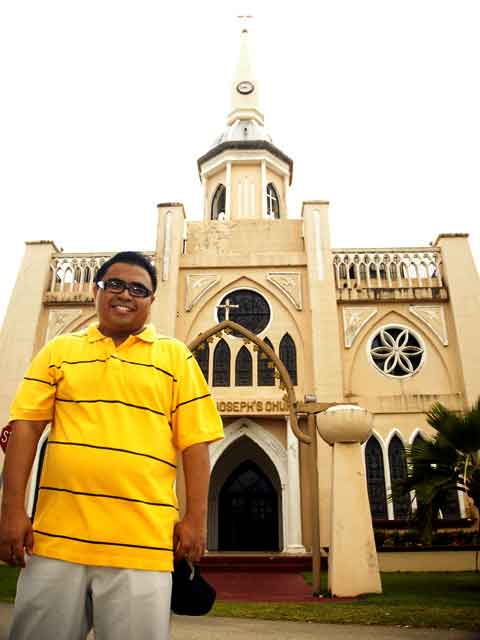
Anyway, from the house, we walked to the nearby St. Joseph’s Church. For a village church, I was surprised that it was air-conditioned inside. There were stained-glass windows portraying the different patron saints of the villages of Guam.

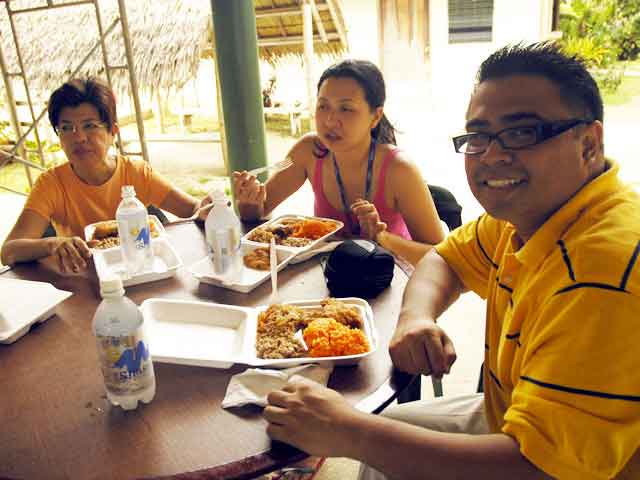
We went back to the Gef Pa’go Village to have lunch. The community served us traditional Chamorro food, a fiesta plate consisting of spiced ground chicken, fried chicken, pancit and java rice. There was so much to eat since everything on Guam was American-sized servings so that was two pieces of fried chicken and close to two cups of rice!

Our next stop was the Two Lovers Point in Tumon. But we made a brief stopover at Yoña at the viewpoint for Pa’go Bay.

Two Lovers Point is one of the more popular tourist attractions of Guam. Aside from being a scenic spot, it has a legend attached to it, a tragedy with a Romeo and Juliet-like plot. It was about two lovers who chose to end their lives together by jumping over the cliff rather than living separate lives.

The girl was a daughter of a Spanish aristocrat and a Chamorro woman of noble lineage. Her father had arranged a marriage with a Spanish captain. Learning about this, the girl ran away from Hagåtña (Agana) until she found a secluded shore. There she met a Chamorro warrior from a modest background. They immediately fell in love with each other.

Upon learning of the relationship, the father demanded that the girl marry the captain immediately. That same day, she ran to the same spot to meet her lover. They were pursued until the tow were cornered and trapped between the edge of cliff and the soldiers.

Seeing that they could not escape, the tied their long hair into a single knot, looked at each other’s eyes and kissed for the final time before jumping to their deaths from the cliff. The father could only but rush and stare in aguish at the waters below where only their knotted hair was seen floating. The two became a symbol of true love, the knot a symbol of two souls intertwined in life and in death; which is why the cliff is called Two Lover Point.

From the cliff, visitors are afforded spectacular views of Tumon Bay and the downtown Tumon area. At the top of the cliff, you would notice several padlocks attached to the grill. These were placed by lovers as a symbol of their love for each other. After the padlocks are locked to the grill, the keys are thrown over the cliff and down to the water. Some couples have even chosen this location for their wedding.

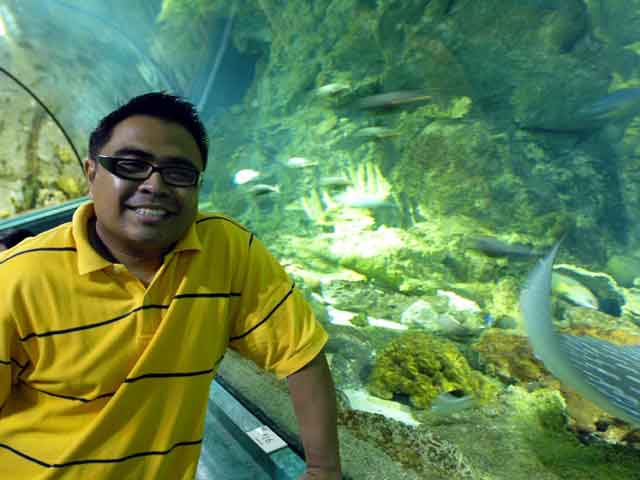
From there, we proceeded to Underwater World. This 800,000 gallon aquarium has a long viewing tunnel made from a special acrylic 2.5 inches thick. It is home to various species of sharks, stingrays, turtles, groupers which weigh as much as 500 pounds, and thousands of other ocean animals.

On the second floor is a sea life gallery which features unique and rare species such as garden eels, giant spider crabs, stingrays, and even a bamboo shark at the touch pool. Yup, I got to touch the shark.

But hear this! In the evening, the tunnel is transformed into a popular nightspot called Kaitei Lounge. Tables and chairs are set up in the tunnel where exotic cocktails are served to guests.


For the evening, we visited two festivals. The first was the Christmas Festival in Hagåtña and the lighting of the big Christmas tree as Skinner Park. I was touched by the sense of community of the people since even if it was raining, everyone stayed to watch the program under their umbrellas. Good thing it stopped raining while the program begun. We also got to chat with Madame Joann Camacho, the first lady of Guam. Although born in Guam, her father is from Bataan.

Our next stop was the Annual Autumn Festival at Ypao Park in Tamuning organized by the Japan Club of Guam. It was packed full with people despite the rains earlier. It was a chance for the Japanese of Guam to showcase their culture. Aside from the performances, many of the performers came straight from Japan, there were food booths offering various Japanese favorites while the game booths kept everyone busy with traditional Japanese games.

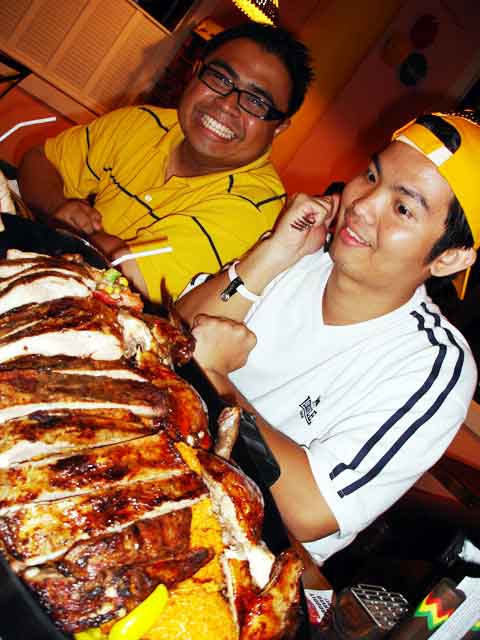
Although our plan was to eat dinner there, we decided not to since there were just so many people. So we went back to the hotel to put down our stuff and we walked to the next building to eat at Jamaican Grill. The food was great! We had roast chicken and pork ribs with their special sauce. That’s it for tonight. We have a lot of activities tomorrow.

It's easier to update my photos so just check my Multiply page for the latest photos.

OT: Atienza is getting greedier as ever. Now he plans to erect a statue of Manny Pacquiao in the Baywalk when he's very much alive! Shame on you Lito Atienza, using Manny Pacquiao's popularity to get votes for your son! Check out this Manila Standard
editorial. I even hear there is a plan to rename the San Andres Sports Complex after him! Let me remind these politicians of Republic Act No. 1059, An Act Prohibiting the Naming of Sitios, Barrios, Municipalities, Cities, Provinces, Streets, Highways, Avenues, Bridges, and Other Public Thoroughfares, Parks, Plazas, Public Schools, Public Buildings, Piers, Government Aircrafts and Vessels, and Other Public Institutions After Living Persons. Gone are the Quezon days when politicians could name cities after themselves.

Photo credits: Karlo de Leon who took most of my photos, Jodi Madridejos and Cheche Lazaro.
Thursday, November 23, 2006

Rizal: Angono Petroglyphs in Binangonan, Rizal

From Nemiranda, we were able to ask for directions to the petroglyphs. We were on the right track since the Angono Petroglyphs are inside the Eastridge Golf Club. So from his studio, it was a three-kilometer drive up and down a steep road. At the guard house, you simply say you're on your way to the petroglyphs. The site is close to the Antipolo entrance of the golf club. You had to enter through a tunnel cut into the hill to get to the other side where the petroglyphs are located.

The Angono Petroglyphs were discovered by Botong Francisco in 1965. Dating back to 3000 B.C., the 127 human and animal figures depicted are said to be the oldest works of art in the Philippines. They are actually at the boundary of Angono, Binangonan and Antipolo. I guess these art works really bolster the claim of the area as the center of art in the country. Neighboring Binangonan is host to the residence of national artist for painting Vicente Manansala (who was from Macabebe, Pampanga), which is a declared National Historical Landmark of the NHI.

Sadly, there are traces of vandalism near some of the figures. It just shows how some Filipinos value their heritage. These rock carvings are National Cultural Treasures and are under the care of the National Museum. In 1996, they were included in the World Monuments Watch as one of the 100 Most Endangered Sites in the world.

I realized that the fact that there was no obvious signage to the place served as a temporary protection since only people who appreciate it go out of their way to look for it. If it was popularized without the proper security and all, some shallow-minded people might think it a novel idea to carve their names beside the petroglyphs! So I guess it's better that way for the meantime.

From there, we proceeded back down. Our last stop was the Catholic Cemetery to check out the final resting places of Botong Francisco and Lucio San Pedro. I laud the local community for regulary holding tributes for them there. The tombs are actually ordinary raised vaults and I feel that Angono, with its artists community could improve them and transform them into real monuments.
Anyway, that's it for now. Where am I off to next?

Part 1: Viva San Clemente! Higantes of Angono, Rizal
Part 2: Angono is the Art Capital of the Philippines

Rizal: Angono is the Art Capital of the Philippines

Since Angono was small anyway, we decided to try our luck and drove towards the hills since that would be the best place to look for them. We made a turn towards the Eastridge Golf and Country Club and saw a sign pointing to the Nemiranda Family Museum. Now this is something I wanted to see having heard of the artist from television features to newspaper and magazine articles.

The entrance fee to the museum was PHP30 but since it was fiesta, they let us in for free. And the great thing about our visit was we got to meet the artist himself! Normally, they also offer lunch for visitors at PHP150 per head if I'm not mistaken. But he kindly offered us and other visitors to partake of the lunch which was served since it was fiesta. The food was great!

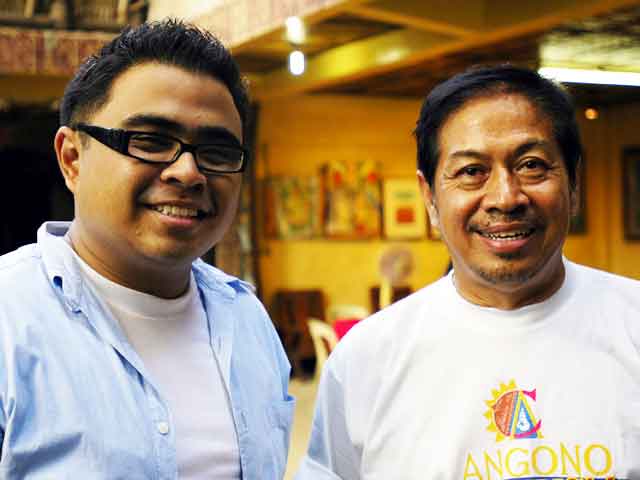
We had a nice chat about his place and how Angono transformed itself into the Art Capital of the Philippines. There are so many art galleries in the town such as his, Blanco Family, Vicente Reyes, Orville DR Tiamson, Ang Nuno, etc. I also asked him about the higantes and its history. He also shared with us his experiences with Botong Francisco, how his father and Botong were very good friends and how he could have been the last artist to talk with Botong before he passed away since they chatted (Miranda was a junior college student then) on the morning the very day Botong died.

Part 1: Viva San Clemente! Higantes of Angono, Rizal
Part 3: Angono Petroglyphs in Binangonan, Rizal

Rizal: Viva San Clemente! Higantes of Angono, Rizal

Today, I finally got to visit the town of Angono, Rizal which is known as the Art Capital of the Philippines and the hometown of two national artists namely Carlos "Botong" V. Francisco for painting and Lucio D. San Pedro for music. Our purpose was to check out the annual Higantes Festival as well as the fluvial procession in honor of the town patron San Clemente held every November 23.

But what a way to start my day! Since on the way to Angono, I got to witness Philippine road courtesy at its worst! Despite the fact that it was still early in the morning, traffic was slow no thanks to the jeepneys who had virtually occupied all three lanes of the road to pick up passengers. Ironically, the shoulders and parking slots on the side of Sta. Lucia East for example was empty and available for use. If we phase out jeepneys from the streets and replace them with an efficient transport system, I could bet you we wouldn't have traffic since most of the grind is a result of undisciplined jeepney drivers and that is virtually all of them!

You had tricycles on the left as well as center lanes when these slow creatures should use the right lanes. In fact, the law does not allow them on national roads! They are being tolerated and yet they cruise along the busy metropolis streets as if there are no vehicles impatiently following behind them. You had vehicles creating their own counter-flows. Indeed, what a way to start my day!

But my excitement overtook my impatience and lack of sleep especially as we neared Angono. The access road to the town was blocked so we had to enter it through a side street. We were able to park in front of the town plaza. From there, it was a 1 kilometer walk to the church where the parade and procession was going to originate from. We arrived at the church just in time for the ending of the Mass and the beginning of the festivities in honor of San Clemente.
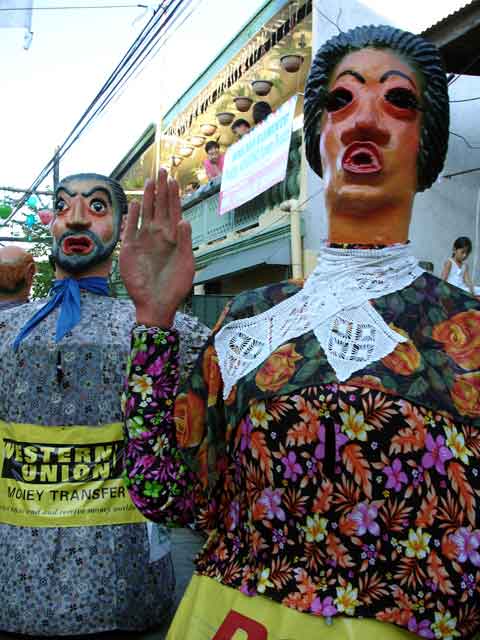
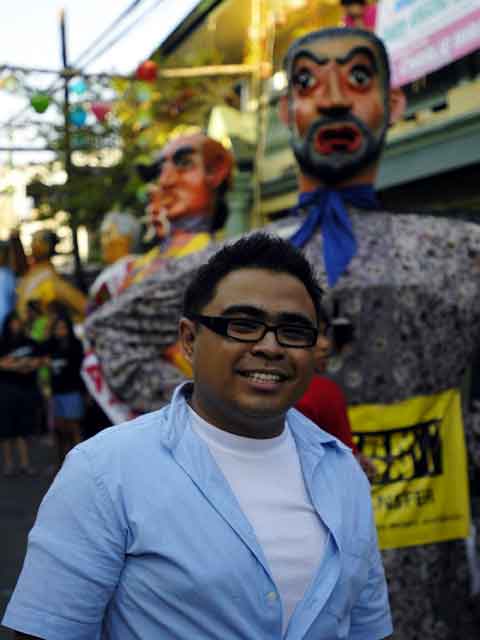
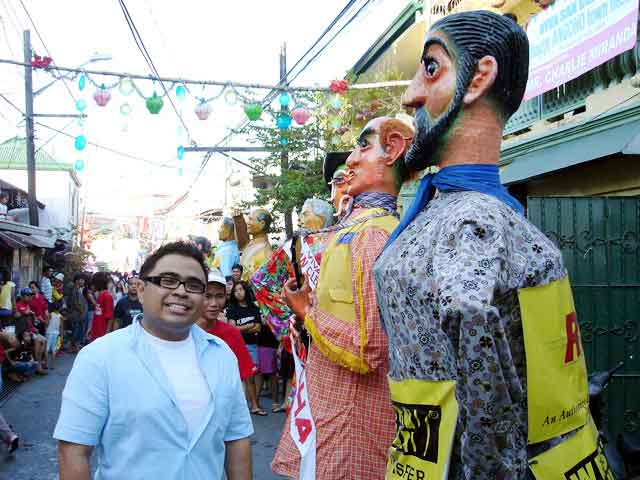
It was one big party on the streets of Angono as the loud and rambunctious mardi gras-like parade made its way around town. Of course, there were the higantes, which are colorful paper mache giants measuring about ten to twelve feet in height.

I heard that higantes used to be found in fiesta celebrations around the country. One story of its origin traces back the roots of this practice to the Spanish colonial period. Hacienda owners were wary of expenses and thus prohibited all celebrations except for one annual fiesta. To make the best of a gloomy situation, the townsfolk borrowed an art form imported from Mexico by Spanish friars and created larger-than-life caricatures of their Spanish landlords, a sly joke to get back at them.

As Angono-based painter Nemiranda recounts, there used to be only two or three higantes at the start of the procession. But because of the large number of artists, which at that time included Botong Francisco, Angono was not only able to maintain this practice. The town elevated it to an art form thanks to creativity of the many artists of the town who made their own versions of the higantes.

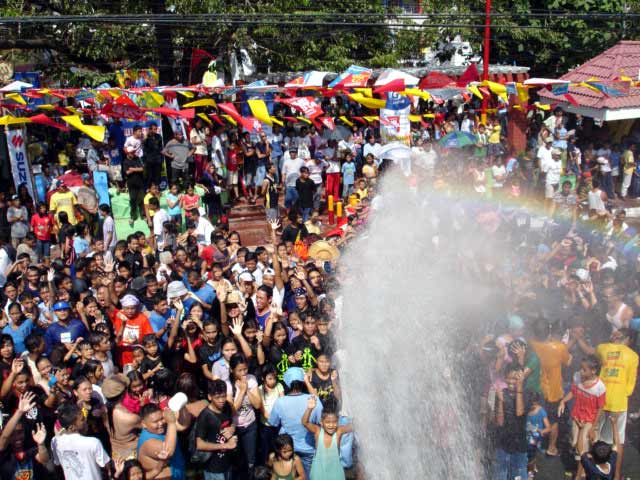
But I would learn that the higantes are just one aspect of this merrymaking. Following them was the procession proper. But this was quite an unusual procession led by altar boys in shorts and rowdy revelers following close behind. Expect to get wet since water is flying all over the place as participants chant "Tubig! Tubig!" asking the people around to throw water at them. Just pray that you don't get hit by a water gun of some wise guy who gets his supply of water from the canal along the street.

The bulk of the procession was composed of parehadoras, groups of young girls from every barangay, in colorful costumes, wearing wooden slippers (bakya), and each holding a wooden boat paddle (sagwan), marching together and stomping the ground in a uniform beat as they walked around town followed by a marching band.

And there were various groups of townsfolk in themed spoofs of pop culture icons. I wonder how Kris Aquino would react if she saw who spoofed her and the 26K. Haha! Towards the end of the procession were the andas bearing three images. The first was that of San Isidro Labrador. A little further back was that of the town patron San Clemente escorted by the Knights of St. Clement in red t-shirts. And at the end of the procession was the image of the Virgin Mary escorted by a bevy of young girls in white dresses. Bamboo pole-bars with hanging ornaments were installed along the route. These were raised by levers on either side as an image passed under it.

We met up again with the parade at the town plaza where it slowed down as louder chants of "Tubig! Tubig!" could be heard, with the crowd summoning the operators of a water truck from Manila Water to hose them down and drench them wet! Everyone wanted his or her share of the water as if it were manna from Heaven.

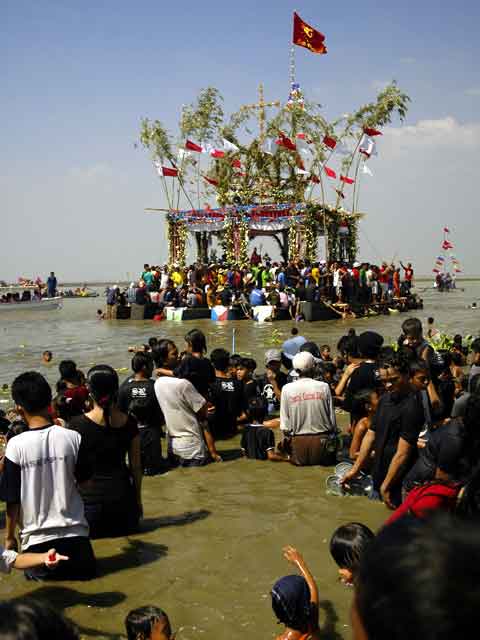
But the activities did not end there. The images still had to be brought to the banks of the Laguna de Bay where they would be enshrined in a floating pagoda for a fluvial procession. We decided to take a tricycle going there since it was still a distance away. The pagoda was a simple tent constructed from bamboo. As the last image was brought on board, the pagoda set sail.

We didn't finish the entire procession since we wanted to visit the Angono Petroglyphs. On the way back to the plaza, we saw the Blanco Family Museum but since we were on a tricycle, we couldn't stop.

We got my car and tried to ask around for the petroglyphs. Everyone we asked from the tricycle drivers, the traffic enforcers to the car wash attendants (my car was full of mud so I had it cleaned) had this puzzled look on their faces when we asked about the petroglyphs. Ordinary people in Angono do not know that they have a national cultural treasure in their town. And there were no signages along the main roads pointing to it either!

Part 2: Angono is the Art Capital of the Philippines
Part 3: Angono Petroglyphs in Binangonan, Rizal

Wednesday, November 22, 2006

Bulacan: Bulacan heritage groups react to imminent transfer of Mercado House

I have not seen the Bagac project personally. But from several friends in the Heritage Conservation Society, I was able to get the following: there are already about eight to ten heritage houses that have been transferred to the property in Bagac, Bataan. Many of them are reportedly from Bulacan. From Pampanga, there are two namely the Reyes House from Candaba, which was said to be the oldest and one of the grandest homes in Pampanga before it was transferred, and an unidentified house from Mexico. Also purchased was the Enriquez Mansion on Hidalgo Street, Quiapo which will be transferred soon.

Another home rumored to have been purchased is the Mercado House in Bustos, Bulacan which was ironically featured in the 2006 heritage homes calendar of Shell. Obviously, this house does not need to be “saved” and is best kept where it is standing right now.

Bustos, Bulacan has a very unique architectural style found nowhere else in the country. Because of its proximity to the forest and mountains, the Mercado House was built like a fortress. This unique type of 19th century house found only in Bustos is characterized by its all stone exterior since it was unlike the regular bahay na bato which was stone below and wood above. There are said to be about 2 to 3 of these houses left in Bustos and the Mercado House is arguably the best and grandest example of these.

It has carved stone corner pillars and carved stone garland and crucifix motifs in the entrance. The house also had peep holes for rifles to aim at tulisanes. The town thus has a different air and taking the house out would leave a large vacuum in the historical fabric of the community.

After hearing of the news, the Pamanang Bulacan Foundation immediately called for an emergency meeting of its Board of Directors. They have also alerted Governor Josie dela Cruz about these developments and we will get her response soon. I spoke with the chairman of the foundation who voiced out his strong opposition to the move. Maybe for the less-signifcant houses, it would not raise too much of an alarm. But for a house as prominent as the Mercado House in Bustos which is significant not only to the town but to the entire province of Bulacan, that is a different question. It just shows that when you go around shopping for the best examples of Philippine heritage and uproot them from their communities, a lot of ethical questions arise.

The problem is the fact that the purchases are sometimes kept from the local community, especially the local heritage foundations. And thus, they are caught off guard. When they find out, it is already too late. Watch out Bulacan since they're also after the Constantino House in Balagtas (Bigaa).

On the Bagac property, it was also discovered that there are many issues regarding the location and there is a large possibility that transferring them may do more harm than good in the long-term. First, no lime plaster was used to protect the stones. And given that the houses were reconstructed right beside the sea, the strong winds could easily wear out and weather the delicate adobe. The air will also cause salt encrustation on the stone which would lead to the disintegration of the adobe. Damage to the adobe would thus be faster because of its location by the sea.

Second issue is the fact that the person tasked with reconstructing the homes is not a trained restoration architect. As a result, the reassembling of the houses is not correct, proportions are wrong, unnecessary embellishments were added, and the setting is just not right so houses look funny and out of context. The way the “town” is laid-out does not follow any Spanish colonial tradition in the Philippines and is not authentic to any period of our history.

Some homes are from urban areas where in the natural setting, they are supposed to stand side-by-side and close to the street. One example is a house from Binondo which is a row house. It is funny to see a row house without the row and even a garden in front!

Issues of flooding also came out. The houses should have been reconstructed further inland. It is reported that the Bagac Church which is already one kilometer inland is still reached by flood waters especially when the waves are high. Moreover, we all remember the West Luzon Fault which became news when the issue of the safety of the Bataan Nuclear Power Plant in neighboring Morong was raised. Thus, the proximity of Bagac to a faultline makes the property prone to earthquakes and more so, because of its seaside location, to tsunamis.

Again, we repeat our call for a moratorium on this project until it is discussed in length in the proper forum.

OT: Congratulations to Manny Pacquiao on his victory! Thank you for lifting up the spirits of the Filipino nation. But Santa Banana! I will have to agree with Emil Jurado on his spending and gambling spree. As he writes "somebody like Pacquiao who is idolized by millions of Filipinos also has an obligation not to indulge in conspicuous consumption while millions languish in poverty." Check out the full column here.

Photo credits: Philippine Ancestral Houses (by Fernando N. Zialcita, et al)

Saturday, November 18, 2006

Pampanga: Giant Lantern Festival 2006


It's a spectacle you should not miss! A showcase of Filipino ingenuity, San Fernando's giant lanterns never fail to bedazzle the crowd! Watch twelve barangays battle it out with their 18-foot lanterns, each with at least 5,000 light bulbs, on December 16, Saturday, 7 p.m. at SM City Pampanga, City of San Fernando. Check out a previous entry on the festival here.

It's best to arrive at the venue early. I suggest you park at SM City Pampanga before lunch. Have lunch there, watch a movie or whatever since if you arrive later than that, traffic will start to get bad since over 100,000 people watch the event annually. Also park near the exit since you'll have a hard time getting out when the event is over. For more information, contact the City Tourism Office at (045) 961-5684.

Ivan About Town in the news
While I was doing my regular Internet search, I found the following:
Old houses mirror revolutionary past (15 Nov 06, PDI) - This Inquier article quoted one of my blog entries on San Miguel, Bulacan. Yikes! It just shows I'm being read. Haha! I hope my good friend Prof. Ambeth Ocampo does not get mad at me for my comments. But I really am hopeful that the NHI will declare San Miguel a National Historical Landmark soon;
Mekeni Tuki Ka! reaping rave reviews from Kapampangans abroad (11 Oct 06, Pampanga News) - Wow! Governor Mark Lapid thanked me for helping promote the Pampanga Tourism MTV and uploading it on YouTube.com. Over 28,000 have viewed the video as of today;
Pampanga heritage supporter is 2006 'Unlad Pilipinas' winner (14 Sept 04, SunStar Pampanga)

Thursday, November 16, 2006

Pampanga: Pio Chapel and the ethics of transferring heritage structures

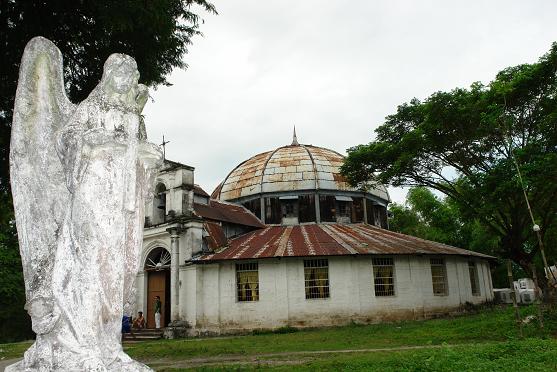
It's time to post again about my Philippine travels. Today, I visited Porac, one of the towns of Pampanga. Although Porac is more known for its natural sites such as Dara and Miyamit Falls as well as the Porac Highlands, it also plays host to some of Pampanga's important cultural heritage structures. One of these is the last intact (meaning unrenovated) hacienda chapel in the province which is located in Barangay Pio.

I have been to Pio several times before but we decided to visit today after it had been rumored that someone had purchased the chapel and will be transferring it to Bagac, Bataan! To give you a backgrounder on the Bagac project, check out this PDI column. As a result of the news, the Pio Chapel is fast becoming a rallying point for Pampanga in the fight to preserve its heritage and is now sparking a debate on the ethics of transferring heritage houses and structures.

Heritage structures must remain where they are because they are part of the historical fabric of the communities they are located in. There may be some cases however when transferring a heritage structure may be better than leaving a structure where it is, especially when it is highly likely that the structure will be lost or demolished in the near future.

But, when you go shopping for heritage houses and structures, especially in places where they are an important part of the historical fabric of the community, is that right? I was told that many of the houses were purchased from Bulacan, including one from the heritage town of San Miguel de Mayumu (which now serves as the house of Bishop Soc Villegas) and another house in Bustos which was ironically featured in the heritage house calendar of Shell. I wonder if Governor Josie dela Cruz knows about this.

In Pampanga, the grand old Reyes House of Candaba, which was the oldest surviving house in the province and the house where Noli Me Tangere was shot several decades back, is now in Bagac. News circulating is that Mayor Jerry Pelayo is not happy and is making moves to protect what is left.

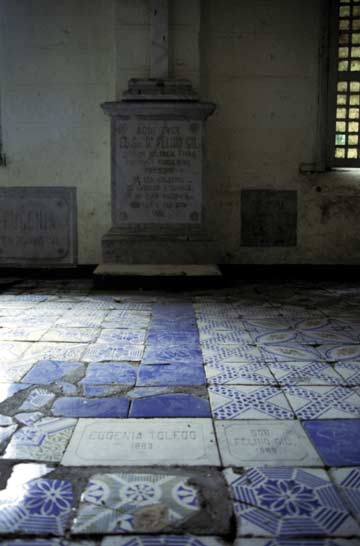
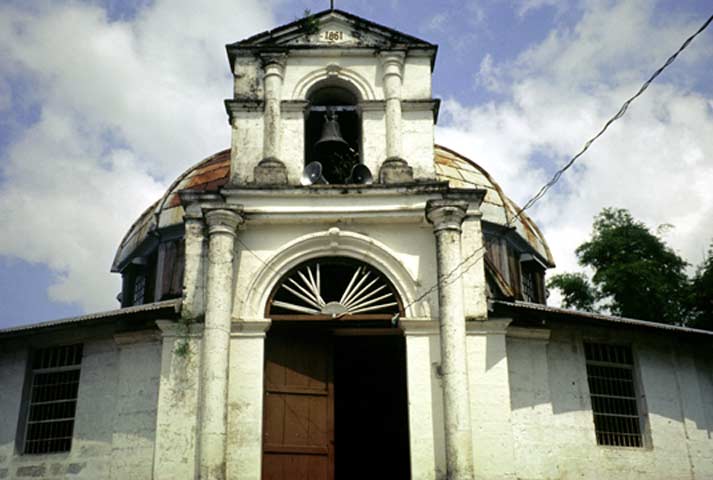
We got to chat with the parish pastoral council president and a barangay kagawad while we were in Pio. Mass is said at the chapel every Saturday at 5 p.m. It was built in 1861 as part of the hacienda founded by Don Felino Gil (who also founded the Escuela de Artes y Oficios, the oldest trade school in Asia, which is now DHVCAT) and his wife Dona Eugenia Toledo. Their descendants include actress Rosemarie Gil. But the property is no longer theirs since it was sold to someone from Bulacan who was said to have donated the chapel to the local community.

We were told that the Gils visited several times to cart off the antique furniture and artifacts inside their hacienda house and chapel. Nothing was spared including the piedra china flooring around the chapel and the house. The most infamous of these visits was in the 1980s when actor Dante Varona, who accompanied them, climbed the belfry of the chapel hoping to get the centuries-old bell. He was mobbed by the local community and they were chased away with tabak, an agricultural-based cutting bolo.

The chapel is very important to Pampanga because as I mentioned earlier, it is the only intact visita in the entire province of Pampanga. Aside from that, it is a circular chapel built during the Spanish colonial period, pre-dating the UP Chapel (which some claim to be the first circular church in the country) by 145 years!

The people of Barangay Pio in Porac are now up in arms after word reached them that their chapel was reportedly sold by a still unknown person and would be transferred to Bagac soon. The municipal government and the local community are now vigilantly guarding the chapel. And if and when the demolition crew comes to get it, they said they will protect it with their lives. Quoting them, "They could not even get the bell, what more the entire chapel!"

Now with that situation, is it still ethical to transfer a heritage structure to someone's private property? And even more so when news is going around that the structure is being transferred to serve as a decoration for their daughter's debut?

A moratorium on this Bagac project should be done until further studies are done on the location in particular since there are a lot of issues on the safety of the houses being built so close to the sea, and until the heritage community has fully digested this unusual project and threshed out the ethics of transferring heritage structures. Again, heritage structures are best kept where they are so that they are appreciated in the proper context vis-à-vis the environment they are built in.

Actively shopping for heritage houses for use as scrap material for homes or transferring them whole, and even worse, using coffee table books featuring heritage homes as shopping catalogues is simply detestable. The best way to save a heritage house is by educating the local community about the value of a heritage house, the significance of its architecture or former inhabitants to the local community, and its potential as a symbol for the community to strengthen local identity and pride of place.

Photo credits: Tonette T. Orejas (2nd, 3rd and 5th photo)

Wednesday, November 15, 2006

Manila: What is wrong with Manila?

When President Manuel L. Quezon said, "I prefer a country run like hell by Filipinos to a country run like heaven by Americans." I'm sure he never thought that his wish would come true quite literally.

Senator Alfredo Lim was right when he berated the City Government of Manila for its greed. Two educational institutions in Tondo, both integral parts of Manila's heritage, and providers of free education to no less than 10,000 students in Tondo, will soon give way to shopping malls. Oh how Atienzic!


And the good senator and former mayor could not have said it better: "These two lands, inseparably identified with institutions devoted to education and imbued with memories of the Manileños’ past, having existed for decades as public schools, accommodating no less than 10,000 poor students of Tondo, for free, the Rajah Sulayman High School and Jose Abad Santos High School, are awaiting their unexpected and dreaded demise, as their death certificates have been signed by no less than the City Council, with the death sentence struck - with a thumb-up sign, by its City Mayor. As heralded, from the schools’ burial sites will rise luxurious malls: the stereotypical symbols of the modern care-free lifestyle – luxurious wares, expensive foods, entertainment centers, fully air-conditioned establishments."

He adds, "Without a doubt, this is the voice of gold, the whisper of wealth, heard and heeded by ears of avarice and greed."

The article Lust for silver triumphs over Filipino heritage was published in two part in Malaya on November 15 and 16.

OT: I updated my Multiply site and added some background music. Did you know that the instrument used in the Lonely Planet theme is the kubing, a jaw harp from the Philippines?

Monday, November 06, 2006

China: Guangzhou, last day in China

I arrived at the Guangzhou East Train Station at 11 a.m. I was met at the station by Jiajin, our liaison officer during the program who was nice enough to take me around Guangzhou during my last day in China. We hadn't been able to see Guangzhou during the program in Guangdong Province since the activities were in Dongguan City.

From the Guangzhou East Station, we took a subway to the Guangzhou Train Station (there are two stations in Guangzhou) since the hotel I was going to stay in was right beside it. It was convenient for me since right beside the hotel was the China Southern office and the pick-up point for the airport shuttle which left every 15 minutes. I paid RMB150 for a single room.

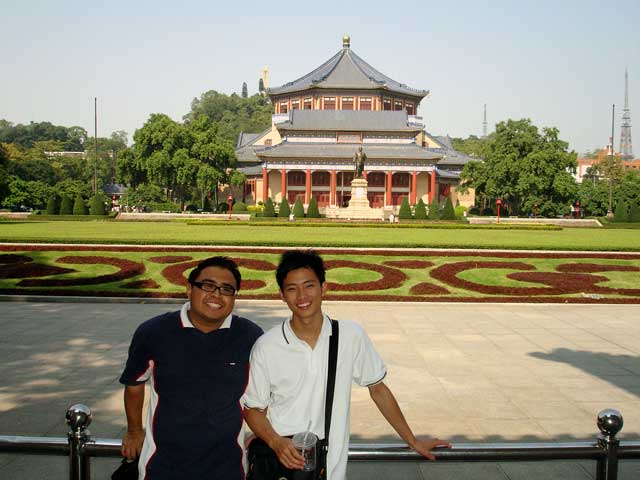
We had lunch at the KFC beside the hotel. From there, we took a subway to the Sun Yat-Sen Memorial Hall. The hall is situated on the southern slope of Yuexiu Hill and was constructed between 1929 and 1931 by the people of Guangzhou and overseas Chinese as a monument to Dr. Sun Yat-sen, the forerunner of Chinese democratic revolution.

Since Jiajin had classes at 3 p.m., we took a 40-minute bus to the Guandong University of Foreign Studies where he is a graduating student. I stayed at his dorm and surfed the Internet while he was in class.

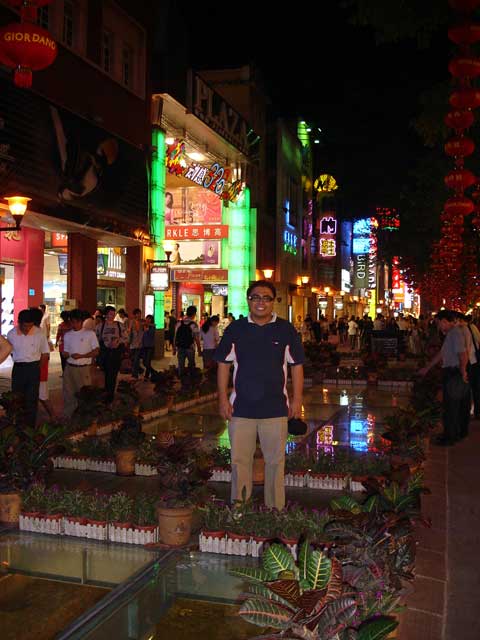
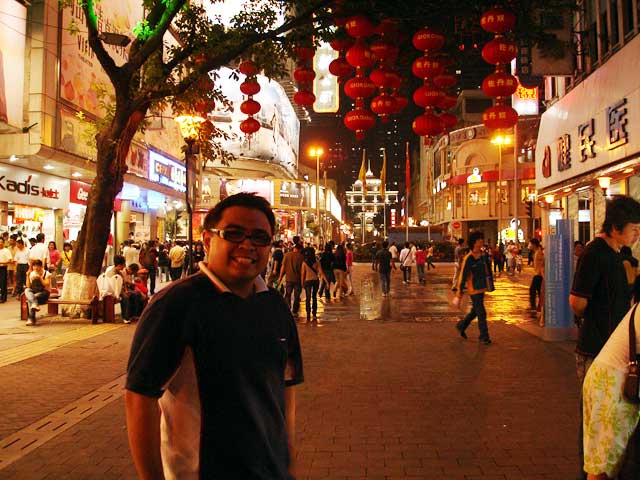
After his class, we took another bus back to the city center. I wanted to pass by a supermarket to check out the local food. We decided to buy dinner there. Got myself some rice noodles and vegetable pie while he got some dumplings. Also bought some dried fruits and my supply of water. From there, we walked towards the Shangxiajiu Walking Street (上下九商业步行街) a famous shopping area of Guangzhou.

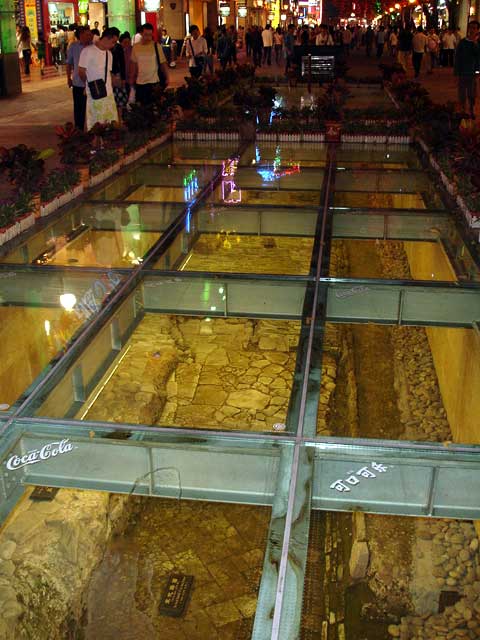
What I liked about the place was the glass covered display of an old street which was accidentaly discovered in 2002 during excavations for a redevelopment project. But instead of destroying the old street and other remnants of the city's heritage, like what Mayor Atienza did in Mehan Gardens and Cuartel Meisic, Guangzhou covered it with glass and it is now an attraction of the walking street.

It was not only one street but actually layer upon layer of streets from various periods dating back to the Tang Dynasty (618 to 907 AD). Between then and the period of the Republic of China (1912 to 1949), ten additional layers were added. The bottom grit layer is about 3 meters below the surface. At a depth of 4.5 meters, the remains of the Southern Yue Kingdom (203 to 211 BC) were found. From 7.9 meters below, the surface lies gray-red virgin soil, which reveals that the site was once a riverbed. If you check out the photo, each label is from a different period of China's history. I hope we are able to find things like these in the Philippines.

After taking some photos, we went back to the hotel to eat our supermarket dinner. Didn't stay up too late since my flight was early in the morning and I had to be up before 6 a.m. to catch the 50-minute shuttle to the airport. My flight back to Manila leaves at 8:45 a.m. Anyway, this is my last post on my China trip. Until the next adventure!
Related Posts with Thumbnails