Tuesday, August 08, 2006

Zamboanga: Santa Cruz Island and its pink sand

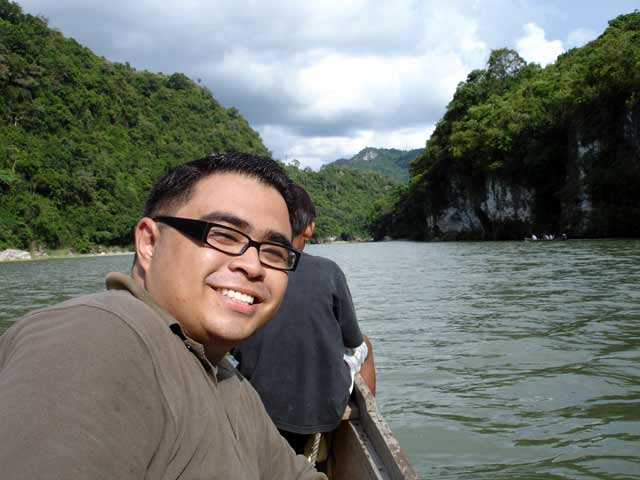
And now, for the final installment of my recent trip is my visit to the Great and Little Santa Cruz Island Protected Landscapes and Seascapes. I had booked my trip with the DOT regional office. I could have opted to go on my own but that would mean paying for the entire boat. So I kept my fingers crossed hoping that a group would leave Sunday, and that they would allow me to tag along. Good thing there was a group of local teachers and students who booked a trip while I was in the office.

So I was up early to make sure I made the 7 a.m. call time. There was still no sign of the group at 7:15 a.m. so that got me worried. Until finally someone had approached me asking if I was the one who was going to tag along. It turned out, the group had two designated meeting places. And the bigger group which was at the pier was gone before the organizer had arrived. To make things worse, there were just three of us at Lantaka Hotel, myself, the organizer and a student.

After waiting for sometime, we decided to check again at the pier. We would later find out when we got to the island that the group which met at the pier, after seeing the rough waves which were a result of the tail end of "Inday," had backed out! Anyway, after some haggling with the boat owner, we were able to bring down the cost thanks to our appeal to pity.

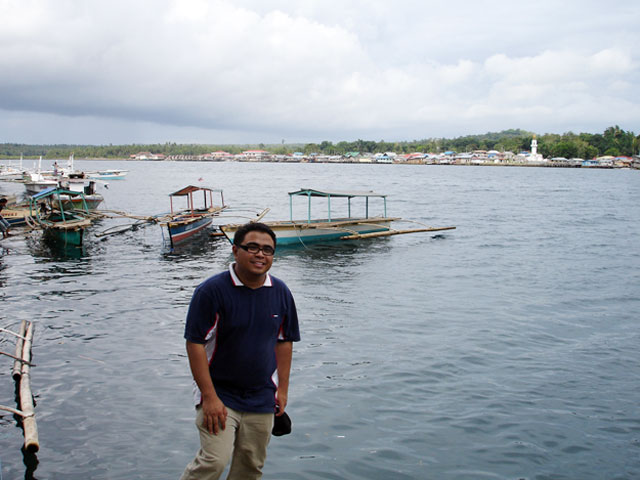
So the three of us made the trip to Santa Cruz despite the rough seas. And I was tense for the most part as our boat made the slow trip to the island, rocked by strong waves. I was actually praying for sunshine. We got there in one piece. And for some twist of fate, the sun did come out a few minutes after we arrived on Great Santa Cruz Island.

The two islands which are a few meters away from each other, and the waters that surround it form the Great and Little Santa Cruz Island Protected Landscapes and Seascapes. Both islands often play host to environmental activities with students from local universities such as Ateneo de Zamboanga organizing tree-planting activities and coastal clean-ups. There are just about forty families which live on the island, all from the Samal tribe which was allowed to stay in the protected area.

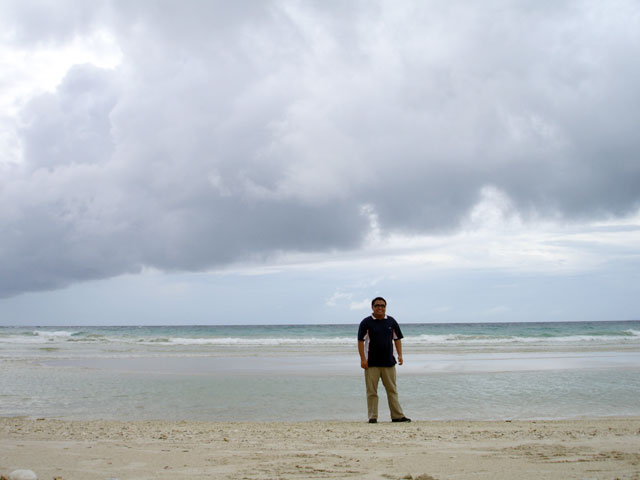
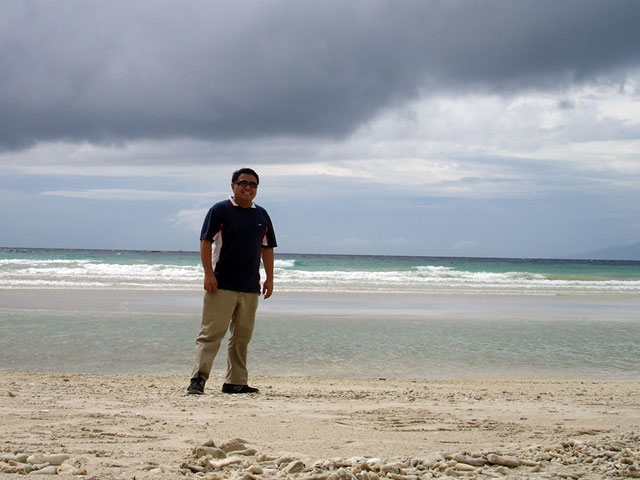
What makes the sand on the island unique is its distinct pink color which is a result of tiny pink coral fragments mixed with the white sand. For a close up of the sand, click here. And just like in Malamawi White Beach, I had the beach all to myself! We learned from the locals there that even before Puerto Galera and Boracay, Santa Cruz was a popular destination among tourists. But after the spate of abductions and kidnappings many years back, its popularity waned.

Anyway, after a brief dip in the blue water, I decided to walk around the island. It would take two hours to walk around from end to end. So I just hiked a few meters to check out the other side. As you can see from an aerial photo which I took from the plane, the center of the island was mostly mangrove swamps and a lagoon.

We went back to downtown Zamboanga at about 12 noon and this time, the water was calmer. But I had a worse headache than the day before. Again, I decided to eat at Tini's where I ordered murtabak daging (beef prata) and roti kosong (flour pancake). Then I walked back to the pension house to freshen up and take a quick nap. I made sure not to sleep too long since I wanted to visit as much as I could during my last 24 hours in Zamboanga City.

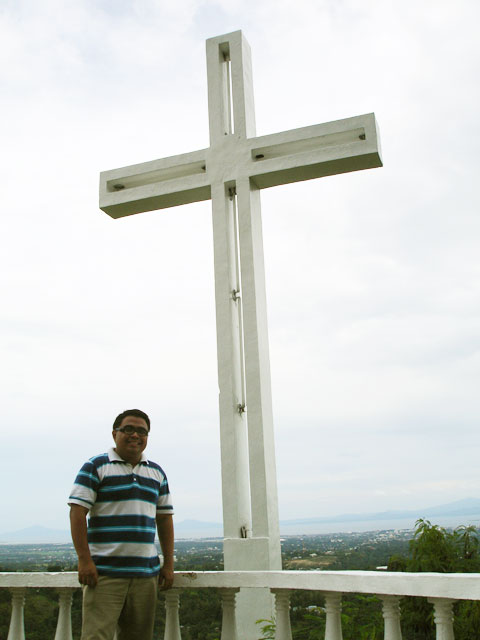
Next on my itinerary was a trip to Mt. Pulong Bato in Barangay Abong Abong from where visitors are rewarded with a breathtaking view of Zamboanga City and the outlying islands. From downtown, I took a jeep to Abong Abong via Pasonanca which was just PHP10. Make sure you mention to the driver that you want to visit the stations of the cross so that he could drop you off at the foot of the mountain. I was dropped off at a place called canyon or Freedom Park which had some military relics, large guns in particular hence the moniker canyon, and a tomb for an unknown soldier.

I thus ended up walking an extra 1.5 kilometers to the foot of the mountain, not including the 750 meter steep climb to the vantage point. On the way up were bas relief murals of the fourteen stations of the cross. That was really exhausting! But the view from on top was worth the climb. Since the road is well paved, you can drive a vehicle up as well.
It was about 3:30 p.m. and I had to rush down and back to downtown since I had one more destination on my itinerary, the oldest mosque in Zamboanga in Barangay Taluksangay. People had warned me that it was going to be far but that did not hinder me. So as soon as I got back to downtown, I immediately boarded a jeep to the Muslim community of Taluksangay near the Mercedes District. It was about 17 kilometers away and the fare was PHP20.

I arrived there at 5 p.m. just before the sun went down. I was happy to see a marker of the National Historical Institute which emphasized the significance of the site to our nation's history.

As I mentioned earlier, this was the first mosque in the Zamboanga Peninsula. Built by Hadji Abdullah Maas Nuno in 1885, it was the first center of Islam which was recognized by the international Islamic community.

Anyway, going back to downtown Zamboanga City was going to be a problem since the jeepney driver had mentioned me that there were no more trips back. So from Taluksangay, I took a pedicab to the next barangay which was Talabaan where motorcycles-for-hire were waiting to take me back to the highway. The trip was PHP30 and I agreed since I would be able to stopover at the Gabaldon buildings in the Mercedes Central School. I was surprised to see many of the buildings intact. Aside from the main building, the original home economics and industrial arts buildings were still standing.

From the highway, I took a jeep back to downtown. The good thing about the public transport system in Zamboanga City is that all jeepneys travel to the downtown area so you can easily find you way around. I got off at St. Joseph's Church to hear Mass. The church was air-conditioned which was a welcome feeling after a humid and tiring day.
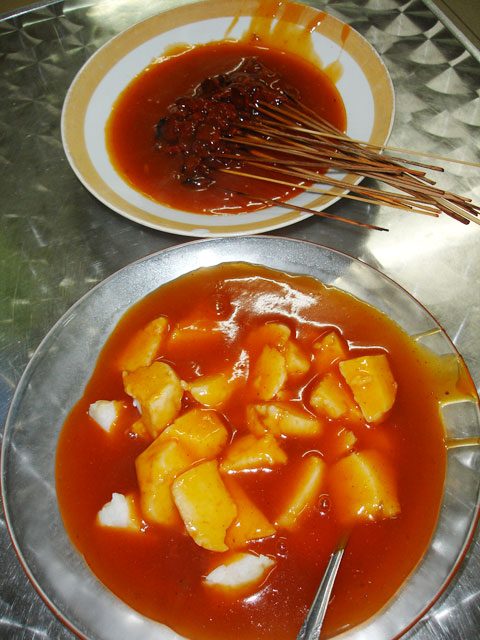
After Mass, my plan was to check out those satti outlets again. It was just 7 p.m. and I was surprised to see all of them closed! So I asked a tricycle driver to take me to the nearest sattihan. The driver mentioned to me that those were the only ones he knew. And that the reason they closed early was because they were open as early as 4 a.m. So that's why! It turns out satti was a breakfast dish in Zamboanga.

Anyway, I went back to Tini's for dinner since this was the last chance I could eat roti in a long time. And I made sure I went to bed early since my plan was to savor the elusive satti before I left on the 9:55 a.m. flight. I was up at 6 a.m. and finally, I was able to treat myself to satti! As I mentioned in a previous post, these were three small pieces of roasted beef on a barbeque stick dipped in a bowl of sweet and spicy sauce served with rice floating in another plate of the same sauce. Each was PHP3.50 and the rice was something like PHP8 per serving (if you remember the rice I had in Larsian which I mentioned in my Cebu entry, it was the same one).

I then went back to the pension house to take a quick nap. After checking out, I took a tricycle to the airport for PHP30. I was quite early for the flight but it was better to be there early than to be left behind. Good thing there was a massage service there so I got myself relaxed before boarding.

One thing I liked about the experience at the airport was that everyone on the runway, from the ground crew to the security guards waved at the plane as it left the tarmac. It was a very heartwarming experience for passengers looking out the windows.

I took a lot of photos on the plane as well. Here are two of them. The first is the Ortigas area with the Pasig River and the old Rizal Provincial Capitol in the green open space along the river close to the center of the photo. The bridge you see is the C5 Bridge.
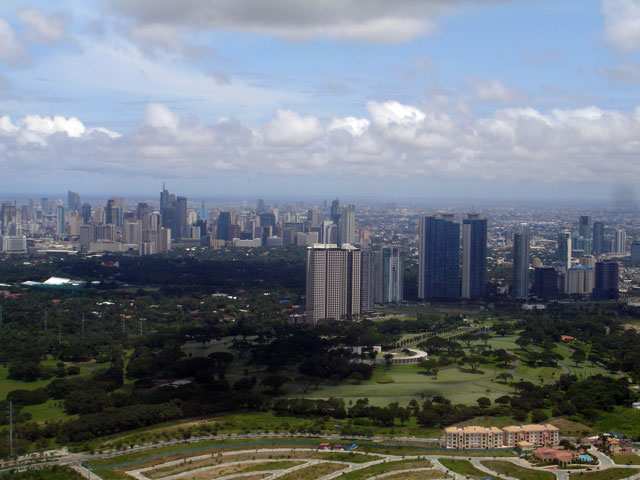
The second photo is Makati with the Fort Bonifacio Global City and American Cemetery in the foreground. I guess that's it for now. Until the next trip.

Saturday, August 05, 2006

Basilan: Off the beaten track in Basilan

Today, I visited Basilan. Just the mere mention of the name evokes fear among those unfamiliar with the place. Every time I told someone that I was on my way to Basilan, I received a shocked response. Who would want to visit Basilan anyway? But if not for the bad publicity brought by the Abu Sayaff many years back, Basilan would be a perfect ecotourism destination if developed properly.

I was planning to get up early today but that didn't work. I was still unusually tired. Anyway, instead of the early morning fast craft to Isabela City in Basilan, I was able to catch the 9:30 a.m. The fare for a first class ticket was PHP130. The ordinary seats at PHP100, although also air-conditioned, are usually jampacked. So the extra PHP30 was worth it. I arrived in Basilan about an hour later.

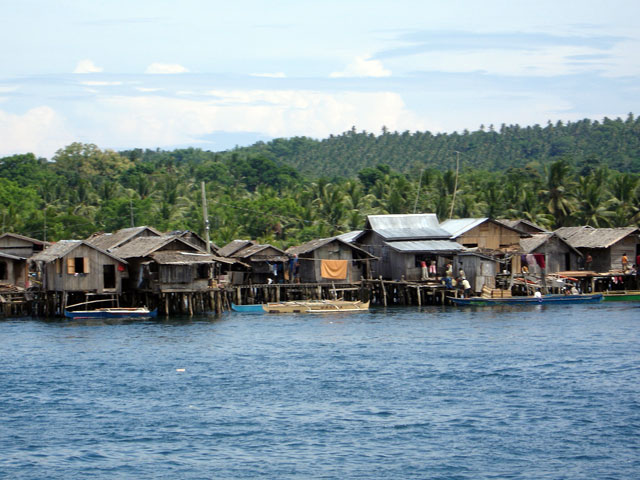
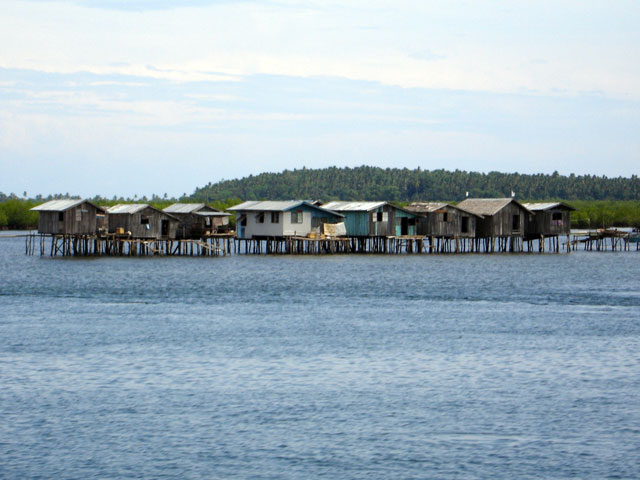
Greeting you as you entered the port were villages on stilts and the minarets of mosques at the center of these communities. From the port, I took a short walk up to the provincial capitol where I decided to take a tricycle to the passenger terminal to Lamitan. My first stop for the day was a waterfalls in the heart of a town made infamous by the sensational clashes between the military and the Abu Sayaff a while back. And here I was on my way there for a visit!

I took a commuter van to Lamitan which was about 27 kilometers away from Isabela. The trip costed PHP40. I was expecting to see bad roads after all that fighting years back but I was impressed since the roads to Lamitan were very well-paved, not a sign of the hostilities that ensued in the past.

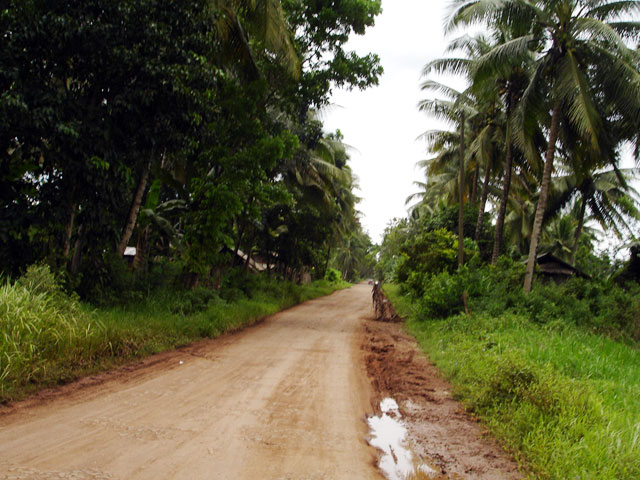
As soon as I arrived in Lamitan, I asked around on how to could get to Bulingan Falls. I was pointed to a motorcycle-for-hire who agreed to take me there for PHP100. It was fair enough since the falls were quite far. I would figure it was a 10-kilometer trip from the town proper to the falls, which was bumpy most of the way and quite muddy at times. The trip took me deeper into Lamitan town which I'm sure used to be evacuated often before when hostilities between the Abu Sayaff and the military were ongoing.

You could still feel the turbulent past of the area since we passed by several military check points and camps along the way. One thing which surprised me was that the barangays going to the falls were predominantly Catholic since each had a little chapel. I didn't see a mosque either. It seems most of them could be found in the coastal areas.

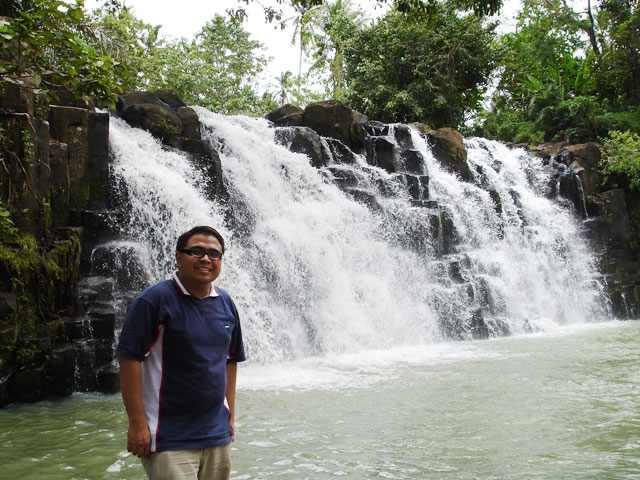
Bulingan Falls was not tall at all. But what made it nice were the square shaped rocks from which the water cascaded down to the pool below. You could see that the falls was frequented by tourists since the mayor had the banks cemented and built several picnic huts on the side. They could have done a better job though.

It was then back down that dirt road to the town proper. Lamitan town has been turned into another of those nondescript Philippine communities. And the only distinguishing landmark in the center of town is the statue of its founder Datu Kalun.

From Lamitan, I took a commuter van back to Isabela City. It was about 1 p.m. and after lunch, I decided to take a walk back to the pier. My plan was to take the last ferry back at 5:30 p.m. but since the weather was unpredictable, it would drizzle then the sun would come out, I decided to take the 3:30 p.m. trip back to Zamboanga.

Since I had time to spare, I asked about Malamawi Beach. It turns out, Malamawi is the island just across the port. And the beach on one side of the island was known to locals as White Beach obviously because of the white sand. There are frequent commuter pump boats which take passengers across the strait for PHP5. So since I had a lot of time, I decided to check it out.

The trip across was just about 5 minutes. At the opposite end, motorcycles-for-hire were waiting to take you to any point on the island. I was charged PHP20 one-way which was not bad. Again, it was off the beaten track since once you left Barangay Carbon proper, there were no roads, just motorcycle trails.

It was quite a distance and the trip took you to the other side of the island, passing by small communities living in vast mangrove forests. Among the obstacles we had to avoid were the occasional cows grazing amongst the thick vegetation along the path.

We finally arrived at the beach. And I wished I had brought my swimming gear! When visiting Malamawi White Beach, it's best that you go with a group and take a pump boat straight to the place. If you're alone, you'll have to make arrangements with the motorcycle to come back for you at a later time.

There were a lot of run down beach huts and picnic tables all over the place; but just a small group of tourists enjoying the white sand. Sometimes you'd realize there are so many underrated beaches all over the country worth visiting, little pieces of paradise secretly tucked away for those diligent enough to search for them and enjoy the serenity they offer.

After a few photos, it was back to Barangay Carbon, and then back to the port of Isabela just across. Again, I purchased a first class ticket which was a passport to comfort since I did not have to join the rat race into the fast craft since only a few people buy the said tickets.

By the time we neared Zamboanga, I was already very dizzy. It was an ordeal walking back to the pension house. But I decided to take a quick snack at Tini's where I bought my favorite roti telor and roti kosong (flour pancakes accompanied with curry dip). When I got back to the pension house, the next thing I knew was I was asleep again. I made sure I got enough rest since I had to be up early to catch the boat to Santa Cruz Island the next day.

Friday, August 04, 2006

Zamboanga: Hola Zamboanga!

Those are the words which greet passengers as they arrive at the Zamboanga International Airport. A visit to Zamboanga City is like visiting our nation's past where our Spanish colonizers seem to have left the strongest imprint of their 300-year rule. Chabacano, the creole language spoken in the area, is said to contain 60 percent Spanish and 40 percent nativo words.

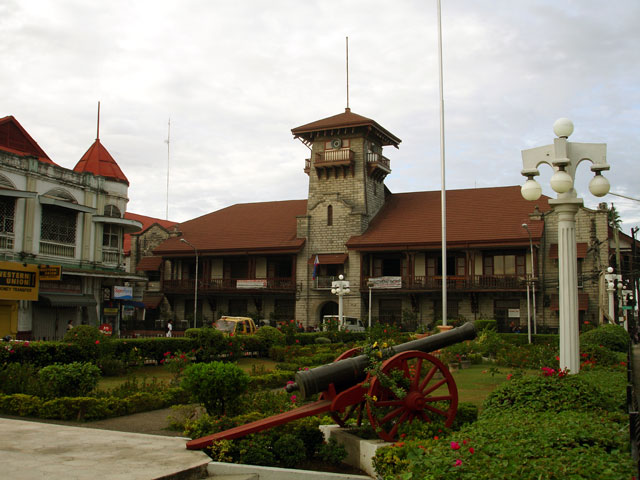
Anyway, I hardly remembered the flight I took from Manila at 4:55 a.m. since I was fast asleep, tired from the work this week. I was so sleepy in fact that I wanted to go straight to bed. But I decided to take photos first of the City Hall of Zamboanga for the 2007 HCS calendar while there were no vehicles parked in front.

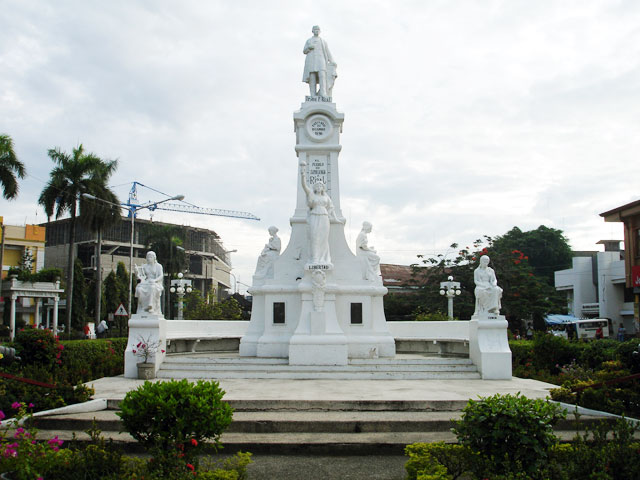
So from the airport, I took a jeep to Canellar Street which was a few meters away from city hall. Most of the old historic core of Zamboanga City was relatively intact. It's one of the few cities I've visited which had maintained its character. Beside the city hall were several colonial structures and newer structures which followed the colonial theme. Yes, the Jolibee store in front of Rizal Park was a new building which chose to adapt its facade to the buildings beside it. I would have been all praises for it if not for the exageration of tarpaulin streamers on its windows and facade.

A few meters away was another open space called Plaza Pershing (that's what Metro cities lack, green open spaces). I was surprised to see the original lamposts intact but in a bad state of deterioration. Sad to say the buildings around it do not complement such a charming plaza.

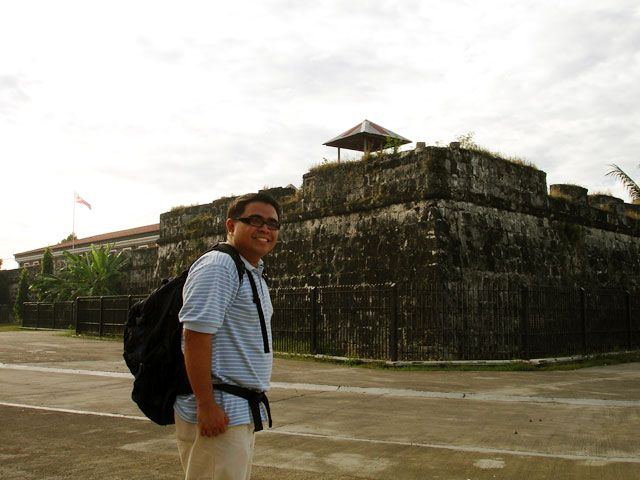
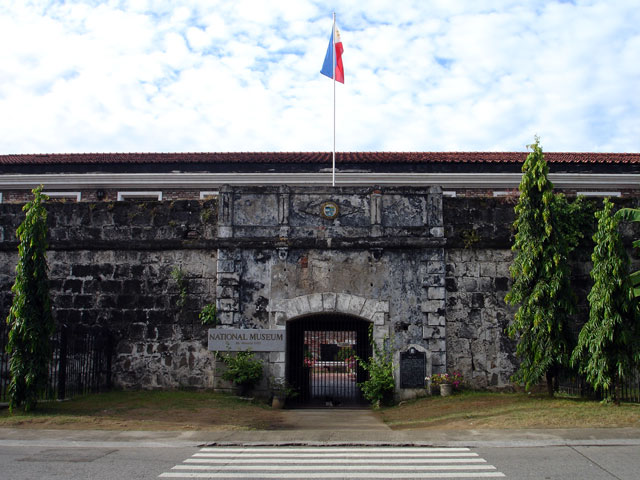
From city hall, I took a walk towards Fort Pilar, a national cultural treasure. Along the way were more old structures along a royal palm tree-lined street. And you could see the great adaptive re-use such as the Bank of the Philippine Islands branch office in a restored old house. I commend BPI because even the signage is subtle and does not distract the viewer from the intricate woodwork of the house's facade. If only the city government pushes this a little further.

After some photos at the fort, I decided to walk back and try to look for a place to stay. I was quite tired and sleepy so I did my usual backpackers routine which was walk until I find an affordable place to stay in. I found a pension house very close to Plaza Pershing and got an air-conditioned room for PHP440 a night.

It was quite unlike me but I didn't do much today, went to bed for the most part. In the afternoon, I went back to Fort Pilar since it was still closed earlier. I also dropped by the DOT regional office beside Lantaka Hotel to ask some questions and book myself a trip to Santa Cruz Island which I will describe in detail in the next entries.

Then is was time for a snack. Lo and behold, my favorite Indian food was sold in Zamboanga in a restaurant called Tini's Malaysian-Bruneian Restaurant just a few meters from city hall. So I ordered a murtabak ayam (chicken murtabak) and iced Milo.

After another nap, it was time for dinner and to sample a Zamboanga dish called satti which is sold along Pilar Street. I was surprised though when I woke up that it was raining really hard. So it was flooded when I got to Pilar Street. None of the satti outlets were open but I found a canteen which served it but it wasn't as good as the freshly grilled ones. Satti may have gotten its name from a similar Malay dish called satay. But satti is smaller is serving size, three tiny pieces of roasted beef on a barbeque stick. It is served to you in a bowl of sweet and spicy sauce with rice chunks also swimming in a pool of the same sauce. Anyway, I'll show you photos of it in a later entry.

Sunday, July 30, 2006

Manila: The walled city of Intramuros before the war

We have been trying influence many of the local government leaders and the clergy to adopt heritage conservation practices to preserve the character of our own cities and towns. But add to the fact that so much was already lost during the Second World War which is why we have to be more aggressive in protecting what's left.

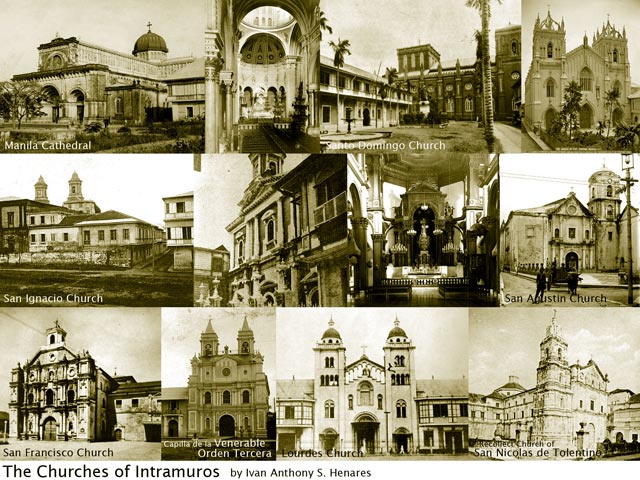
To illustrate my point, I will hark back at the good old pistaym days when Manila was in its heyday. In Intramuros today, there are only two churches left, namely the Manila Cathedral and San Agustin Church. In fact, the Manila Cathedral that is standing today is a reconstruction of the original one and only San Agustin was unscathed during the war.

Before the war, there were at least nine of these grandiose and gargantuan churches within meters away from each other. These included the Manila Cathedral, Santo Domingo Church with the original main building of the University of Santo Tomas beside it, the Jesuit Church of San Ignacio beside the Ateneo de Manila (it was said that "there was so much wood in the church that it took all of four days for the conflagration to consume the buffet of tropical hardwoods – narra, tindalo, magcono, molave – cut from the mountain fastness of Surigao and transported to Manila seven decades previous), San Agustin Church, the Franciscan Churches of San Francisco and the Venerable Orden Tercera which were right beside each other sharing the same plaza, the Capuchin Church of Lourdes, the Augustinian Recollect Church of San Nicolas de Tolentino and the San Jose Church.

And those were just churches. I did not even touch on smaller chapels, colleges and universities, religious institutions and government buildings. Oh yes! We had ostentatious and elegant palace-like government buildings in Manila! And that was just Intramuros. The districts outside the walls such as Binondo, Santa Cruz, Ermita, Malate and San Miguel where equally charming as well.

Indeed, Manila was as beautiful as any European city. But we lost everything, centuries of work, in just a matter of days during the liberation of Manila. Sadly, unlike Europe which was also devastated mind you, we did not rebuild many of these monuments to Filipino craftsmanship and excellence. And all we could do now is sigh and say "Sayang!"

Manila: Metro Manila and its old churches

Below is a "Directory of Cultural Heritage Churches" in Metro Manila which used to be found in http://www.aam-rcam.org/vim/index.htm but is no longer online. I was still able to salvage it from the Google cache. I'm sure there are more since Paranaque has several others such as the Redemptorist Church in Baclaran and the San Dionisio Church for example; and schools have charming churches and chapels as well such as the Abbey of Our Lady of Montserrat in San Beda College and the Chapel of the Holy Sacrifice in UP Diliman which is both a National Historical Landmark and an Important Cultural Property. Visiting all the churches below is one adventure worth doing in the near future.

Archdiocese of Manila
1. Minor Basilica of Immaculate Conception (Manila Metropolitan Cathedral), Intramuros, Manila
2. Minor Basilica of San Lorenzo Ruiz (Binondo Church), Binondo, Manila
3. Minor Basilica of San Sebastian, Plaza Carmen, Quiapo, Manila
4. Minor Basilica of the Black Nazarene (Quiapo Church), Plaza Miranda, Quiapo, Manila
5. Monasterio de Santa Clara (demolished recently to build Katipunan flyover)
6. National Shrine of Our Lady of Lourdes, Kanlaon cor. Retiro Sts., Santa Mesa Heights, Q.C.
7. National Shrine of Saint Michael and the Archangels (San Miguel Church), J.P. Laurel St., San Miguel, Manila
8. Nuestra Senora de Gracia Parish, Bernardino St., Guadalupe Viejo, Makati City
9. Nuestra Senora de Guia Parish, M.H. Del Pilar St., cor A. Flores St., Ermita, Manila
10. Our Lady of Loreto Parish, Bustillo St., Sampaloc, Manila
11. Our Lady of Remedios Parish (Malate Church), M.H. Del Pilar St., Malate, Manila
12. Our Lady of the Abandoned Parish (Sta. Ana Church), Pedro Gil St., Sta. Ana, Manila
13. Sacred Heart of Jesus Parish, Old Santa Mesa, Sampaloc, Manila
14. Saint Anthony of Padua Parish, Singalong cor. San Andres Sts., Malate, Manila
15. Saint Anthony of Padua Shrine, Manrique St., Sampaloc, Manila
16. Saint John the Baptist Parish, Pinaglabanan St., San Juan, M.M.
17. Saint Joseph Parish, Juan Luna St., Gagalangin, Tondo, Manila
18. Saints Peter and Paul Parish, D.M. Rivera St., Poblacion, Makati City
19. San Felipe Neri Parish, Boni Ave. cor Aglipay, Mandaluyong City
20. San Fernando de Dilao Parish, Paz St., Paco, Manila
21. San Vicente de Paul Parish, San Marcelino St., Ermita, Manila
22. Santa Clara de Montefalco Parish, P. Burgos St., Pasay City
23. Santa Cruz Parish, Santa Cruz, Manila
24. Santo Nino Parish, Jesus St., Pandacan, Manila
25. Santo Nino Parish (Santo Nino de Tondo) I. Chacon, Tondo, Manila
26. Santuario de San Antonio, McKinley Rd., Forbes Park, 3117 Makati City
27. Santuario de Santo Cristo, F. Blumentritt St., San Juan, M.M.
28. Shrine of Our Lady of Correa (San Agustin Church), Real St., Intramuros, Manila
29. Archdiocesan Shrine of Our Lady of Guadalupe, 1923 Orense St., Guadalupe Nuevo, Makati City

Diocese of Cubao
30. National Shrine of Our Lady of the Holy Rosary (Santo Domingo Church), Quezon Ave., Q.C.
31. Santuario de San Pedro Bautista Archdiocesan Shrine, San Pedro Bautista St., SFDM, 1104 Q.C.

Diocese of Kalookan
32. Immaculate Conception, Gen. Luna St., Concepcion, Malabon, M.M.
33. San Bartolome Parish, Rizal Ave., Malabon, M.M.
34. San Jose de Navotas Parish, M. Naval St., San Jose, Navotas, M.M.
35. San Pancracio Parish, La Loma Cemetery Compound, Grace Park, Caloocan City

Diocese of Pasig
36. Immaculate Conception Parish, Plaza Rizal, Malinao, Pasig City
37. San Roque Parish, B. Morcilla St., Pateros, M.M.
38. Archdiocesan Shrine of Saint Anne, Santa Ana, Taguig City

Diocese of Paranaque
39. Our Lady of the Abandoned Archdiocesan Shrine, National Rd., Poblacion, Muntinlupa City
40. Saint Andrew Parish, Quirino Ave., La Huerta, Paranaque City
41. Saint Joseph Parish (Bamboo Organ Church), Diego Cera Ave., Las Pinas City
42. Santa Rita de Cascia Parish, Quirino Ave., Baclaran, Paranaque City

Diocese of Novaliches
43. Our Lady of Mercy Parish, Dumalay St., Quirino Highway, Novaliches, Q.C.

Monday, July 24, 2006

Cagayan & Isabela: Church heritage in Cagayan and Isabela

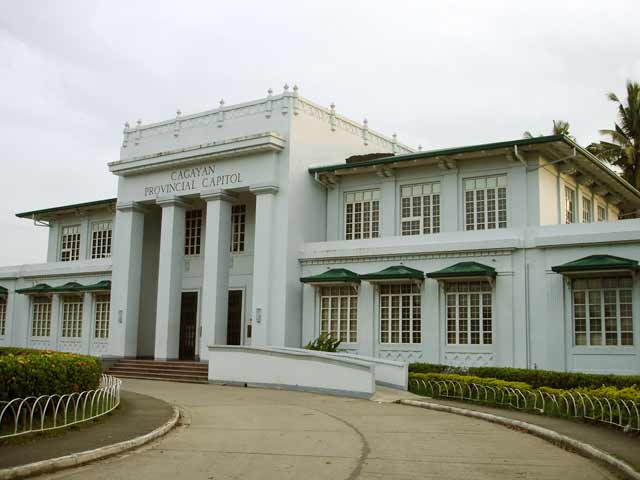
We were up quite early yesterday. Although our itinerary started with breakfast at 7 a.m., Karlo and I got up at 5 a.m. to check out the provincial capitol of Cagayan and take photos for possible inclusion in the 2007 HCS calendar.

One thing which surprised me was its distance from the town center since the tricycle ride took about ten minutes. It was actually at the border of Tuguegarao and Peñablanca and in the middle of nowhere. In fact, you first had to cross the welcome arch of Peñablanca to get to it. From the gates, we could already see that we were not going to be disappointed.

The capitol building may be the last untouched piece of heritage in Tuguegarao. It is in the center of a gated compound that is very well-maintained. In front of it is a large landscaped lawn which contains a relief map of Cagayan and an old fountain among others.

After taking photos, we went back to the hotel for breakfast. The group left the hotel at 8 p.m. for visits to the Cagayan towns further up north. First on the list was the town of Iguig which was famous for its Calvary Hills, a collection of life-sized tableaus of the Stations of the Cross scattered across the sprawling grounds of the church.

Sad to say, the façade of this old church was badly-altered. But the sides remained relatively intact. What is unique about this church are the “flying buttresses” found at the back of the church which are the only one of its kind in the country. I hope the priests realize that and do not touch it.

From Iguig, we proceeded to Alcala where an unpleasant surprise greeted us. In front of the red brick church was a billboard showing a modern interior in the works. Damage had already been done to the interior. The original wooden ceiling had already been replaced by galvanized iron sheets. You could also see that there were elements such as a choirloft which had already been demolished.

I immediately looked for the parish priest to talk to him before more damage was done. In fairness, the priest was quite receptive. He said they had been trying to contact the National Commission for Culture and the Arts for help but to no avail.

Now we see an oversight on the part of the government. The stakeholders do not have a direct line to the technical support that they need. I think it’s about time that the NCCA reaches out to these stakeholders by simply writing all custodians of heritage churches all over the country to let them know that technical assistance is available if you contact the NCCA, National Museum or National Historical Institute; and that they could get advice from the experts before they make any plans to renovate or restore a church. Writing letters to everyone to let them know that they're there to help is the least they could do.

You could also see that the priests lacked basic knowledge of what restoration was. The parish priest mentioned to us that the proposed altar design was done by another priest who was also into restoration. But obviously, the altar was not restoration. It was a modern replacement that did not match the age of the church. Priests really have to be educated, especially those who make these designs and claim that they are restorations.

Our next stop was the town of Gattaran. But we weren’t going to the town church which was equally quaint. If only we weren’t pressed for time, I would have wanted to stop at the town church as well. Instead, we visited the Nassiping Church ruins which was the church of Nassiping town before it was merged with Gattaran.

The stone side altars were quite intact. But a sad note was one of its bells was stolen last year, most probably by an antique dealer. I wish stealing these relics could be considered a heinous crime! These unscrupulous antique dealers should be shot by the towsfolk if they are caught carting away priceless pieces of heritage, to teach them a lesson. Check out the article in the PDI.

Our next stop was the town of Lal-lo which was also known as Nueva Segovia. It was the former seat of the Diocese of Nueva Segovia before it was transferred to Vigan in 1758. The story of the transfer is in the Vigan website.

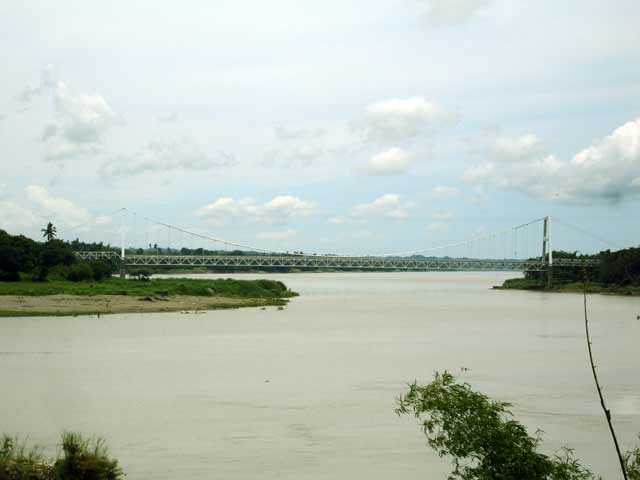
But before visiting the old church, we passed by the Magapit Suspension Bridge which spans the Cagayan River. It was one of the most modern in Asia during its time. Another monumental Marcos project which lessened the travel time between Cagayan and Ilocos, it shows us how much Philippine infrastructure has deteriorated today. The DPWH should let architects and not engineers design bridges. That's if they want to rid themselves of the reputation of churning out the ugliest infrastructure in the world! The only recently constructed bridge worth praising is the Bamban Bridge linking Mabalacat and Bamban. But then again, that was a Japanese financed project. Hehe!

Anyway, the facade of the Lal-lo Church was similar to that of Alcala. In front of the church was an wooden cross encased in glass. According to the marker, it was planted there over 300 years ago by the Dominican missionaries who evangelized Cagayan.

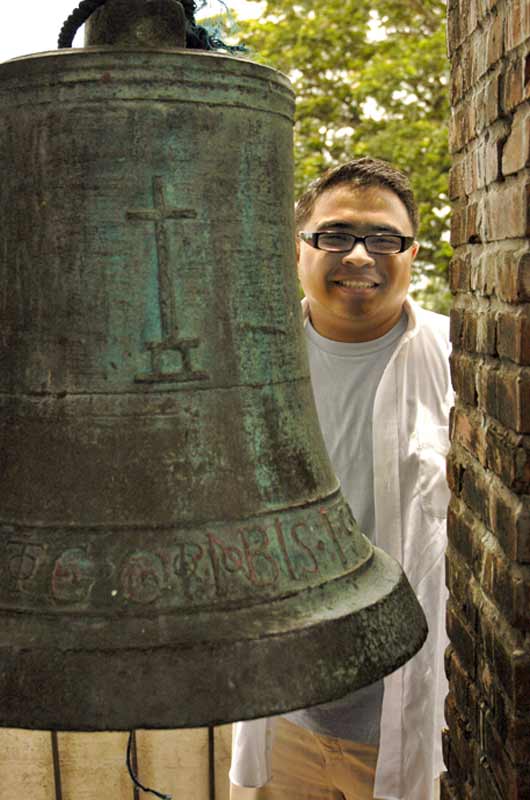
From Lal-lo, we moved on to the next town Camalaniugan which housed the oldest Catholic bell in the Far East. Before visiting the church, we passed by another horno. Unlike the one in Tuguegarao which was obviously neglected, this horno was well-cared for by the local community. In fact, there were even signages pointing to the place.

When we got there, we were greeted by an horno which was close to 100 percent intact. Makeshift fences around plants in the area showed that this piece of heritage was very important to the local government and the townsfolk. Two thumbs up to them!

Next stop was the church. But we received a shock since there was a totally new church being constructed right beside the old belfry. I learned from Jojo that the one it replaced wasn't old either and the original church was lost maybe in the 1970s.

Anyway, we were disappointed when we saw the belfry since there was a big tarpaulin streamer covering the structure just like in Alcala. We were saying that the priest should have placed the streamer in front of the construction rather than on the belfry. I hope Fr. Camilo Castillejo removes his billboard from the belfry which is on the side of the oldest bell which dates back to 1595.

That was the end of our morning itinerary and it was time to move back to Tuguegarao. Again, if we weren't pressed for time, I would have wanted to visit the next town which was Aparri and find out for myself what this town, made famous by the Eat Bulaga jingle, is all about. Hehe!

We stopped by Alcala again to buy some milk candies made from carabao's milk. These flat candies are Alcala's version of the pastillas. Along the way, I think it was in Iguig, we also bought corn from vendors along the highway.

Back at the hotel, we packed our stuff and went down for a quick lunch before checking out. From there, it was a long drive to Isabela along the old highway to the town of San Pablo where ruins of an old church could be found. What is peculiar about this church is its size since it is unusually large for the community it currently serves.

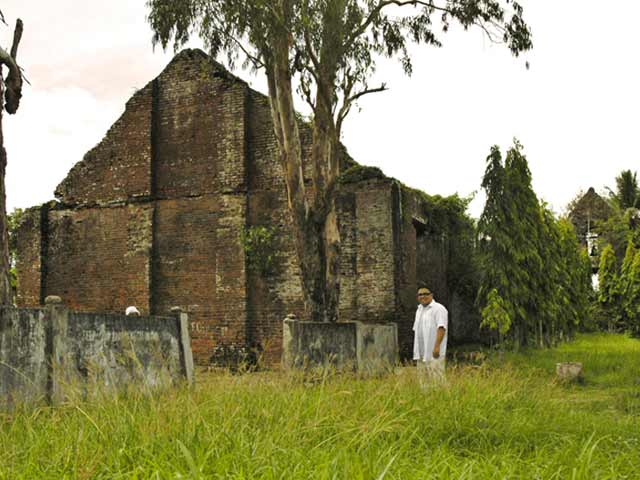
According to accounts, San Pablo was a very prosperous town before which explains the large church. But as the years passed, people left and fortunes changed. And the church as well as other structures were left to decay. Today, only half the church is in use, having been covered by a makeshift roof and walls. It would just be too costly to restore the church entirely. But from the intricate brick designs, one could imagine its past grandeur as a center of life in Isabela.

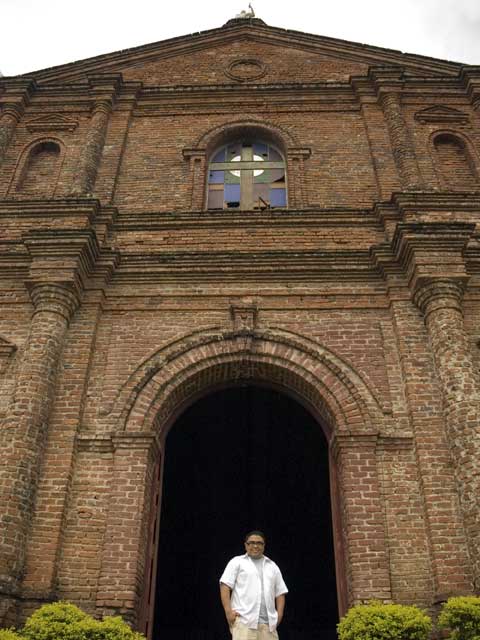
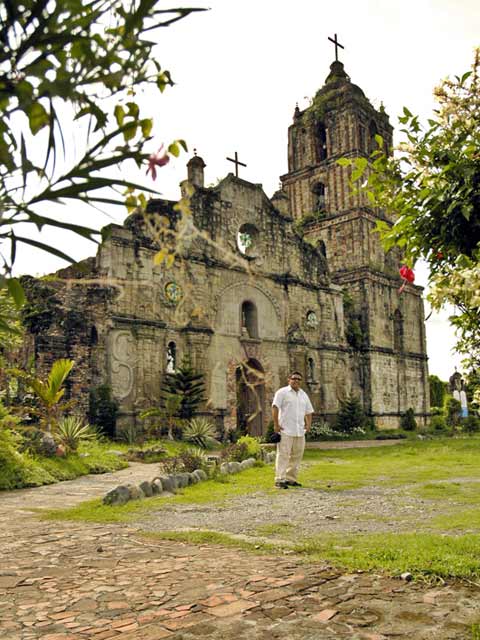
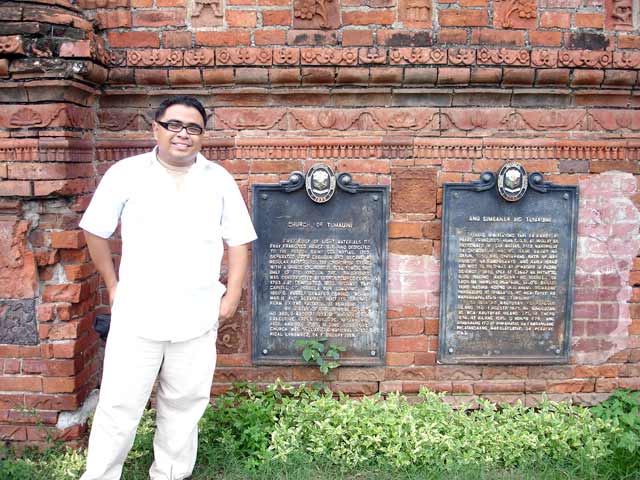
From there, we went further south to Tumauini to visit the Church of San Matias, a national cultural treasure. Just like the Callao Caves, this was another famous image in books. And finally, I got to see it for myself. I was not disappointed.

The facade is said to be Pampanga's greatest contribution to Cagayan Valley heritage since it is said that Kapampangan woodcarvers were imported to create the moulds for the intricate and ornate brick tiles that adorned Tumauini and many other churches in the Cagayan Valley.

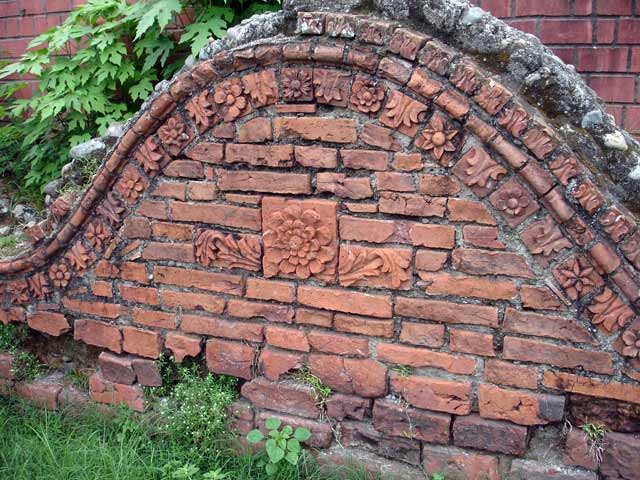
It's a pity Pampanga did not have an abundance of bricks because Tumauini was just breathtaking, each brick carefully planned and numbered to create this mosaic of ornate clay tiles.

Even the walls that surrounded the church plaza was generously decorated with designed brick tiles! Indeed, Tumauini deserves its declaration as a national cultural treasure.

Another unique feature is the cylindrical belfry which is designed like a wedding cake. It's the only cylindrical belfry left in the country today, the other one in Leyte having been demolished by you know who. Sigh! I wonder why Tumauini, and many other deserving churches, weren't included in the original UNESCO declaration which sadly only includes Augustinian churches. Hope they make it to the expansion.

Anyway, from there, it was off to Cauayan again for dinner at the Jambalaya Grill. But we stopped over in the provincial capital Ilagan to check out the biggest butaca or armchair which is on display along the national highway. After some fun shots on the giant wooden chair, we left for Cauayan.

We were there at about 5:30 p.m. just in time for early dinner. After dinner, Jojo made a synthesis lecture of the learnings from the past two days. Then it was off to Manila at about 7:30 p.m. We made a number of stopovers to make sure the drivers were awake. And one of them was near Balete Pass where I bought some perantes, the citrus fruit of Nueva Vizcaya. Although the best place to buy them is along the highway somewhere near Bambang if I'm not mistaken. We arrived in U.P. at about 5 a.m. Lucky for the students, classes were suspended in anticipation of the heavy traffic due to today's SONA. So I'm sure everyone went straight to bed. Hehe!

The rest of the photos are at http://photos.yahoo.com/ivanhenares and http://ivanhenares.multiply.com/photos as well as in Karlo de Leon's blog.

Saturday, July 22, 2006

Isabela & Cagayan: Nature at its finest in Cagayan Valley

Finally, I've reached the last two provinces of northeastern Luzon Island! Yes, we visited Cagayan and Isabela today. Just like the Ilocos trip in July last year, I joined the Arch 17 class of Prof. Jojo Mata for the semestral study tour organized by the UP College of Architecture HTC Lab.

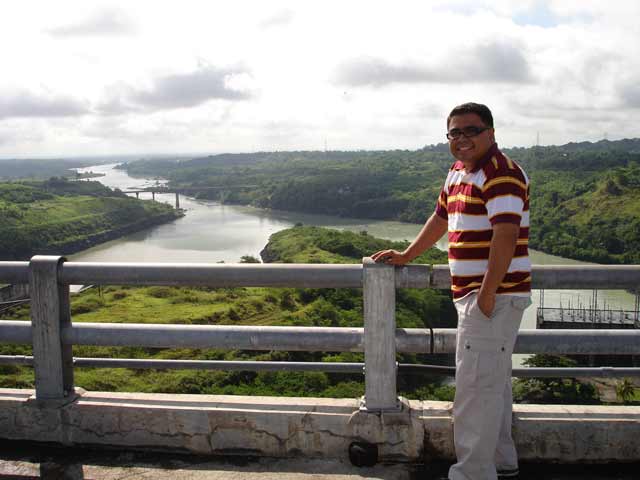
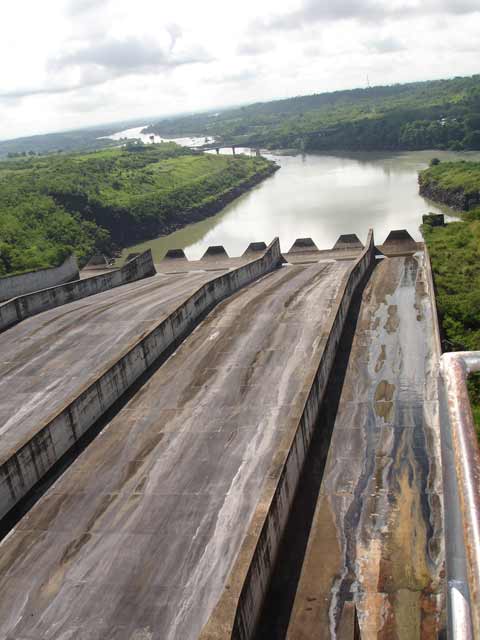
We left UP at 10 p.m yesterday and arrived in Cauayan, Isabela at 6 a.m. just in time for breakfast at the Jambalaya Grill. After a hearty breakfast, we went to the Magat Dam in Ramon. Although I was surprised to see a sign along the road a few meters from the dam that we were in Alfonso Lista, Ifugao.

It was a massive structure which reminded me of the Marcosian-era of the Philippines, the last time when the Philippine government thought big. If there was one thing I would hand to Ferdinand Marcos and his wife Imelda, they left their legacies in architectural monuments such as the Cultural Center of the Philippines and massive infrastructure projects such as the Magat Dam. No other president after them left monumental legacies not including of course Ramos' white elephant known as Expo Filipino.

From the Magat Dam, we went straight to our hotel in Tuguegarao City in Cagayan to freshen up, get some rest and have lunch. After lunch, we went to the Tuguegarao Cathedral, a heritage horror which Jojo calls a "good example of a bad example!"

Imagine, they demolished the old brick convento right beside the church and replaced it with this horrible commercial structure and multi-purpose hall which is still under construction at this moment. Now you see why we can't entrust heritage decisions to some bishops because they themselves are at times the culprits.

That also happened in Lingayen, Pangasinan just recently. Instead of demolishing these centuries-old conventos and replacing them with horrible new buildings, the bishops could have contacted the NCCA or a conservation architect to consult them on how to do adaptive reuse of the conventos, meaning tranforming the interior of the conventos in order for them to serve the purpose intended for new buildings. In that manner, heritage is preserved and the bishops get the income they want.

Yes, the bottomline was income for the bishops since commercial stalls replaced the old conventos when the said stalls could have been integrated properly with the old conventos had they consulted. Notice also the water tank on top of the demolished part of the convento. You can really see how some priests and bishops treat our national heritage.

Tuguegarao is actually an urban planning disaster having transformed itself into another nondescript Philippine city without character. Not much of its heritage is left since Church and State seemed to have formed a perfect tandem in eradicating its rich past. Add to the fact that the roads are literally congested with tricycles. Yes people! After Cabanatuan, Tuguegarao follows with the most number of tricycle franchises issued. Driving in the city streets is a nightmare since the drivers treat the roads as if they were theirs.

We then visited a horno, an oven for baking bricks, in some forgotten corner of the city. I guess the city government has no plans of caring for the site since it's already hidden in a rundown residential area right beside a basketball court which is obviously more important to the people than this relic of the past.

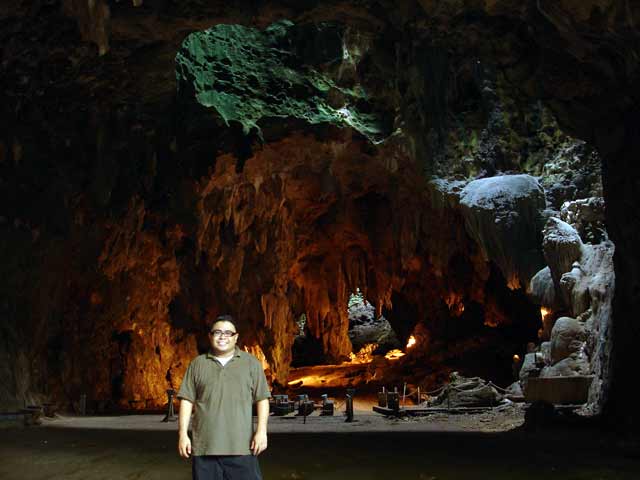
But these depressing episodes would soon be forgotten as we crossed into the next town Peñablanca to visit the Peñablanca Protected Landscapes and Seascapes, in particular, the famous Callao Caves. The image of the caves is so popular owing to the little chapel inside a large cavern which receives sunlight from a natural opening above. Finally, I get to visit the famous caves. But the signature ray of sunlight wasn't there since it enters the cave only at a particular time of the day.

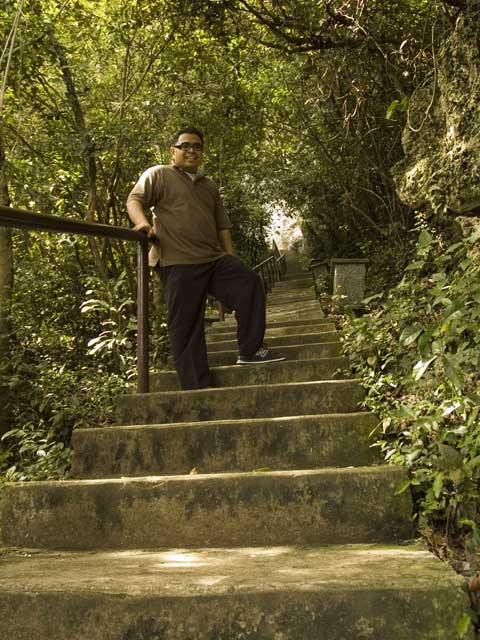
Getting up to the caves can be exhausting thanks to the 183 steps you have to climb to get to the top! But you will be rewarded with surreal rock formations that are very easy to explore.

After the caves, we went down to the banks of the Pinacanauan River for a boat trip that offered us spectacular views of limestone cliffs covered with lush forests. Indeed, this was a reminder that the Philippines had a lot to offer and if we let all of this go by neglecting our natural heritage, it's the next generation of Filipinos that would suffer.

I really hope illegal logging in this part of the country, particularly Cagayan and Isabela, is stopped. But we all know why it still goes on. If politicians in the area can't curb illegal logging, it's either they are weak and don't have the political will, or more plausible is that they are earning from it as well!

We went back to Tuguegarao to get our long-needed rest and for dinner of course. The next day's itinerary was mostly church heritage. I'm quite excited since I rarely visit the Cagayan Valley owing to its distance from Manila. Last time I visited was in 2002 during a conference in Bayombong, Nueva Vizcaya. As part of the conference we visited the church in Dupax del Sur which is a national cultural treasure.

It looks like I'm close to completing the provinces of Luzon Island soon. With my visits to Isabela and Cagayan today, that leaves seven namely Quirino, Kalinga, Apayao, Abra, Aurora, Camarines Norte, and Sorsogon; plus of course six island provinces of Luzon which are Batanes, Occidental Mindoro, Romblon, Marinduque, Masbate and Catanduanes which I hope to visit in the near future. Hehe!

Saturday, July 15, 2006

Batangas: Mount Malarayat Golf and Country Club

They call it a piece of Hawaii in the Philippines. But indeed, the Mount Malarayat Golf and Country Club in Lipa, Batangas offers some of the best views of Philippine landscape architecture at its finest. I was lucky to spend a relaxing day enjoying the serene views of a well-landscaped golf course amidst the backdrop of Mount Malarayat. Such a conducive place for a meeting that would otherwise have been quite exhausting if not for the great view from the function room.

It turns out, the landscape architects were led by none other than National Artist for Architecture, Ildefonso P. Santos and Associates as well as Pesons, Dimanlig, Aleta, Alcazaren (PDAA) Partners whom I believe are professors of landscape architecture at the University of the Philippines.

I hope we get more of the Philippines landscaped by professionals!
Related Posts with Thumbnails