Sunday, January 21, 2007

Taiwan: The mountains of Nantou County

Since we had been in Taichung the whole time and usually did nothing during the day, our Taiwanese guide Frank, who worked with the MECO office in Taichung, arranged for a van to take us to this place he called "snowy mountain." We didn't know where exactly we were going since all the names were in Mandarin. But since we were yearning to go around, we said yes.

The trip took several hours along the Central Cross-Island Highway or Route 8. I also distinctly remember that we wasted so much time because of a flat tire!

On the way, our group paid a courtesy call to Mr. Yukan Nafu, chief of Jen-ai Hsiang (Ren-ai Township) in Nantou County. The place reminded me so much of our laidback mountain towns in the Cordilleras. The mountain climate was very pleasing to the senses. It's sad Baguio City air is no longer as clean as it used to be and you really have to go into the rural areas to enjoy nature at its finest.

Also in Ren-ai, we dropped by the Mona Rudao Monument, which was erected to honor Mona Rudao, a chief of the Atayal Tribe, who led his tribe people in the Wushe Anti-Japanese Incident.

Anyway, it turns out, we were on our way to the highest point on the Taiwan Highway System. Although I know it was somewhere inside the Taroko National Park, it was only after research that I found out that this area was known as Wuling. We took photos in the marker in Hehuanshan Pass, which at 3275 meters above see level is the highest road pass in East Asia.

The fog was so thick, it was difficult to see things around. So obviously, the view of the mountains was blocked as well. In fact, it was so cold, it was actually snowing. Near the marker were several makeshift stalls which sold hot meals such as noodles and grilled sausages. It was good someone posted his photos of Wuling so I was able to see the view of the mountains sans the thick fog.

We didn't stay too long up there since it was freezing cold and there was nothing to see at that time. Winter is not a good time to go up. So the group made its way down the mountain again.

Maybe if I get the chance, I should come back here during the summer months. The brochure of Taroko National Park has very enticing photos of the many natural attractions of the park. We decided to rest early that night since we were going to Taipei the next day.

Saturday, January 20, 2007

Taiwan: Taichung, culture city of Taiwan

How can one forget the date we left for Taiwan. It was February 14, 2003. The City Government of San Fernando was being sent by the Department of Tourism to represent the country in the 2003 Taiwan Lantern Festival which was held in Taichung. I had previously been to Taiwan when I was five but we only went around Taipei. So this was my first time to get out of the capital city. But time was limited since although we were there for almost two weeks, most of our time was at the festival and meeting with local officials.

It was a late night Philippine Airlines flight since I remember, our passports were stamped in Taipei on the 15th. We were met by the Tourism Attache who accompanied us on the two-hour bus to Taichung, Taiwan's culture city. The bus ride was very comfortable since the chairs were really big. It was like sleeping in your own living room. When we arrived in Taichung we all went straight to bed.

Most of our time that day was spent at the Taichung branch of the Manila Economic and Cultural Office (MECO), our de facto embassy in Taiwan. That night was the opening of the festival. We had passes but didn't get to use them since we were busy preparing the San Fernando giant lantern.

Anyway, when our work was done, I checked if I could still catch the program. But when I got close to the stage, President Chen Shui-bian was about to leave. I was just about a meter or two away but because of tight security, I wasn't able to have a photo taken with him like I usually do when I get the chance to meet heads of state . Who wouldn't? Oh well!

On the right is the main lantern that was lit by President Chen. I remember that the NT$10 million (US$287,356) spent by Chunghua Telecom to produce this 20-meter lantern was the talk of the town during the festival.

We only got to go around Taichung on the 17th and 18th. I remember walking around Taichung Park, also known as Zhong Shan Park. Its main attraction is Jih-Yueh Lake which was originally a natural pond. After years of human modifications, it now covers an area of about 13,500 square meters. In the middle of the lake is a pavillion built in 1908 to commemorate the completion of the north-south railway when the island was still under Japanese occupation. This pavilion has become an important symbol of the city.

It was while reading on the Japanese rule in Taiwan that I found out that the Republica Filipina was not the first Asian republic as some would claim, but was predated by the Republic of Formosa (May 24, 1895) and the Republic of Ezo in Japan (December 25, 1868) among others. In fact, according to Wikipedia, the first republics in Asia are Vaishali, Licchavi and Vajji all established in India circa 600 B.C.

The next day, we visited the Confucius Temple. According to the Taichung website "Taichung's peaceful Confucius Temple features impressive, rectangular Sung Dynasty-style structures, surrounded by spacious courtyards and a garden. The buildings and grounds are usually quiet and near-deserted, giving the temple a relaxing, meditative air. Once a year, during Confucius' birthday (Teachers' Day), the temple comes to life for a dawn ceremony featuring processions of marchers and musicians clad in traditional Chinese imperial court costumes, government officials and hundreds of spectators." Beside it is the Martyrs Shrine. But we weren't able to go inside since it's closed on weekdays.

We also got to visit the Paochueh Temple, a Buddhist temple in the northern edge of the city which is known for its big Buddha statue. The 88-foot gold statue is a big-bellied, happy Buddha known as Maitreya. Below it is an inscription which translates "Happiness to All."

The temple complex is a quiet and secluded place where one can reflect and meditate. The main shrine hall, with a striking blue glazed roof, was built in 1928 and houses three Buddha images protected by a row of fierce guardians.

That afternoon, we also made a courtesy call to Mr. Chen Tien-Wen, the Vice Speaker of the Taichung City Council at the historic Taichung City Hall. It was commissioned in 1912 as the Taichung State Building by the Japanese colonial government. This wood and re-inforced brick structure was completed in 1924 and is considered one of the most elaborate and ornate buildings of the Japanese colonial period in Taiwan.

That's it for Taichung. Up next is the day trip to the mountains in Nantou County we did the day after.

Heritage watch
Chinese boat loaded with stuffed sea turtles released
Legal eagles to help prosecute Tubbataha reef poachers
Legal team formed to help prosecute Chinese poachers
Chinese envoy’s letter led to suspected poachers’ release
Chinese gov’t pressed RP to free Tubbataha poachers
This is a very sad issue for the Philippines. It just shows how weak our government is in protecting our natural heritage. It also shows how other nations condone the illegal acts of their citizens.
Lost but not forgotten lighthouse
Pila townsfolk preserve heritage town
Here is some good news for everyone. I hope other localities follow Pila's example.
Historic church, houses fill Laguna town’s coffers
Restoring Dagupan’s most treasured heritage

Monday, January 15, 2007

Manila: Stopover in Manila

To those asking about what one can do in Manila while in transit and waiting for their flight out, here is a suggestion: Go to the SM Mall of Asia!

Ton, my SSEAYP SG-mate from Thailand, was in Cebu the past few days for the 12th ASEAN Summit being part of their Ministry of Foreign Affairs. It was all work for him and he didn't get to see much, just Shangri-La Mactan, Cebu Midtown and the CICC as well as the sights along the way. To add to that, he only had three hours in Manila today from the time his PAL flight arrived in the NAIA Centennial Terminal 2 to the time his Thai Airways flight left the NAIA Terminal 1.

So Pam, my SG-mate from the Philippines, and I played it by ear and met up with him at Terminal 2. The vehicle from the Thai Embassy was there to bring their group to Terminal 1. So we joined them in the van.

We found out that they were having lunch at the SM Mall of Asia after they checked their luggage in. Good news, since at least we get to have lunch with Ton. So we waited outside until I received a phone call from Ton that they had left Terminal 1 from the VIP level of the arrival area which I had forseen since obviously, the vehicle had diplomatic plates. Haha! We had no choice but to take a taxi to SM Mall of Asia.

The trip was less than 20 minutes and we spent PHP75 for the taxi. If you are a passenger in transit and want to save on a cab since the airport taxi is costly, go to the departure area and sneak into one of the taxis that had just unloaded its passengers. Hehe!

We only had an hour to go around and eat lunch. So we rushed to find the first Filipino restaurant we saw. The name of the place was Bangus. Since Ton wanted pork, we ordered sisig, crispy pata, and chicken and pork adobo, as well as garlic rice. He enjoyed the sisig but found the adobo quite salty. Same reaction here, their adobo was quite salty. We got to walk around a bit after but not too far since we had to be in the van by 1 p.m. So much for my first visit to the SM Mall of Asia! Haha! Sad to say it was my first visit too. Haha!

Anyway, I haven't really traveled much these past few weeks. I regret not going out of town during the Christmas break since now, school, work, the Senate meetings on the proposed Heritage Bill, as well as meetings for the Ateneo Alumni Association have occupied most of my time. So in the meantime, I'll write about my trip to Taiwan, also in 2003.

Wednesday, January 10, 2007

AirAsia is giving 1,000,000 free seats!

Those who already know about it will kill me for posting this. But those who might find out about it when it's too late will kill me too for not posting it. It's like a damned if you do, damned if you don't thing. Hehe! Anyway, AirAsia is at it again. I almost thought they weren't giving away free tickets this year. So I was pleasantly surprised when I saw the announcement in my inbox, that they had 1,000,000 free seats up for grabs.

In fact, I've already booked flights to Kuala Lumpur and Jakarta this June! Although the fare is free, you pay for taxes, surcharges and other expenses. My round-trip ticket from Clark to KL came out at PHP3,290. Add the PHP1,620 travel tax you pay at the airport plus the terminal fee of PHP300 (I'm not sure about the security fee), it's really cheap! I also bought a round-trip ticket from KL to Jakarta for just RM175 (PHP2625).

Hurry because the free flights are going... going... gone!

Friday, January 05, 2007

Malaysia: More Straits Settlements history in Malacca

I arrived in Kuala Lumpur from Penang late in the evening. Of course, the first thing we did was go for a late dinner. If I remember it right, it was at a mamak which served roti canai, beef murtabak and teh tarik.

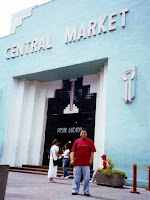
September 19: The next day, I think we went shopping since the only thing I could remember was that we passed by KL's Central Market. That evening too, Leon took a bus from Singapore to join us in KL.

September 20: We decided to go to Malacca (Melaka) and meet up with Shyamala, another SSEAYP batchmate who lived there. Aside from me, Kenneth and Leon, two Filipino friends of Kenneth joined us.

Since I had been to Malacca the previous year during the SSEAYP program, we didn't go around much. I hadn't realized it then but I had actually visited the three major towns of the Straits Settlements (Singapore, Penang and Malacca) during the trip.

Just like Penang, Malacca had its own heritage trail sponsored too by American Express. We started at the Town Center of Malacca Town. One of the major structures there is Stadthuys. which according to the Melaka website was built in 1650 as the official residence of Dutch Governors and Deputy Governors. It adds that "the edifice is a fine example of Dutch architecture, with solid doors and louvred windows. Believed to be the oldest Dutch building in the East, the port-red theme extends to the other buildings around the Town Square and the old clock tower."

Also painted in port-red is Christ Church which was completed in 1753. Inside this Dutch church are 200-year old pews, an altar painting of the Last Supper on glazed tiles, as well as 15-meter beams each made from a single tree.

From the Town Center, we walked straight to Jonker Street (Jalan Hang Jebat) which is a cluster of art galleries, antique and souvenir shops, as well as traders of traditional items, "among them goldsmiths, watch repairers, clog makers and beaded shoemakers, blacksmiths, rattan and bamboo weavers, Chinese traditional medicine merchants and food outlets."
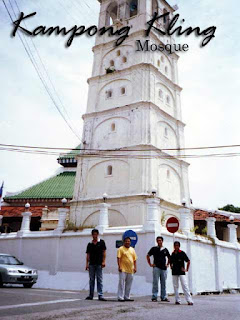
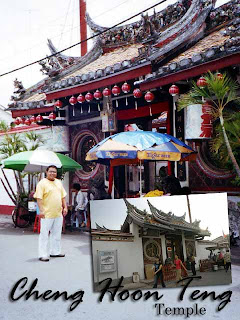
Also in the area were several mosques and temples, among them the Kampong Kling Mosque, one of the oldests mosques in Malaysia which has Sumatran architectural features; and the Cheng Hoon Teng Temple which was built in 1646 and is thus the oldest Chinese temple in Malaysia.

One of the must see sights which I got to visit the previous year is A'Famosa, the "hallmark of Melaka and perhaps the most photographed subject next to the Stadthuys. Built by the Portuguese in 1511 as a fortress it sustained severe structural damage during the Dutch Invasion. The British had set to destroy it but timely intervention by Sir Stamford Raffles in 1808 saved what remains of A' Famosa today."
Also visit the ruins of St. Paul's Church, where the remains of St. Francis Xavier were briefly enshrined in the open grave in 1553 before they were brought to Goa, India.

When it comes to food, don't miss the Baba-Nyonya cuisine which is unique to Malacca. The Baba-Nyonya are the Straits Chinese, descendants of very early Chinese immigrants who partially adopted Malay customs. Another collective term for these immigrants is Peranakan which refers to descendants of foreigners who had assimilated into the local community. There are Indian Peranakans called Chitty and Eurasian Peranakans known as Kristang. In the Philippines, we had the mestizos de Sangley, with Tsinoy as its modern day equivalent

After that long day in Malacca, Shyamala joined us back to KL where we met up with another batchmate Andrea. The five of us went up to Genting Highlands for the evening. It is a 2000-meter high peak which is occupied by a mountain resort called Genting - City of Entertainment. They call it the Las Vegas of Malaysia since it is the only legal land-based casino in Malaysia. Aside from the casinos complex and the world-class hotels, other facilities in this resort include a theme park, golf course, shopping malls, sky diving simulator, concert hall and many more

September 21: It was a Sunday and we didn't do much. Leon had to commute back to Singapore since he had work on Monday. All I remember was we just kept on eating, and eating, and eating since Kenneth was very eager to let me try as much Malaysian hawker food as possible.
September 22: The M/S Nippon Maru docked in Port Klang. I attended the welcome ceremonies in the afternoon as well as the reception on board the ship in the evening. I had to leave immediately after the reception since I had to rush back to KL which was about an hour away to catch the 11:50 p.m. bus back to Singapore.

Septermber 23: I arrived in Singapore early in the morning. I think I took a nap after breakfast. I was in Changi Airport by early afternoon for my Singapore Airlines flight back to Manila.

Related entries
Melaka, Malaysia is a historic city of the Straits of Malacca
Exploring the Penang heritage trail on foot
Bus trip from Kuala Lumpur to Penang, Malaysia
Following the heritage trail in Penang

Thursday, January 04, 2007

Malaysia: Following the heritage trail in Penang

The good thing about most Asian cities is that they have central bus terminals unlike Metro Manila where every bus company has its own terminal which, although clustered together in areas such as Pasay and Cubao, make transferring from one bus to another very inconvenient since the distance between each of them is quite far for a walk. Anyway, Kenneth had already purchased for me a round trip ticket to Penang (Pulau Pinang) at KL's Puduraya Bus Station. A one-way ticket for the five-hour trip on Transnasional was RM22.70 then.

I arrived in Penang at 5 a.m. which was good since I was able to save on hotel expenses. When I got there, it was still dark. I went straight to the hotel where I was booked and tried to get some more sleep.

Penang is also referred to as Pulau Mutiara which means Pearl of the Orient. I was actually surprised when I found out about this since we all thought the Philippines is the undisputed Pearl of the Orient. Well, if we weren't heavily bombed during the Second World War and if the City Government of Manila starts doing something to preserve what's left, there would be no contest. Today, the stunning architectural heritage of Penang is very much intact. In fact, Penang is working to put its capital George Town on the UNESCO World Heritage Site list which they hope would put Penang in a better position to protect her rich cultural heritage.

Established in 1857, George Town became the first city of Malaysia when Queen Elizabeth II granted it a city status by a royal charter on January 1, 1957. It was the only city in Malaysia until Kuala Lumpur was granted city status in 1972.

I was up at about 10 a.m. and started my walk around George Town. The good thing about George Town is that there are readily available brochures for do-it-yourself walking tours called the Penang Heritage Trail. The structures along the heritage trail were restored using a grant given by American Express. Here are the brochures for Penang Heritage Trail 1 and 2.

Among the interesting sites in the trail is the Cheong Fatt Tze Mansion, an 1880s Chinese courtyard mansion which is distint for its cobalt blue walls. The restoration of the mansion from 1991 to 1995 was recognized in 2000 by the UNESCO Asia-Pacific Awards for Culture Heritage Conservation as the Most Excellent Project of the Year. You can actually book a room in the mansion for a unique heritage homestay.

You also shouldn't miss the City Hall which was built in 1903 in the British Palladian architectural style. It currently houses the Penang Municipal Council Chambers and was listed as a national monument of Malaysia in 1982. Between 2004 and 2005, the Penang Municipal Council spent RM3.58 million (PHP54 million) for its restoration.

The most famous historical monument of Penang is the Khoo Khongsi which is called the Heritage Jewel of Penang. It is the clan association temple of the Leong San Tong (Dragon Mountain Hall) clan, whose forefathers came from the Sin Kang clan village in Hokkien province. Built in 1906 when the Khoo clan was at the height of its wealth and eminence in Penang society, the temple underwent a RM4.2 million (PHP63 million) restoration between 1999 and 2000.

I also got to visit the Residence of Ku Din Ku Meh, the Benggali Mosque, Cathedral of the Assumption, St. George's Church, Fort Cornwallis, the Town Hall and Yap Khongsi among other structures that day.

The next day, I continued my walking tour, walking as far as Wat Chayamangkalaram which was quite a distance from the downtown area. Along the way, I saw some elegant colonial country mansions!

Built in 1845, the temple is most know for its Reclining Buddha, the 3rd largest of its kind at 33 meters length. When I got there, they were raising funds to restore the tile roof and what they were doing was actually a good idea since visitors are requested to donate RM10 to sponsor one tile and you could write a dedication at the back of the tile.

I then walked back to the historic core where I hired a trishaw to tour me around. The driver knew the history of the different sites and I was impressed. I visited the Malay Mosque, Mahamariamman Temple, Syed Alatas Mansion, Kapitan Keling Mosque, Kuan Ying Temple, Christian Cemetery, Dr. Sun Yat Sen's Penang Base and Hainan Temple before finally boarding the 5:30 p.m. bus back to Kuala Lumpur.

Related entries
Bus trip from Kuala Lumpur to Penang, Malaysia
Exploring the Penang heritage trail on foot
Melaka, Malaysia is a historic city of the Straits of Malacca
More Straits Settlements history in Malacca

Wednesday, January 03, 2007

Singapore: A little trip around Singapore town

Wow! Talk about digging out albums from the baul! And talk about tedious too since I had to scan every photo!

I was lucky then since I still had remaining miles on my United Mileage Plus account for a free ticket to Singapore. The plan was for me to attend the 2003 SSEAYP reunion (SIGA) in April but that didn't work out since it was postponed to 2004 due to the SARS scare. So I had to rebook my ticket to a later date and I chose instead to visit when the M/S Nippon Maru was docked in Singapore and Malaysia in September. It was still risky since if the SARS situation didn't improve, SSEAYP could have been cancelled. But to make the long story short, the trip pushed through.

September 12: I arrived in Singapore late in the afternoon on a Singapore Airlines flight. I can't remember what I did that night but eating Singapore hawker food was definitely on the list. We had dinner in Holland Village if I remember it right. I stayed at the flat of my SG-mate Leon in Ang Mo Kio while in Singapore.

September 13: For lunch, I met up with the family of my mom's classmate. They took me to this great Chinese restaurant which served chili crab. In the evening, I attended the reunion on board the ship. It was great meeting old friends and munching on Nippon Maru food again.

September 14: I spent the morning walking around Chinatown. I visited the Chinatown Heritage Centre. This museum is actually several old shophouses that were refurbished to show the early days of Chinatown. In the Philippines, we now have Bahay Tsinoy.

Anyway, walking around the brightly-painted colonial shophouses in Chinatown sure shows how much Singapore loves its architectural heritage. According to one account, "Singapore's Chinatown was slated for demolition. However the government, recognizing the people's desires and the historical importance of the area, canceled plans to raze Chinatown and are now in the midst of reconstruction."


According to the Visit Singapore website, "Singapore's Chinatown evolved around 1821 when the first Chinese junk arrived from Xiamen, Fujian province in China. The passengers, all men, set up home around the south of the Singapore River which is known today as Telok Ayer. Chinatown’s local name - Niu Che Shui (Bullock Cart Water) arose from the fact each household at that time had to collect fresh water from the wells in Ann Siang Hill and Spring Street, using bullock-drawn carts.

"Not all parts of Chinatown are Chinese though. The Al Abrar Mosque along Telok Ayer Street, and the Jamae Mosque and Sri Mariamman Temple along South Bridge Road lay witness to the harmonious racial and religious atmosphere in Singapore."

Singapore has other ethinic quarters which include Little India, Geylang Serai and Kampong Glam. In the afternoon, we relaxed at the beach in East Coast Park. Located off the East Coast Parkway, the beach and landscaped terrains in the park are a weekend favorite for Singaporeans. I also got to visit CHIJMES, a heritage landmark of Singapore.

For dinner, we attended a birthday celebration and met even more PYs there. And for an evening snack, we went to Lau Pau Sat, another Singapore landmark, for some satay. Stalls open only at night when Boon Tat Street is closed from vehicular traffic since the stalls and tables occupy the street.

September 15: Lunch was with my SSEAYP host sister. The highlight of the day was a boat trip along the Singapore River. I paid SG$12 for the guided tour. It came with a great map which showed the highlights of Singapore River, from the restored shophouses and imposing colonial structures, the many charming bridges, to modern-day skyscrapers.

Of course, you couldn't miss the Merlion. A half-fish, half-lion beast, it is a fitting symbol of Singapore. The singa or lion is said to represent the animal that a Sumatran prince saw when he rediscovered Singapore while the fish is a tribute to Singapore's history as Temasek, the ancient sea town.

After the brief tour, I strolled around Boat Quay and Clarke Quay. Now that is adaptive reuse! The old shophouses and warehouses in the area were restored and converted to chic bars and restaurants which come alive especially in the evenings. If Mayor Atienza had some political will and love for heritage, he could do this rehabilitation and urban renewal in San Nicolas for example.

For the evening, it was a visit to largest fountain in the world at Suntec City. Made of cast bronze, it was built in 1997 costing an estimated US$6 million.

September 16: Traveling to Malaysia from Singapore is very easy since you can do it by land. I took a six-hour bus to Kuala Lumpur for SG$25. I was met at the Puduraya Bus Station by another SSEAYP batchmate and we had dinner for a while at KFC. But I was leaving for Penang on an 11:59 p.m. bus so not much time to chat.

Check out this song called
Singapore Town.

Heritage watch
More endangered fish found inside boat of arrested Chinese

Tuesday, January 02, 2007

Looking back at SSEAYP 2002

Happy New Year to all! Time really does fly fast and I can't believe it's already 2007! Anyway, I was cleaning my room a few days ago and I got to look at some albums from previous trips when film cameras were still in style.

After my voyage on the Ship for Southeast Asian Youth Program in 2002, I tried my best to visit my friends in the various ASEAN countries every year. I remember in 2003, my trip was postponed several times due to SARS. It finally pushed through in September and it was a blessing in disguise since it coincided with the docking of the M/S Nippon Maru in Singapore and Malaysia. In 2004, I went to Hue, Vietnam but wasn't able to meet up with anyone. My mistake was I sent the e-mail message too close to the trip and my SG-mate (the 340 participants are divided into 11 Solidarity Groups or SGs) only found out we were in the same city, attending the same festival when we got back.

My blog was born during my trip in 2005 to Kota Kinabalu, Malaysia and Brunei. The very first post was actually in my Friendster blog which is still up and about. In April last year, I made a whirlwind tour around Southeast Asia visiting five countries namely Malaysia, Singapore, Cambodia, Thailand and Laos. I've blogged about all these post-SSEAYP trips already except the one in 2003. And thinking about it, I may never get to see again some of the cities I visited during that trip. It would be a pity if I didn't write about them, two of which are heritage towns of Malaysia namely Penang and Malacca. So for the next few days, I'll be looking back and writing about that trip.

Heritage watch
Enriquez antique mansion goes kaput
Yes people! The Enriquez Mansion along Calle Hidalgo, an 1890s house with Ionic columns and praised by Maria Morilla Norton in 1910 as the "the most beautiful house in the islands," the same one which became the site of the School of Fine Arts of the U.P., is now Acuzar property and has been transferred to Bagac, Bataan. And yes, Acuzar is planning to build a 20-storey building to replace this elegant house in the heritage street.

Saturday, December 30, 2006

Happy Rizal Day!

The networks will definitely be congested beginning tomorrow. Besides, it would be more meaningful to greet people today. So to all my friends... Happy Rizal Day! May Rizal's martyrdom remind us to love our country and be proud to be Filipinos!

Here are some of the lesser known quotations from Rizal's writings:
"They could serve the country more if they were in the Philippines. To serve our country, there is nothing like staying in it. It is there that we have to educate the people, it is there that we have to work." - Letter to Jose M. Basa, January 1889

"A nation wins respect not by covering up abuses, but by punishing them and condemning them." - The Philippines a Century Hence, La Solidaridad, 15 December 1889

"People and government are correlated and complementary. A stupid government is an anomaly among a righteous people, just as a corrupt people cannot exist under just rulers and wise laws. Like people, like government, we will say, paraphrasing a popular adage." - The Indolence of the Filipinos, La Solidaridad, 15 September 1890

Rizal in the news
Rizal joins ranks of Dickens, Austen
"JOSE Rizal’s 'Noli Me Tangere' has been published in a new English translation and released worldwide by Penguin Books, one of the major publishing houses of the English-speaking world, under the Penguin Classics imprint. The publication effectively canonizes the novel as one of the classics of world literature." All I can say is... wow!
National hero a prisoner of myths
This article by Ambeth Ocampo talks about and debunks urban legends on Rizal, such as the one which says he was the father of Adolf Hitler, and another that he was Jack the Ripper! Talk about imaginations running wild!

Heritage watch
China urged to stay away from case of Chinese ‘poachers’

Congress urged to probe poaching in Tubbataha Marine Park

I knew something like this was going to happen. It's a good thing the local provincial and church leaders as well as environment stakeholders in Palawan are not letting down their guard.

Friday, December 29, 2006

Manila: Inside, outside and on the walls

Today, we did a walking tour of Manila's San Nicolas and Intramuros areas. Since Manila Streetwalker Ivan ManDy was free that afternoon, he took me, Karlo and Maricris around Binondo and San Nicolas. But before that, how could we resist not eating in Chinatown? So lunch was first on the agenda.

My tokayo brought us to Benavides Street which is fast transforming itself into a restaurant row. Lunch was at the Hiongso Chicken Restaurant which we were told was value for our money. And my tokayo was indeed right because we had a big bowl of hot and sour soup (they say it's good for three to four people, but this is the size they serve at Chinese restaurants for ten people!), honeyed pork spareribs, peppered beef tenderloin and Yangchow fried rice all for PHP430. That's about PHP100 for each of us and we were so full!

After that, it was time for the walk around San Nicolas. As Ivan ManDy writes, "In San Nicolas we have what is probally Manila's single largest concentration of period houses and mind you, not the 'old-new' (bagong-luma) wannabe architecture that characterizes much of Intramuros. This is as true as it can get.

"On a personal note, I can honestly say this district is special, not just for every true-blue, heritage-loving Manileño but personally for this walker who, as a child, spent his early years amidst these beautiful wooden houses, playing on the very streets while sucking in the atmosphere of commerce, dark esteros and the overpowering smell of onions.

"These days, the historic properties are still there. Though diminished substantially, they still provide a backdrop of what old Manila looked, felt and smelled like in the days of our ancestors. What revolutions, earthquakes and a world war didnt destroy, our 21st century cavalier attitude eventually will. It's a conststant battle between the old and new, commerce and culture, development and destruction, why can't we get these acts together?"

Yes, it was one of the few Manila districts which survived the Second World War. But we are fast losing it. In fact, Ivan said that twenty years ago, San Nicolas was even more grand and a lot was lost since then. Another avid traveler, Sidney Snoeck, rated his visit to San Nicolas a 10 out of 10. He says, "Even if they are in a far state of decay those 19th century old houses have still a lot of charm. I saw a lot of lovely windows, doorways and panels decorated with stars & flowers."

"This district has probably the biggest collection of 19th-century houses that still exist in Manila," Sidney writes. "It seems that those houses are just waiting to be demolished. Actually I saw quite a lot of new buildings being constructed. It is too bad that the owners of those marvellous houses don’t have the money to renovate them. My advice is to visit this neighbourhood as soon as possible and take a lot of pictures. I fear that in ten years time the whole neighbourhood might be just another concrete jungle. I feel bad because I know it will not be saved for future generations. Sad, very sad," he adds.

If only our local officials could see the potential of the heritage architecture in this area when rehabilitated properly. Living in these grand and charming old houses were actually informal settlers. So much potential when only if Manila's policy-makers were forward looking! The Manila districts outside the walls are still worth saving.

From there, we trooped to Intramuros to check out the books at Tradewinds. At 5 p.m., Ivan calls us to let us know he was free to join us at Intramuros. So we went to the Baluarte de San Diego area. Believe it or not, it was the first time I actually walked on the walls. To find out where that is, check out this Intramuros Virtual Map.

According to Jose Victor Z. Torres in his book Ciudad Murada: A Walk through Historic Intramuros, "There were seven gates in Intramuros (not including Fort Santiago): Postigo, Santa Lucia, Real, Parian, Isabel II, Santo Domingo, and Almacenes."

"The city had 32 streets: Aduana, Almacenes, Anda, Arzobispo, Audiencia (now part of Gen. Luna), Basco, Beaterio, Cabildo, Claveria, Escuela, Hospital (now part of Cabildo), Legazpi, Maestranza (disappeared after this section of the walls was demolished), Magallanes, Muralla, Novales, Postigo, Real del Palacio (now Gen. Luna), Real, Recolletos, San Agustin, San Francisco, San Jose, San Juan de Dios, San Juan de Letran, Santa Clara, Santa Lucia, Santa Potenciana, Santo Tomas, Solana, Urdaneta, and Victoria.

"Intramuros had nine bastions: Baluarte de San Miguel, Medio Baluarte de San Francisco, Baluartacillo de San Francisco Javier, Baluarte Plano Luneta de Santa Isabel, Baluarte de San Diego, Baluarte de San Andres, Baluarte de San Francisco de Dilao, Baluarte de San Gabriel and Baluarte de Santo Domingo as well as small fortifications like Revellin del Parian, Revellin de Real de Bagumbayan, Revellin de Recolletos and redoubts like Reducto de San Pedro and Reducto de San Francisco.

"Within the city there were seven churches: Manila Cathedral, San Agustin, Lourdes Church, San Ignacio, San Francisco, Santo Domingo and Recoletos..."

As Ambeth Ocampo writes, "The above shopping list ends with hospitals and schools. Just reading it makes one imagine Intramuros at its height, before the Americans destroyed it during the Battle for Manila in 1945."

We actually went up through the Baluarte de San Andres since the guards wouldn't let us in at San Diego since a wedding reception was on-going. From San Andres, we were rewarded with great views of Manila's American colonial architecture from the Central Post Office, Manila City Hall, the former Legislative Building and Finance Buildings (now the National Museum), and the Department of Tourism. It was obvious what big idiots we have in the Manila City Hall since they allowed several buildings behind it to rise higher than the charming city hall building itself, ruining what would have been a grand and elegant vista.

Anyway, it was fun watching the sunset and we walked the walls back to San Diego, sneaked past the guards and exited through the entrance the guards didn't want to let us through. Hehe! I'll try to do that again some other time, this time walking the entire length of the fortifications of the walled-city!

Save Corregidor!
There was this e-mail message circulating about something happening in Corregidor. I didn't want to react to it immediately since I knew the people who were involved and wanted to ask for their side first before I made any shout-outs. It turns out, the e-mail message was one-sided and the only thing that was true about it was the fact that the government is not giving any attention to Corregidor!

Leslie Murray af the Filipino American Memorial Endowment writes, "Amazing how UNESCO can save the terraces and the churches, and here we have vestiges of one of the most famous chapters in recent history on the doorstep that could bring in a whole niche market of visitors (WWII survivors' and fatalities' families, historians, etc.) to a site that really turned the tide of that war. And nobody, until now, has seemed to care."

Indeed, we are wasting the potential of this island. In fact, I think the World War II Memorials of Bataan and Corregidor should be nominated to the UNESCO World Heritage List. The A-Dome in Hiroshima is in the list already.

Heritage watch
Finding the past in Alegria
A bridge breathes its last
Now this is totally stupid! The article says: "Alegria used to be the only town in Cebu that had two bridges figuratively spanning the colonial period. One was the remnant of the only Spanish-era arched stone bridge in Cebu, the other a 1913 bridge built probably built by the famous American colonial engineer Eusebius J. Halsema when he was public works chief in Cebu.

"Both are long gone now as they were torn down without much ceremony by a conservation-deficit contractor three months ago. Vice-Mayor Verna Magallon, chair of the local Tourism and Heritage Council, fired off protest letters as a result but these were for naught. When we met her for lunch last week, she told us that the Sangguaning Bayan invited the contractor twice in order to learn about its plans. But the contractor never showed up and the bridges are now nowhere to be found." That contractor is one big idiot!

Thanks to Manila Streetwalker Ivan ManDy for photos of San Nicolas and to Karlo de Leon for taking our photos in Intramuros.

Wednesday, December 27, 2006

Manila: Battle for Manila

As I've mentioned time and time again, Manila was devastated during the Second World War. Thus, with so much lost, the architectural heritage left standing today should be preserved for future generations of Filipinos. Just to give you an idea of the destruction, check out this 1945 footage of the only urban battle in the Pacific, where Manila was flattened to the ground. Today we wage a battle to preserve Manila's heritage!


Thanks to Hawayano of SkyscraperCity for uploading it on YouTube!

Heritage watch
Sino poachers caught with endangered fish in Tubbataha

BFAR to escort Chinese vessel out of Tubbataha?
Kudos to the Tubbataha Management Office for enforcing national and international laws with the arrest of poachers in the protected reef. Let's just hope no government official will throw his weight around and intervene for the fishermen and vessel owner.
Baguio City starts 1,000-day countdown to 2009 centennial
Now this is good news for Baguio City! The organizing committee has "decided to celebrate Baguio’s centennial as a three-year continuing advocacy for policies that would protect its American and Ibaloi heritage."
Facelift for Taguig lakeshore
This is great news for Taguig City if they are able to revive the old town district! It's good to hear that the legendary Napindan Lighthouse is finally getting the attention it deserves. Wow! That's a lot of good news for Philippine heritage today!

More from Ligligan Parul
While doing my rounds of YouTube, I found a video of the giant lantern of Barangay San Felipe, this year's champion. It was only now that I was able to review their first round routine and was impressed even more since the interplay of lights was simply exciting. Notice that they use the traditional marching band music. I'm going to get footage of the first round routines of the three winners from InfoMax8 so watch out for it. Anyway, here is the video.
Related Posts with Thumbnails