Saturday, September 22, 2007

South Cotabato: An afternoon in Lake Sebu

From Sultan Kudarat, we entered South Cotabato. Our main stop for the day was Lake Sebu. The municipality has three lakes including the main Lake Sebu. On the way, we got to see Lake Lahit.

Before proceeding to the restaurant, we checked out the viewpoint of Lake Sebu beside the municipal hall. It was a disappointment since the view was not spectacular since it was blocked by trees. What a waste of PTA money! Guess whose name is painted on the structure? This shameless self-promotion in government is really sick. And next time they select and construct a viewpoint, they should make sure there is a view. Anyway, I didn't let that ruin my afternoon in such a great place.

We passed by a small house converted into a T'boli Museum. Not so many items inside but we got some souvenirs there. We then had a really late lunch in a floating restaurant of the Punta Isla Lake Resort where tilapia was the main course on the menu. There were over a dozen tilapia dishes in fact. The view was serene. Nothing beats eating amidst nature at its finest.

After lunch, we took a pump boat around the lake. We spent PHP350 for the 45-minute boat ride. The area is the ancestral domain of the T'boli minority and we got to see their dwellings and way of life from the boat. There are also several islands in the lake where the T'boli have built their homes.

Sadly, more modern structures are crowding the banks of the lake. It uncontrolled, the lake may lose its charm. In fact, there was a gargantuan church built on top of a hill. I feel that it should at least been blended with its surroundings since it sticks out like a sore thumb.

From Lake Sebu, we went to Koronadal to meet up with our brod Gibby and his wife Shay who live in the the Dole Plantation in Kalsangi, Polomolok where we were going to stay for the next two nights. On the way, we bought more fruits in Tupi.

I took some night shots of Gen San from what they call the highest point in Kalsangi.

Cotabato & South Cotabato: Soccsksargen road trip

Today, we traveled from Midsayap, Cotabato to Polomolok, South Cotabato by road. Our stops included the Pikit, Cotabato; Isulan and Tacurong City, Sultan Kudarat; and Lake Sebu, South Cotabato. Don't Pikit and Tacurong sound familiar? Let's just say we kept our fingers crossed.

In Pikit, we stopped over at the municipal hall which was built on top of a hill. A few meters behind the municipal hall are the ruins of the old Fort Pikit built during the Spanish colonial period. We got to meet the mayor who was meeting with his security. They were kind enough to tell us how to get to the old fort which was inside a military camp.

Our next stop was the Sultan Kudarat capitol building in Isulan. Since it was a Saturday, it was empty. In front of the capitol was a statue of Sultan Dipatuan Kudarat after whom the province is named. I really hate it when government officials try to perpetuate their names on the edifices the build. I found it tasteless that under the embossed words "Provincial Capitol of Sultan Kudarat," they had to add "constructed under the administration of governor blah blah blah and congressman blah blah blah" also embossed. The elegance of our government buildings are diminished by the unnecessary self-promotion.

Anyway, we got ourselves a snack in Tacurong City (yes, they have a Jollibee there). But we didn't eat much since we were saving space for our really late lunch in Lake Sebu.

Friday, September 21, 2007

Maguindanao: Around Cotabato City

I had been looking forward to this weekend for months. I went to Mindanao with brods Ryan and Allen, and our friend Ching. The tickets were booked way back April (yes, it's the P1 fare promo). We took a flight to Cotabato City (the airport is in Datu Odin Sinsuat, Shariff Kabunsuan) where the van of Ching's cousin picked us up.

We visited Small World in the same town. Aside from the zoo, everything else was closed since the park is fully-open only on Sundays. The Lourdes Grotto is also there but since the priests who own the place make it such a hassle to visit (you have to get a permit and leave your driver's license and all), we decided to move to our next stop, the Tamontaka Church, a national historical landmark.

I had expected to see an old church. But it was totally new. The older church was destroyed by a fire several years back. It was declared a national historical landmark just in 2004, long after the new and current church was built which thus came as a surprise to me since I know that the NHI requires a certain percentage of authenticity before declaring structures.

Anyway, we passed by the new Cotabato City Hall before proceeding to Mang Gorio for a late lunch. We ordered barbeque chicken and buko halo-halo. We also dropped by the Kuta Wato Caves but that was a big disappointment. It was so dirty, and you had informal settlers residing above the caves. I could just imagine where all their human waste goes. The city government should take out that tourism sign outside because it is no longer an attraction. It's such a pity since the natural pool inside the cave would have made it such an enchanting place.

From there, we proceeded to the old city hall and town plaza. Our plan was to drop by the tourism office but it turns out, government offices close early on Fridays in this part of the country. Friday, is a day of prayer for Muslims and I was told it had been practice here that after services, employees don't go back to the office anymore. Oh well!

The local government should encourage the rehabilitation of the early post-war commercial buildings in the town proper. These structures give the city a lot of character.

We also took pictures by the Rio Grande de Mindanao and its tributaries before driving to Midsayap, (North) Cotabato where we stayed for the night. I can't remember how long the drive was because I dozed off at times. The view of the Mindanao countryside was a refreshing sight. Anyway, More photos in Multiply.

Thursday, September 20, 2007

Speaking engagement in Tuguegarao City

I'm in Tuguegarao City to speak at the 2nd Regional Youth Leadership Congress in St. Paul University. I took an Air Philippines flight which was two hours delayed! When I got here, we rushed to the Callao Caves to watch the bats fly out but since it was raining, they didn't. Maybe next time.

The congress was today. I slept early last night and also slept the entire morning since I wasn't feeling well. For the sights in Cagayan, just check out my older Cagayan entries. For this trip, I just visited the Ermita of San Jacinto which is in front of the campus.

Now I'm just waiting for my bus ride back to Manila. I could have opted for a plane but there is no flight which would allow me to make it to my flight to Cotabato tomorrow. This Tuguegarao to Cotabato journey would be my personal record for the farthest distance traveled in the Philippines in a 24-hour period.

Wednesday, September 19, 2007

HCS 2008 Calendar: Heritage Recycled

The HCS will be featuring fine examples of built heritage structures transformed into commercially-sustainable business projects. You will find elegant family residences that have been recycled into boutique hotels and banks; a century-old train terminal (Tutuban) became a shopping mall and the first international airport of Manila (Nielson Tower) was restored and recycled into a library and bookstore.

All these are compiled into the 2008 Heritage Calendar/Postcard Collection called HERITAGE RECYCLED. These unique calendars are excellent Christmas gifts to your friends and business associates. You can also have your company and/or personal logo printed on the standee.

As you know, the HCS is a non-profit group. One of our main objectives is to show how the restoration of heritage structures can enhance the value of real estate development projects, urban planning, and tourism.

By ordering, you will be contributing to this worthwhile advocacy. (P200/copy; 10% discount for members and bulk orders of 100pcs++)

Thank you for your valued support. E-mail us at info@heritage.org.ph

Heritage recycled
Adaptive re-use is a creative mode of conservation that gives heritage structures new and alternative functions other than the original ones that may no longer be required.

Adaptive re-use is applicable to most heritage structures. These need not be as grandiose as the vintage Department of Finance, now the National Museum. HCS did not include it to show that ancestral homes of modest proportions, obscure town halls, colonial watchtowers and bridges, warehouses and train stations can also be recycled into sustainable projects.

Most often than not, built heritage resources are found on premium real estate property so developers are in a hurry to demolish rather than restore and recycle. Today, there is a growing awareness that adaptive re-use can enhance property value.

In many countries, like Australia for example, demolition of heritage structures is considered wasteful. Heritage resources are given adaptive re-use because it is good for the environment. Recycling a valued heritage place makes adaptive re-use of historic buildings an essential component of sustainable development. The United States of America abounds with examples of creative (and remunerative) re-use of heritage. Old warehouses in Manhattan's meat-packing areas have been transformed into fashionable and expensive lofts. Elegant mansions in "Gone with the Wind" country were transformed into boutique hotels.

In London, a power plant along the River Thames became the elegant Tate Gallery of Modern Art. In Mexico City, the Cemento Azteca plant is now an environment-friendly children's museum-- El Papalote. Singapore has salvaged a cluster of decrepit shop houses, turning Boat Quay and Clarke Quay into an eclectic mix of high-end restaurants, al fresco dining, dazzling bars and pubs.

We are not too far behind in the Philippines that is why the HCS has chosen "Heritage Recycled" as its theme for 2008. Until now, you may not have noticed these twelve amazing projects of sustainable, adaptive re-use. Take a good look around you and find more incredible examples of how Filipinos have so creatively recycled heritage.

However, in the Philippine scene, recycling heritage and adaptive re-use are still polemical issues. Should heritage conservation be done strictly "in situ"? Should heritage structures be transferred to different sites and settings, when that is the only way to save them? Is adaptive re-use intrusive? Or, should heritage conservation be a priority at all? Let the debate begin. After which we, conservation advocates, can make policies suitable to our own needs and vision.

Tuesday, September 18, 2007

Register now for the 2nd Philippine Towns and Cities Seminar

Join us at "Philippine Towns and Cities: Reflections of the Past, Lessons for the Future" on November 9, 2007 at the Sarabia Manor Hotel and Convention Center, 101 General Luna Street, Iloilo City.

The main objective of this seminar series is to enhance civic engagement with local governments units so the Heritage Conservation Society (HCS) can inform and guide them on the proper care and utilization of a valuable asset — built heritage resources. The first seminar was held last 8 November 2006, at the Development Academy of the Philippines, Pasig City.

In our towns and cities, wanton real estate speculation and over-construction are often mistaken for modernization when in fact these exert devastating pressure on the historic and cultural core of many of our human settlements. As a result, a valuable economic resource – built heritage — is left to deteriorate or is thoughtlessly demolished in the name of progress. Concerted effort is imperative to protect heritage resources because these are revenue and job-generating assets that can spark economic revitalization, as the case of Vigan clearly shows.

However, there is a general lack of awareness at the local government level, which is precisely where policies should be formulated and ordinances passed to declare heritage districts and protect these as the town's or city's prime assets. Built heritage resources should be the core of any master plan for urban development and inner town/city revitalization. Livelihood opportunities are generated by adaptive re-use, the revival of traditional crafts for restoration work and an increase in tourism receipts.

Significantly, communities begin to feel a "pride of place".

The "Philippine Towns and Cities" seminar series is a communications campaign to influence policy makers at the local government level. Through the "Mayors' Forum", best practices are shared. Other stakeholders in the Executive branch, the private sector and the academe are invited to participate because heritage conservation is a multi-disciplinary concern.

In a second seminar, the Heritage Conservation Society will take this awareness and education campaign to the local governments of the Vizayas, where built heritage resources abound in the cities of Cebu, Bacolod, Iloilo, Dumaguete, Tagbilaran, and many others.

For more information, contact Ms. Dorie Soriano (HCS): 521-2239, 522-2497, info@heritage.org.ph; or Ms. Len Diño (UPF): 895-1812, 896-1902, 890-2480, annalynn.upf@gmail.com.

Sunday, September 16, 2007

Cavite: Salad party in Sonia's Garden

My SSEAYP batch (Me, Dep, Nona and Pam) brought Noby, our Japanese batchmate, to Tagaytay today, part 2 of his birthday celebration. On the way, we passed by Dep's alma mater, the Philippine National Police Academy where we did some rounds at the firing range. It was my first time to shoot and thanks to beginner's luck, I did not miss my targets. Thanks for that Dep!

On the way to Tagaytay, we debated as to where we were going to have lunch. And the salad buffs won so it was Sonia's Garden. It was my first time to have lunch there would you believe. And it was a good decision since I really like the ambiance of the place, eating in a garden atmosphere. Their business model was great since it was a set menu at PHP610 (tax inclusive), a sit down buffet of bread and spreads, salad greens, fruits, pasta, dalandan juice and dessert.

As soon as you sat down, the waiters immediately brought in the bread and salad so there was no waiting time. If you wanted more, you simply asked the waiters to brings in more. It was a really healthy treat and very much worth the visit!

Pia followed us there. And after we were done eating (we were all so full), we drove back to Manila. We had wanted to go around the garden outside but it was raining.

We got some buko (coconut) and other fruit tarts from Amira's which is a small shop along the National Highway; and some burgers at Mushroomburger before proceeding back to Manila. I was asleep the whole time, tired from so many days of traveling. Anyway, more great photos in Multiply.

Sonya's Garden
Buck Estate, Alfonso, Cavite
Mobile +63 928 5073302
Landline +63 46 4132081

Related post
Around Taal Lake

Saturday, September 15, 2007

Pampanga: An afternoon in Abe's Farm

I trooped to Pampanga today to attend a party hosted by Larry Cruz (he's the man behind Cafe Adriatico, Cafe Havana, Bollywood and Abe Restaurant among others) in Abe's Farm, an emerging resort at the foothills of Mount Arayat. I tagged along my SSEAYP batchmate Noby who is celebrating his birthday today.

As expected, the food was fantastic, the best of LJC!!! There was just so much food from the menu of his different restaurants, I wasn't able to taste every dish served on the buffet table.

Nurture Spa is also opening a branch in Abe's Farm and there was a special rate for everyone today, P500 for all treatments, one day only! That included massages, foot spa and facials. Sorry guys but they'll be regular price beginning tomorrow.

I finally got my hilot spa treatment. This spa features massages such as "Seseng-Ima," a Kapampangan-inspired massage, "Aruga," "Payapa," and the "Hilot Kagalingan" which was done as I described in an earlier post, with coconut oil and warm banana leaves.


Of course, we met some VIPs and I told Noby he was lucky to meet Senate President Manny Villar (right) among many others. We were back in Manila after three hours in traffic. Will someone please tell the NLEX to speed up their repair works in Balintawak. It's stressful and draining to drive in that area! Anyway, more photos of this fantastic place in Multiply.

Friday, September 14, 2007

Vietnam: Mekong River boat ride

During my second day in Vietnam, I decided to go on a Mekong River tour. The thing I like about mainland Southeast Asian destinations is that it’s so easy to book tours even if you’re just alone.

I spent US$7 for a whole day tour which included lunch. I was picked up at my hotel at 8 a.m. and we were off to My Tho City, one and a half hours away.

We took a small roofed pump boat a few minutes from the city center. The river was very wide and we got to see many fishing boats, ferries and floating houses. Most of the tour was going to be in Ben Tre province across the river. Our first stop was a small coconut candy factory in Turtle Island where we got to see how they made the local delicacies.

From there, we went back to the boat and stopped over a fruit orchard where to my surprise, we were given bicycles for a ride around the area. Nothing fancy actually, it was the typical rural life in Vietnam which one can see here in the Philippines. But I’m sure the other foreigners in my group were excited with the new experience. We have better rural scenes in the Philippines. But there was no grassroots tourism program like this where the locals benefit directly. Our DOT is focusing too much on big resorts and golf courses, local residents don’t get to benefit too much from the tourism boom.

After the bike ride, we were served lunch in the fruit orchard. It was a small serving of spring rolls, pork, soup and rice. You could order more but it was a bit pricey. From there, we boarded our boat again and rode to Unicorn Island where first visited a bee-keeping farm to taste the honey, honey tea and honey wine. But we got more than that since we got to play with their pet python too. But the highlight of this part was that each of us was given a serving of snake wine!

We walked down the path to another area of the island where we enjoyed the local tropical fruits while being serenaded with Vietnamese traditional folk-song music performed by the locals. On the way back to the boat, we had to ride small paddle boats from the restaurant which took us through narrow river creeks shaded by nipa plants. We boarded our boat and headed back to the port.

From the port, we boarded our van and made a brief stopover at the bonsai garden in My Tho. Didn’t see much but I got some jackfruit snacks to munch on. We were back in Ho Chi Minh at 5:30 p.m. More photos in Multiply.

Thursday, September 13, 2007

Vietnam: More from Ho Chi Minh City

The following day, I decided to take it slow. I wanted to get away from the pulsating beat of orderly disorder that characterized Saigon. So I booked myself on a trip to the Mekong River that would take me one and a half-hours outside Saigon to the city of My Tho and Ben Tre Province. The van passed by for me at my hotel at 8:00 a.m. and we were back in Saigon’s urban chaos exactly at 5:30 p.m. I'll discuss that in a later entry.

Back in Hồ Chí Minh City, as soon as I stepped down the van, I rushed back to my hotel to change and drop off my stuff since I wanted to catch the 6:30 p.m. water puppet performance. I took a cab from my hotel to the Golden Dragon Water Puppet Theatre to catch one of Vietnam's cultural symbols. It was a brief 50-minute show which is a must visit for culture vultures like myself.

I realized I had been so stingy like always that I had a lot of funds left. So I decided to check out the Vietnamese restaurant my hotel recommended called Hoang Yen Restaurant. I had minced meat soup, spring rolls and chicken wings. It wasn’t as cheap as what you’d get from hawkers or hole-in-the-wall establishments. In fact, it wasn't even close! But it’s worth a try if you have some extra money to spend.

From the restaurant, I walked to the Ho Chi Minh City Hall to check out this wonderful work of art well lit at night. The intricate detail of this charming French colonial government building never fails to enchant me, even more when it is lit up in the evening.

I didn't stay too long since I had wanted to sleep early. But a college friend, who I met in the plane on the way to HCMC, sent me a message that we meet up. So it was another night at Allez Boo (this time I downed a bottle of Saigon beer and a pizza). But we decided to go around and we moved to Gossip to check out the clubbing scene. It seemed the young, rich and trendiest of HCMC were all there on a Wednesday night. It was one big parteee!

The next day, I woke up early for some last minute shots around HCMC before my flight back to Manila. I got myself a xe om (motorbike for hire) for an hour to take me around District 1.

Of course, I dropped by the Ho Chi Minh City Hall again and the nearby Saigon Opera House. I watched as the city woke up with joggers and old folks doing their morning rituals; and motorbikes started to increase in number. But I didn’t have that much time since I had to be at the airport by 8 a.m.

I wish I had more time to explore. But at least I got back to Manila in one piece since I felt that I was in the middle of a giant traffic accident waiting to happen. If there’s a next time, I definitely will rent my own motorbike and join the fun!

Golden Dragon Water Puppet Theatre
55B Nguyen Thi Minh Khai, District 1
Ho Chi Minh City
Showtimes: 6:30 p.m. & 8 p.m.

Tuesday, September 11, 2007

Vietnam: Experiencing old Saigon and cosmopolitan HCMC

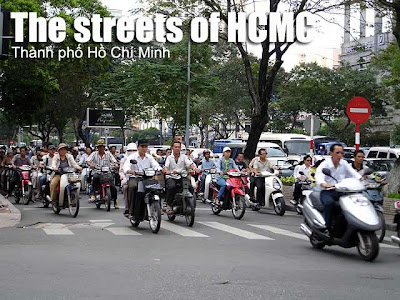
Day 1 in Ho Chi Minh City. I arrived at 9 a.m. after a two and a half-hour flight from Manila. Although I was at NAIA as early as four, the lack of sleep did not deter me from rushing out to explore this dynamic city.

First impressions do last. I was pleasantly surprised that a new and modern Tan Son Nhat airport welcomed me. How I wished that the Philippines opened its new terminal sooner since all other ASEAN countries have modernized their own gateways. Outside was an orderly line of taxis waiting for passengers. I was expecting to argue with the driver as one travel guide warned. But as soon as I sat down, he turned on the meter. I was booked in a hotel along Pham Ngu Lao Street, Saigon’s backpacker haven.
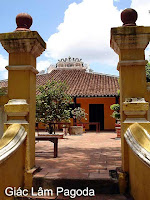
Most guides to HCMC always recommend a visit to its many pagodas and temples. I thus decided to drop by one or two to get the ball rolling. I took a cab to the Giac Lam Pagoda, believed to be the oldest in the city. It was quite a distance from the city center. And the trip made me a spectator to the organized chaos that passes through the many tree-lined motorcycle-choked boulevards of Saigon. There was not too much activity in the temple as what I’ve seen in other Buddhist temples in Southeast Asia. But there were a few devotees doing rounds around the different images with their joss sticks. By the time I exited its gates, it was time for lunch.
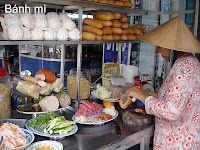
Since I was on the run, I tried to look for the neighborhood bahn mi vendor. These are the local sandwiches which may look Western but definitely taste Vietnamese. I just love the way the pate, meats, and herbs mix very well with the baguettes, a culinary blend of East and West indeed. After walking under the sun for several meters, I finally found a stand. Until now, I still cannot fathom how a sandwich that costs only VND5,000 (approximately 15 pesos) in the streets of Vietnam is sold for ten times that much in Manila!

After that quick bite, I visited nearby Giac Vien Pagoda. The first thing I noticed as I entered was a number of shrines on each side with photos of the departed. I walked around the hall for a while and was resting on a stool, preparing to leave, when the lone monk in the hall blurted out something in the vernacular, as if calling me to come closer. When I got to his table, he threw a few questions at me which he asked in English, albeit with a bit of difficulty. He stood up, picked up a few joss sticks, and asked me to follow him. He toured me around and I made my rounds around the temple like the locals.

It was another cab ride to my next stop, the Reunification Palace. The former presidential palace of the defunct South Vietnam, it was where the Vietnam War was said to end when tank number 843 rammed into its gates on April 30, 1975, the day Saigon surrendered. It has been left the way it looked on that momentous day for Vietnam. Even the command center in the basement of the building still has its war maps, telephone and radio equipment, and other items on display in the different rooms as if the war had just ended yesterday.
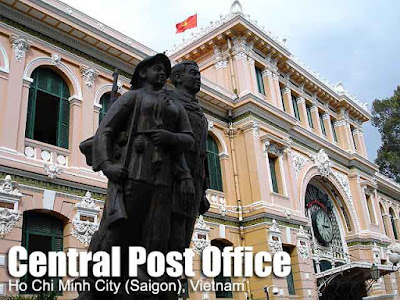
From the palace, I walked to the nearby Notre Dame Cathedral and General Post Office which stand beside each other. The red-brick neo-Romanesque cathedral, built between 1877 and 1883, towers over the area. Right beside it is the well-preserved post office building, one of the more elegant French colonial buildings of Saigon. There are in fact many more buildings like it.

Further down the road was Ben Thanh Market, the best place to start shopping in HCMC. I’ve gone shopping there before. But for this trip, I had no plans of spending on anything. So I decided to skip it since warnings and tales of bad experiences are very familiar to me. No matter how alert or good you are at protecting your things, sticky fingers around the place can get really sneaky. And I didn’t want to lose my camera or wallet while even just a few seconds caught off guard.

So I walked back to my hotel in Ð Pham Ngu Lao to get some rest before going out for dinner. The streets around Ben Thanh are also alive in the evenings. As soon as the shops inside close, those outside set-up tents for the night market. Right beside the market building, a row of stalls offers fresh seafood which they serve dampa style.

Right beside my hotel, was Allez Boo bar where I got to chill out, watching people and motorbikes go by this busy bamboo-walled street corner. I ordered the house special, Allezboo Slammer, a mix of amaretto, sambuca, brandy, lime juice and cointreau. Check out my photos in Multiply.

Sunday, September 09, 2007

Manila: Manila Bay sunset

This afternoon, I took a Japanese friend around Manila. Our SSEAYP batchmate Noby was here for a few weeks to study tropical diseases in the Philippines. Anyway, I took him to Intramuros first. We visited the San Agustin Church and the Manila Cathedral. Our next stop was Rizal Park where we took a quick stroll around.

To cap the afternoon, we watched the famed Manila Bay sunset along the Baywalk (don't worry folks, I was assured that Lim has plans for the place and that it will not violate the law like the previous project).

There were a lot of people, several foreigners too taking photos. The breeze was strong but there was a slight odor. Then as I was about to rave about the view, I saw the small strip of beach near the US Embassy. Will the people responsible for the area please clean all the garbage up?!

Saturday, September 08, 2007

Laguna: Mt. Romelo and its waterfalls

I hiked up Mt. Romelo in Siniloan, Laguna with the UP Med Outdoor Society. It's actually a hill if you compare it to other mountains. But Mt. Romelo is a popular destination because of its four waterfalls: Buruwisan, Lansones, Batya-Batya, and Sampaloc. The group visited Buruwisan Falls which was really an awesome sight. Others went to Lansones Falls too.

But it was a crazy adventure for the group and myself too. I had to change a flat tire while I was on my way to our meeting point. Our jeeps didn't arrive on time so we were more than two hours delayed. The organizers were told that one of the jeeps had a flat too that's why they didn't arrive on time. We got new jeeps instead. But since we were two hours delayed, we now had to deal with slow traffic in certain places. One of the jeeps we hired had something wrong with the tires too. So we kept on stopping to adjust the brakes.

On the way to Buruwisan Falls, my body just gave way (since I had zero hours of sleep which is quite stupid and I won't do that again). But the good thing is if there's a will, there's a horse. Yeah, I took a horse up instead. Haha! But I wasn't the only one.

Going down the falls was also difficult since the trail was very steep. But the sight of the falls was all it took to forget how tired I was. It just took a dip in the cold waters of the pool to take away all the stress.

Going back down was easier. But the ride on the horse (it wasn't a regular saddle I was sitting on) was very bumpy. Anyway, we were back in Manila at 12 midnight. After ditching our jeep in Tanay, (the group just didn't want to take the risk since we kept on stopping and it started to smell like rubber), we took another jeep to EDSA Central were we finally had dinner. Good thing Mia Gervasio sent her army of vehicles to pick us up and bring us back to UP Med.

It was fun and everything was all part of the (mis)adventure. Thanks to Gid Lasco, my Pinoy Mountaineer partner, for organizing this climb. Of course, there's Team 4, and the rest of the UP Med Outdoor Society. More photos in Multiply.

Monday, September 03, 2007

'Hilot' for a spa treatment anyone?

It's about time we promoted our traditional Filipino culture around the world. We should start with our own food since the cuisine of our own Southeast Asian neighbors are making waves in the global community. I also wonder why our own local martial arts such as Arnis or Eskrima (known as Kali or FMA abroad) are not as popular in the Philippines as Muay Thai is in Thailand, Taekwondo in South Korea (it is their national sport) or other martial arts are in their countries.

This is also true when we go to the spa. We've all heard of Swedish, Shiatsu, Thai or Indonesian/Balinese (therapies which are popular in their countries of origin). But we fail to realize that the Philippines has its own art of massage called hilot.

In fact, hilot is becoming one of the hottest trends in our spas today. The DOT is now requiring accredited spas to include hilot in their massage therapies. In some spas, this deep tissue massage is accompanied with virgin coconut oil and warm strips of banana leaves. I should try out this therapy one of these days since it sounds enticing.

Related articles
Hilot is Hot!
‘Hilot’ joins the big leagues

Sunday, September 02, 2007

Pinoy Mountaineer is now online

Pinoy Mountaineer, your guide to hiking in the Philippines, is now online! This blog is brought to you by Gideon Lasco, founder of the UP Med Outdoor Society and yours truly.
Related Posts with Thumbnails